

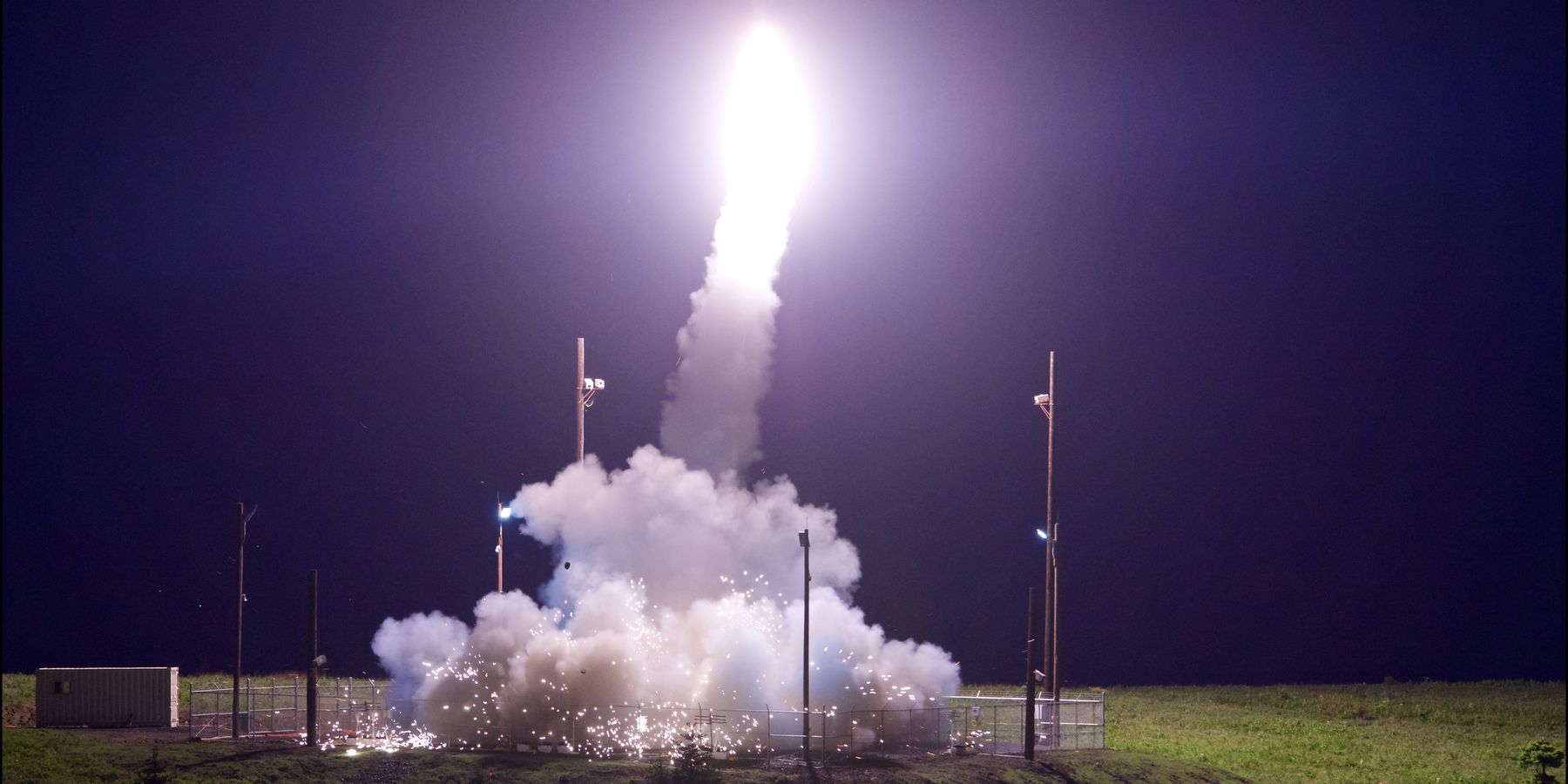
Amid the broken ceasefire in Gaza and boiling Israel-Iran tensions, Arab and Israeli media outlets are reporting that the U.S. is now deploying more missile defense capabilities to Israel.
The news broke ahead of President Trump’s Monday meeting with Israeli Prime Minister Benjamin Netanyahu in Washington. NBC News previously reported on March 30 that defense officials had approved a second Terminal High Altitude Area Defense (THAAD) system’s relocation to the Middle East; the Telegraph reported Monday that a C-5M Super Galaxy, a large U.S. transport aircraft able to carry a THAAD system, was at Nevatim airbase in Southern Israel on Saturday.
“America is understood to have delivered an advanced missile defence system to Israel,” the Telegraph reported.
One of the U.S.’s most powerful anti-missile systems, THAAD can intercept incoming projectiles with kinetic energy, in a process often referred to as “hit-to-kill,” or “kinetic kill.” Through this process, THAAD can intercept ballistic missiles from up to about 120 miles away.
With seven THAAD battery systems in its arsenal, the U.S. previously deployed a battery to Israel in October 2024 after an Iranian missile strike on Israeli soil earlier that month. That first battery system has gotten a “workout," according to reports but it is not clear whether it successfully intercepted any incoming missiles.
"If reports that a second THAAD missile battery is being deployed to Israel are true, this would put almost a third of U.S. THAAD systems in the small country,” Jennifer Kavanagh, Senior Fellow and Director of Military Analysis at Defense Priorities, told RS. “This incredible commitment of scarce resources is out of proportion with the limited U.S. interests in the Middle East and the Trump administration's stated intent to focus on security threats in Asia.”
One hundred U.S. soldiers went to Israel to help operate the first THAAD system sent there, suggesting more troops could be on their way to operate a reported second one.
This follows numerous other weapons sent to Israel in the last few weeks, which Kavanagh said includes B-2 bombers, fighter jets and warships, a Navy carrier strike group, and Patriot air defense systems. Meanwhile, Israel already has other anti-missile systems on hand, including missile-based projectile interception system Iron Dome and David’s Sling, which can take out short-range targets.
Altogether, this continued proliferation of advanced weapons systems in the region creates prospects for more explosive conflict under already tenuous geopolitical conditions.
With THAAD, “the Trump team might be setting the foundation for further escalation in the region, including strikes on Iran. In advance of such a move, U.S. defense leaders might put air defense and other assets in place to guard Israel from any Iranian blow back,” Kavanagh explained.
“Regardless of the intent, the deployment of second THAAD sucks the United States more deeply into a region it has been trying to get out of and risks pulling it more directly into Israel's ongoing wars with its neighbors, not least because a THAAD in Israel will mean more U.S. operators on the ground in that country as well,” she added.
Indeed, others observed that the THAAD deployment enables Israel to pursue further conflict with its neighbors.
“The deployment of a second THAAD missile defense battery to Israel could just be another symbol of the Trump administration's ‘all in’ support for Israeli aggression in Gaza and beyond,” said William Hartung, a Senior Research Fellow at the Quincy Institute for Responsible Statecraft. “Or it could have specific relevance to defending Israel from a counter-attack in the event that it goes forward with plans to bomb Iran's nuclear facilities. This is precisely the wrong approach.”