

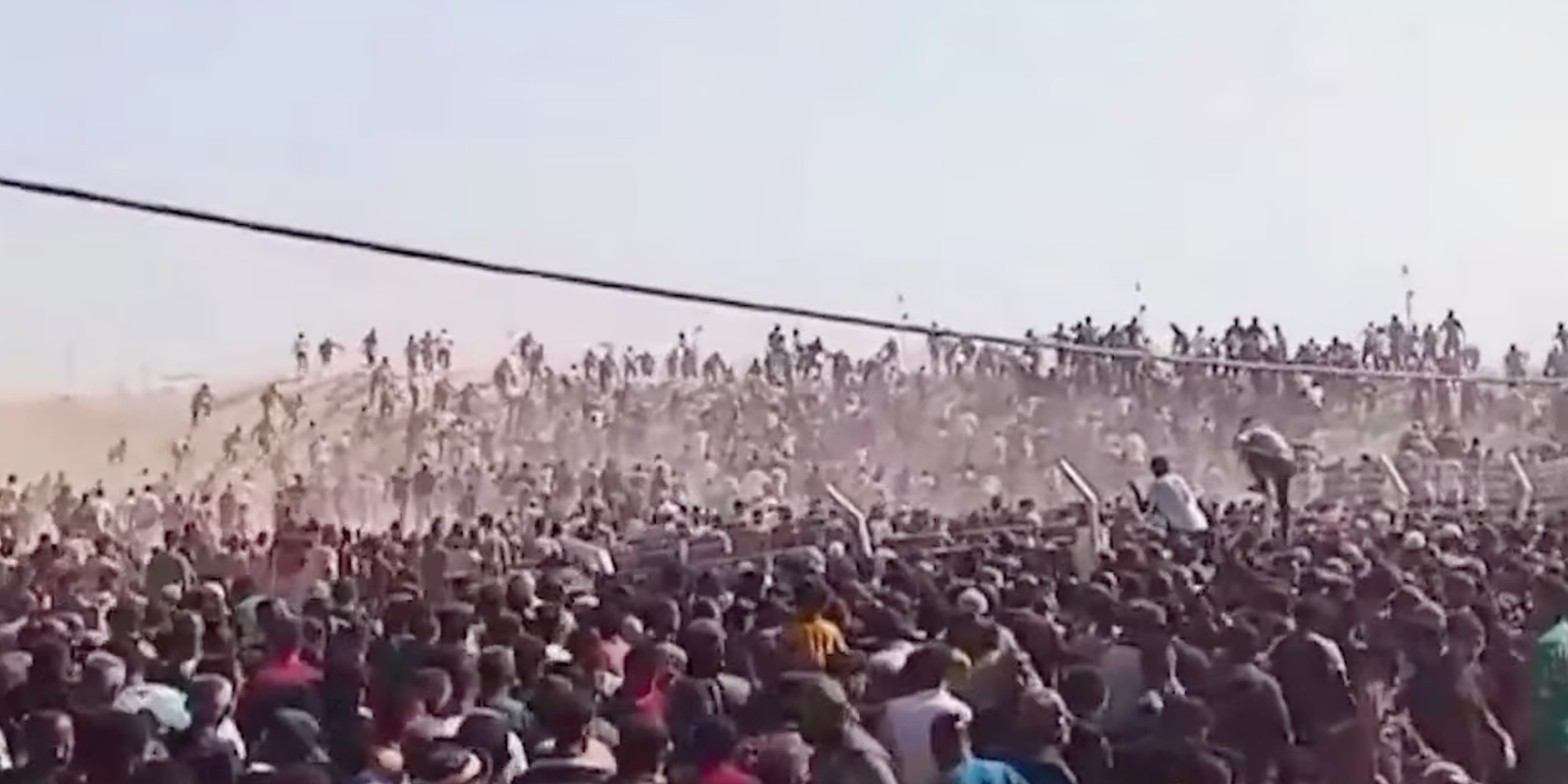
UPDATE 5/28: The Washington Post is reporting today that some 47 people were injured, most of them from gunshots, in the mayhem that ensued at a new food distribution site in Gaza yesterday. A United Nations spokesperson said the gunshots appeared to come from Israeli military but an investigation for full verification is ongoing.
U.S. private contractors charged with securing controversial new Israeli aid-distribution centers in Gaza reportedly lost control of the crowds and fired live ammunition to disperse throngs of civilians described as “desperate to get food to feed their families," according to Al Jazeera.
Al Jazeera reported Tuesday that IDF forces were then sent in “to try and evacuate these contractors.” Al Jazeera also reported that military helicopters and tanks fired into the vicinity “to try and also get the crowds to disperse.” An AP journalist based in the area also reported sounds of Israeli tankfire and gunfire.
Meanwhile, a security source told CNN that U.S. contractors did not fire shots.
At the time of this writing, it is unclear whether the incident as a whole resulted in injuries or fatalities, though Middle East Eye has reported it caused a “deadly stampede.”
In response, the controversial U.S.-backed Gaza Humanitarian Foundation, which facilitates the new distribution sites, claimed that the volume of crowds overwhelmed its team and forced it to pull back so that people could “take aid safely and dissipate.” It alleged that “Gazans experienced several hour delays in accessing the site due to blockades imposed by Hamas.”
According to Haaretz, aid distribution by the Gaza-Humanitarian Foundation has resumed on site following the incident, though a source told CNN that aid distribution would resume there tomorrow. Haaretz also reported that the Israeli army denies reports suggesting that IDF helicopters opened fire at the aid hubs, insisting that troops on scene fired warning shots.
The Gaza Humanitarian Foundation began operating its aid-distribution centers in Gaza yesterday, despite objections from the U.N. and other aid groups that the Foundation was assisting Israel’s efforts to use food as a weapon of war. After breaking a temporary ceasefire in Gaza, Israel had blocked foodstuffs, fuel, and other goods for almost three months, until finally allowing a small amount of aid to enter the Gaza Strip last week.
The New York Times reported over the weekend that the aid scheme has been in the works since shortly after the Oct. 7, 2023 attacks and has been assisted by ex-CIA officer Phillip R. Reilly, who has had a long career dating back to training the contras in Nicaragua in the 1980s. The Foundation is registered in both Switzerland and the U.S. Retired Marine Jake Wood was appointed CEO in charge of fundraising until he resigned Monday, saying “It is clear that it is not possible to implement this plan while also strictly adhering to the humanitarian principles of humanity, neutrality, impartiality, and independence, which I will not abandon.”
After the clash with the crowds Tuesday, the Government Media Office in Gaza put out a statement saying, "today’s events are clear evidence of the occupation’s failure to manage the humanitarian crisis it has deliberately created…Establishing ghettos for distributing limited aid is a deliberate policy aimed at sustaining starvation and dismantling society.”
Drop Site news, meanwhile, said that the aid-distribution centers in Gaza may be used to detain Palestinians. They reported that an elderly man has gone missing after failing to provide information on a relative during questioning at the Muraj Crossing. As of this writing, that report has not yet been confirmed.
The U.S. State Department did not respond to request for comment in time for publication.
Editor's note: This article is being updated according to ongoing developments.
- Surprise: CIA link to sketchy Israeli aid scheme ›
- Israel to use US military contractors in new Gaza aid scheme ›
- Democrats to admin: Use your tools to get aid into Gaza now | Responsible Statecraft ›
- Is the US now funding the bloodbath at Gaza aid centers? | Responsible Statecraft ›
- Charges of US contractor abuse in Gaza recalls ugly Blackwater era | Responsible Statecraft ›