

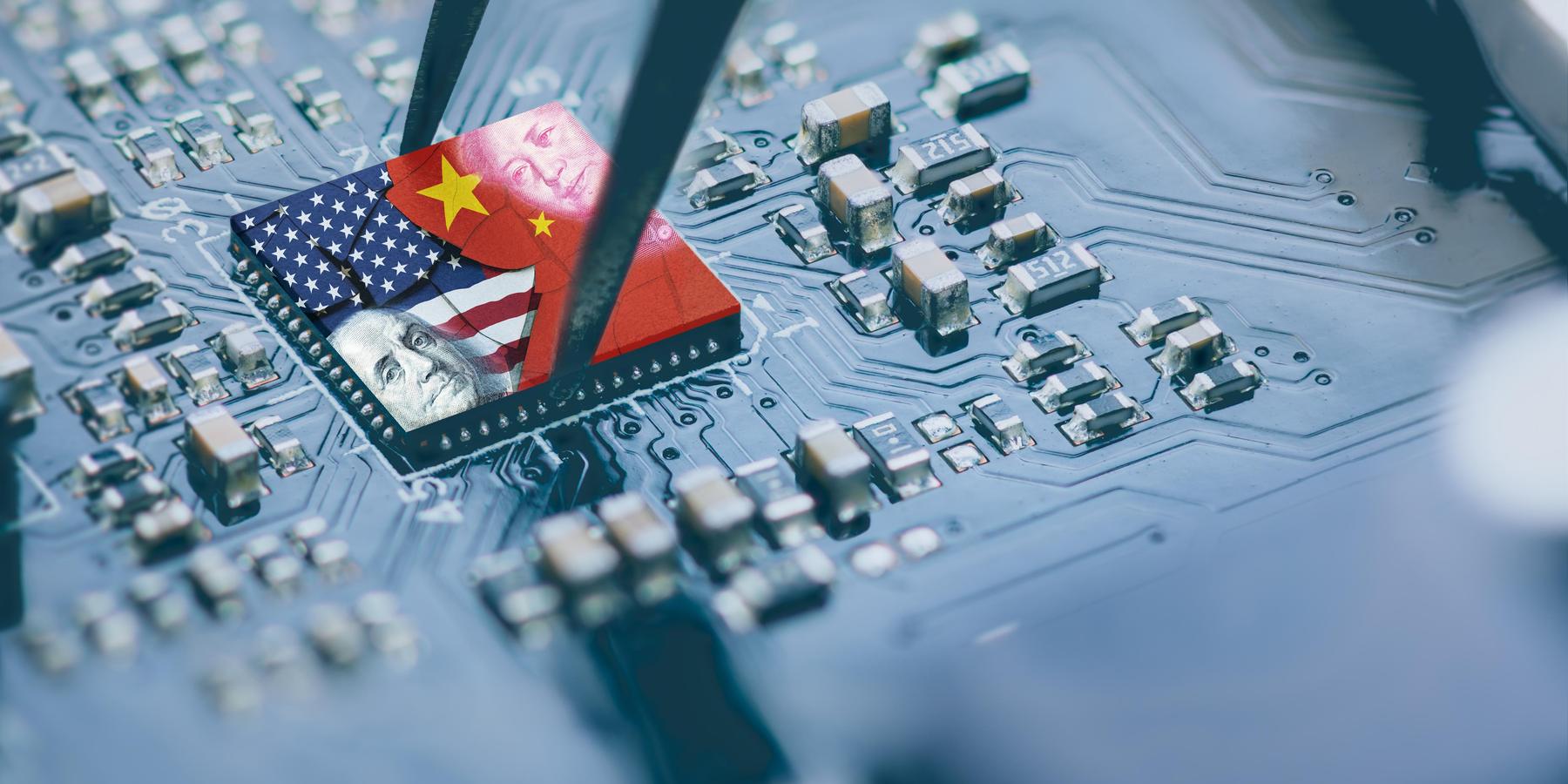
With no little irony, the Trump administration announced late yesterday that it had approved Nvidia H200 chip exports to China, which are essential to China’s AI programs — just before the House Committee on Foreign Affairs held a hearing about the danger of China's AI advancements to U.S. national security.
The hearing discussed the necessity of winning the AI arms race against China and the imminent threats that would be sure to follow should this race be lost.
“The stakes could not be higher,” Rep. Andy Barr (R-Ky.) told the hearing. “Whoever wins the artificial intelligence race will gain an edge in economic power, military dominance, technological leadership and global influence. This is the defining competition of the century.”
When Trump announced the sales last month, he said they would be exported to China "under conditions that allow for continued strong National Security,” but many are wondering if that is truly the case.
Defense Secretary Pete Hegseth, while announcing a new AI Acceleration Strategy earlier this month, said that AI will redefine the character of war over the next decade. Meanwhile, a former White House and Commerce Department official acknowledged to the Financial Times that access to this chip would allow China to take great strides in an already tight race.
“Unfettered access to the H200 would allow China to build frontier-scale AI supercomputers to develop the most powerful AI systems, just at a moderately higher cost relative to cutting-edge Blackwell chips,” the official told the Financial Times. “It would also arm Chinese cloud providers to compete globally with US hyperscalers.”
With today’s announcement, safety measures that had not been previously established were also released, including requirements that chips be reviewed by a third-party testing lab to confirm their technical AI capabilities before being shipped, and regulations that ensure China cannot receive more than 50% of the total amount of chips sold to American customers.
Chinese customers purchasing the chips will also need to demonstrate "sufficient security procedures" and will be barred from using the chips for military purposes.
Still, there are questions of whether these conditions will stop the so-called most consequential arms race in recent history.
“The outcome of this race directly affects military competitiveness of the United States of America versus China,” said Rep. Brian Mast (R-Fla), who chaired the hearing. “It is that black and white, and because AI works to improve other AI, this is a very unique race where the further you get ahead, the further you get ahead.”
Many lawmakers, including those in attendance at the hearing, expressed confusion and outrage about this move by Trump. Rep. Gabe Amo (D-R.I.) said at the hearing that the approval of sales will “empower China” and “handicap the United State’s AI superiority.”
“He's sabotaging our national security by auctioning off our most advanced technology to the highest bidder, and his aggression towards Venezuela and Greenland is creating a dangerous permission structure for Chinese and Russian aggression towards Taiwan and Ukraine,” Amo said.