

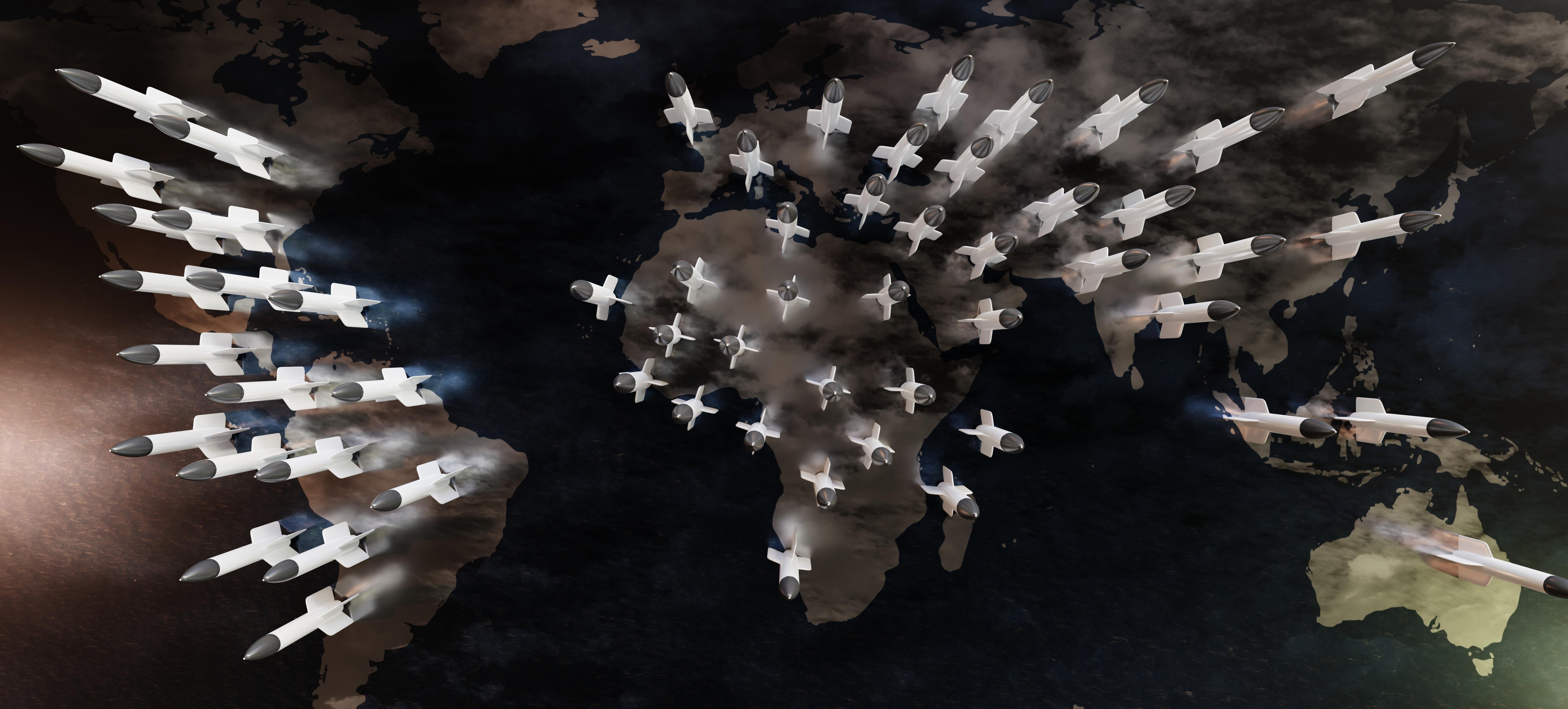
The New START Treaty — the last arms control agreement between the U.S. and Russia — is set to expire next week, unless President Trump and Russian President Vladimir Putin make a last minute decision to renew it. Letting the treaty expire would increase the risk of nuclear conflict and open the door to an accelerated nuclear arms race. A coalition of arms control and disarmament groups is pushing Congress and the president to pledge to continue to observe the New START limits on deployed, strategic nuclear weapons by the US and Russia.
New START matters. The treaty, which entered into force on February 5, 2011 after a successful effort by the Obama administration to win over enough Republican senators to achieve the required two-thirds majority to ratify the deal, capped deployed warheads to 1,550 for each side, and established verification procedures to ensure that both sides abided by the pact. New START was far from perfect, but it did put much needed guardrails on nuclear development that reduced the prospect of an all-out arms race.
The deal that sealed ratification of New START in the Senate a controversial pledge to invest $85 billion in U.S. nuclear warheads over 10 years, an arrangement that some critics argued would cement U.S. possession and development of nuclear weapons for the long-term, thereby making it harder to forge a future agreement to bring warhead stockpiles below New START levels.
New START’s strictures on the number of deployed weapons did not prevent the U.S. or Russia from investing in a new generation of nuclear weapons. In the U.S., for example, the Pentagon is moving forward on a plan to build a new generation of nuclear-armed missiles, bombers and submarines — with new warheads to go with them — at a projected cost of $946 billion over the next decade. At least $140 billion of that sum will go to developing and building a new intercontinental ballistic missile (ICBM), the Sentinel. The new ICBM — which is being developed by Northrop Grumman after it received a sole source contract in September 2020 — has undergone tremendous cost growth of over initial estimates. The overrun prompted a Pentagon review of the program, but the assessment led to a decision to go full speed ahead.
Even more crucial than the cost issue is the fact that ICBMs are “some of the most dangerous weapons in the world,” former Secretary of Defense William Perry, because a president would only have a matter of minutes to decide whether to launch them in a crisis, increasing the risk of an accidental nuclear war based on a false alarm. Independent analyses by the Union of Concerned Scientists and other expert groups assess that the U.S. could retain the ability to dissuade another nation from launching a nuclear attack on the United States without ICBMs in its arsenal.
Russia is also developing a new generation of nuclear weapons, and threats by Russian leader Vladimir Putin to use nuclear weapons in Ukraine — however impractical that may be — have raised fears, but have not spurred an effective push for new limits on the possession and use of these potentially world ending weapons.
These developments have prompted the Bulletin of the Atomic Scientists to move its Doomsday Clock — an estimate of the risk of a nuclear conflict — to 85 seconds to midnight. Its statement in support of that judgment urged the leaders of the major nuclear weapons states to shed their complacency and take action to rein in nuclear arsenals and reduce the risk that they will be used. They assessed the current situation as follows:
“A year ago, we warned that the world was perilously close to global disaster and that any delay in reversing course increased the probability of catastrophe. Rather than heed this warning, Russia, China, the United States, and other major countries have instead become increasingly aggressive, adversarial, and nationalistic. Hard-won global understandings are collapsing, accelerating a winner-takes-all great power competition and undermining the international cooperation critical to reducing the risks of nuclear war, climate change, the misuse of biotechnology, the potential threat of artificial intelligence, and other apocalyptic dangers. Far too many leaders have grown complacent and indifferent, in many cases adopting rhetoric and policies that accelerate rather than mitigate these existential risks.”
The lapsing of New START runs contrary to U.S. public opinion on the matter. A poll released this month and commissioned by the Nuclear Threat Initiative found that 91 percent of Americans — including 85% of President Trump’s supporters — believe that “the United States should negotiate a new agreement with Russia to either maintain current limits on nuclear weapons or further reduce both countries’ arsenals.”
Letting the treaty’s limits lapse is also out of step with the positions of the majority of the world’s nations, 74 of which have ratified the U.N. Treaty on the Prohibition of Nuclear Weapons, while another 25 nations have signed the treaty but yet to formally ratify it.
Reversing current trends and restoring a commitment by the major nuclear powers to reduce and eventually eliminate their nuclear weapons arsenals will require more constructive relations among the U.S., Russia, and China. But even at the height of the Cold War major agreements to curb nuclear weapons development and deployment were reached, from the Limited Test Ban Treaty of 1963 to the Nuclear Nonproliferation Treaty of 1970.
Keeping New START limits and negotiating new deals to limit nuclear arsenals and deployments is in the interests of every nation, and should supersede disagreement on other issues. Whether it will is an open question.
- Reckless posturing: Trump says he wants to resume nuke testing ›
- Trump on New Start nuke treaty with Russia: if 'it expires it expires' ›
- The last treaty curbing US and Russia nukes expires today | Responsible Statecraft ›
- New START treaty loss a 'colossal' failure leading to nuclear arms race ›