It all happened in a flash.
Two weeks ago, Texas announced that it was designating the Muslim Brotherhood and a prominent American Muslim group as foreign terror organizations. President Donald Trump followed suit last week, ordering his administration to consider sanctioning Muslim Brotherhood chapters in Egypt, Jordan, and Lebanon.
Today, the House Foreign Affairs Committee will discuss a bill that goes further yet, requiring the Trump administration to designate all Muslim Brotherhood-related groups as foreign terror organizations.
The sudden movement against the Muslim Brotherhood has left many observers confused. Trump considered designating the group in his first term but ultimately decided against it. At the time, career officials in the State Department and Pentagon were adamant in their assessment that the group didn’t qualify as a terrorist organization. In fact, it barely qualified as a single group. Nearly 100 years after its founding, the loosely organized Islamist political movement had inspired an endless number of different organizations, the vast majority of which have never participated in violence. And those that do advocate violence, like Hamas and Liwa al-Thawra, have already been designated as terror groups by the U.S.
Intelligence agencies have also long opposed efforts to designate the group. In 2017, the CIA said such a move would “fuel extremism” and lead to endless diplomatic headaches given that many political parties in the region are affiliated with the group in one way or another. And a wide range of national security experts say that designating the Brotherhood as a terrorist organization would divert resources away from more serious threats, like al-Qaida or ISIS.
So why, exactly, is this controversial effort suddenly so close to the finish line? An analysis of publicly available information suggests that the credit goes to a pair of influential advocates: hawkish D.C. think tanks and Middle Eastern governments.
Let’s start with the think tanks. One major player here is the Foundation for Defense of Democracies, an organization best known for advocating regime change in Iran. FDD Action, the think tank’s lobbying arm, released a “policy alert” last month detailing how the Muslim Brotherhood has “methodically and insidiously supported terrorist organizations” in the Middle East. “Designating the Muslim Brotherhood and its violent affiliates is a first step to addressing the growing threat posed by its radical mandates,” one lobbyist argued, adding that the U.S. should “work in concert with regional governments who have already outlawed” the group.
The release of this report coincided with a more voluminous entry from the Institute for the Study of Global Antisemitism and Policy, or ISGAP. In a 265-page-long analysis, ISGAP alleged a decades-long conspiracy by the Muslim Brotherhood to infiltrate the West and undermine its institutions from within. The report relies heavily on a pair of documents that purport to portray the brotherhood’s far-sighted plans for global domination. (Scholars of political Islam argue that the influence of these documents is greatly exaggerated, if they ever had any influence at all.)
FDD and ISGAP have a lot in common. For one, both groups have close ties to Israel. FDD originally described itself in tax filings as seeking to “enhance Israel’s image in North America,” and it continues to host former Israeli military officers as fellows while organizing trips to Israel for U.S. foreign policy hands. ISGAP received much of its funding from Israel until at least 2022.
Both FDD and ISGAP also maintain an intimate working relationship with the United Arab Emirates. Leaked emails from 2017 revealed extended correspondence, and even policy coordination, between the head of FDD and a prominent Emirati diplomat, who also later spoke at an FDD event in 2021. ISGAP, meanwhile, brought an Emirati official to Congress just a few weeks ago.
The UAE and Israel have a shared commitment to fighting the Muslim Brotherhood. The UAE designated the group as a terror organization in 2014 — a move driven in part by its desire to crack down on local opposition during the Arab Spring, in which a Muslim Brotherhood-backed president briefly came to power in Egypt. “The Emiratis are uniquely obsessed with the brotherhood,” said Khaled Elgindy, a senior fellow at the Quincy Institute, which publishes RS. Israel, for its part, has long been skeptical of the organization, in part due to the fact that Hamas emerged as a violent offshoot of the Palestinian Muslim Brotherhood.
Israel has made no visible effort to push the current ban, but Israeli officials have welcomed it with open arms. One Israeli minister has even used it to advocate for an Israeli ban on the Council on American-Islamic Relations (CAIR), a prominent American civil rights group. Prime Minister Benjamin Netanyahu, meanwhile, used the new designation as an opportunity to call for a complete ban on the Muslim Brotherhood in Israel — a comment that many Arab observers received as a threat to ban prominent Palestinian political parties in the country.
There is reason to believe that the UAE is playing a more direct role in the push. The group has long advocated for Western bans on the Muslim Brotherhood; in 2014, Emirati officials threatened to back out of an arms deal with the United Kingdom unless London moved to crack down on the organization, according to the Guardian. A few weeks ago, the Emirati ambassador to the U.S. joined ISGAP for a “policy workshop” on Capitol Hill, just as ISGAP’s advocacy efforts in favor of a ban were heating up. Then, when Trump’s executive order came out, a prominent adviser to the Emirati president quickly welcomed it as a “strategic, courageous, and historic decision.”
These outside efforts have found a sympathetic ear in the halls of power, particularly as the Trump administration has stretched the definition of terrorism to include groups like drug cartels. One key ally in the White House is Sebastian Gorka, Trump’s senior director for counterterrorism. At an FDD event in July, Gorka referred to the brotherhood as the “granddaddy” of all terror groups and thanked FDD for all its efforts to “tell the truth about the brotherhood.” (This assessment will come as news to mainstream terror analysts, who don’t consider the brotherhood to be a terrorist group in the first place.) After Trump’s announcement, Gorka gushed that “history has been made.”
In Congress, the leading advocate for a designation has been Rep. Mario Diaz-Balart (R-Fla.), the sponsor of the bill that the House will discuss today. Diaz-Balart chairs the Friends of Egypt Caucus, suggesting a close relationship with Egyptian officials, who have long pushed for a brotherhood ban. He also joined FDD’s executive director last week for a discussion about Trump’s executive order, which he lauded as a key first step to fighting a “pernicious and dangerous terrorist group with global reach.”
The difference between Trump and Diaz-Balart’s approaches is consequential. Trump’s order would only designate a few chapters of the Muslim Brotherhood, which the administration accuses of making common cause with terrorists. (Experts largely agree that the Lebanese chapter of the Muslim Brotherhood has participated in violence, while the evidence against the Jordanian and Egyptian branches is far less clear.) But the congressional version would throw these distinctions out the window, forcing the U.S. to crack down on a seemingly endless list of Muslim Brotherhood-affiliated groups.
The biggest question mark here surrounds the possible role of Ileana Ros-Lehtinen, a powerful former GOP lawmaker who now works as a lobbyist for the UAE, among other clients. Ros-Lehtinen wrote a lengthy report in 2020 in which she described the Muslim Brotherhood alongside al-Qaida and ISIS as “terrorist and extremist groups.” She also happens to be a close personal friend of both Diaz-Balart, who once called her “a part of my family,” and Secretary of State Marco Rubio, who recently credited her for helping get him into law school and launch his political career.
Regardless of who is behind the effort, its impact will fall squarely on opposition groups in the Middle East, according to Raed Jarrar of DAWN, a group that pushes for democratic change in the region. “It's a free gift that authoritarian regimes would use to stifle freedom of expression and political organizing in the Middle East and North Africa,” Jarrar said, noting recent efforts to crack down on non-violent Muslim Brotherhood-related political groups in Jordan and Tunisia.
- Unlikely foes: Egypt and the UAE's hidden battle for Sudan ›
- Was Jordan's Muslim Brotherhood ban a bid to please Israel, Saudi? ›
- Trump designates 3 branches of Muslim Brotherhood as terror groups ›
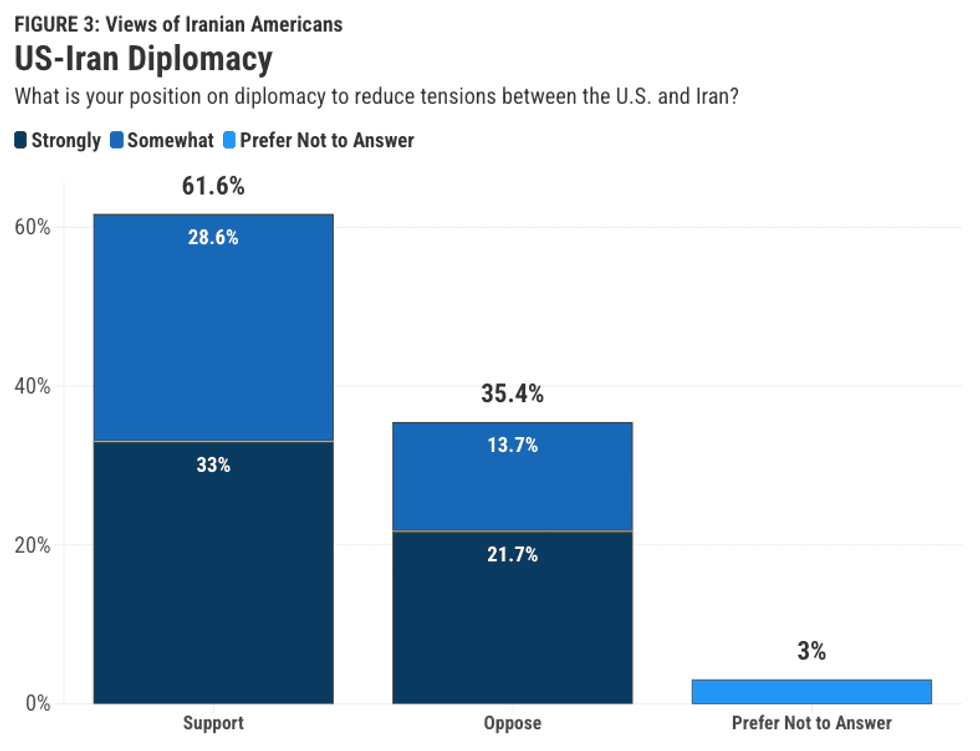 Screengrab via niacouncil.org
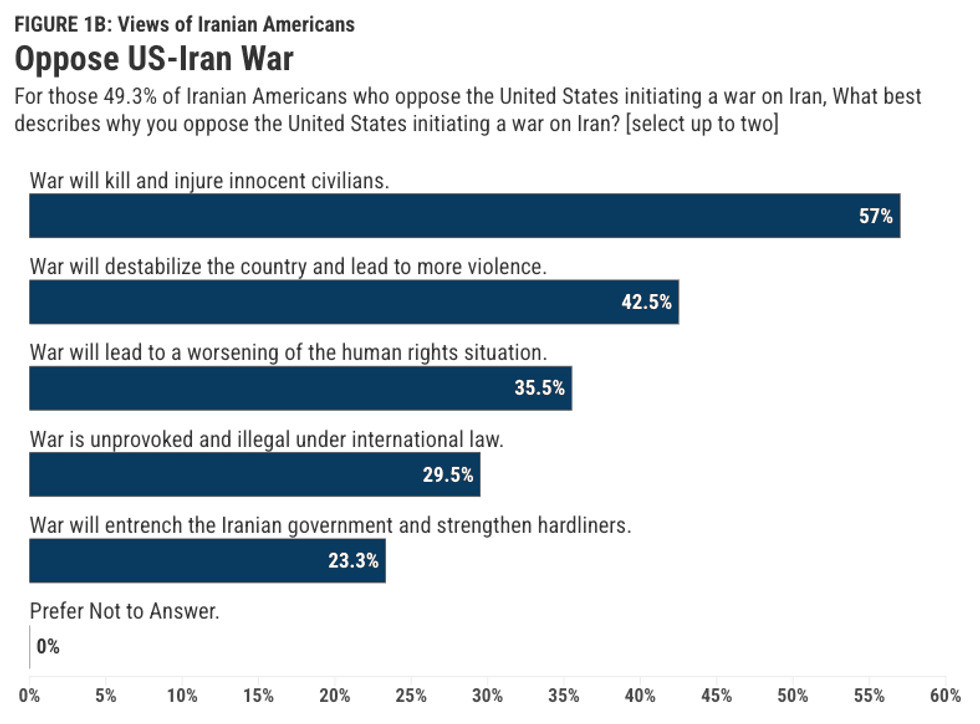 Screengrab via niacouncil.org