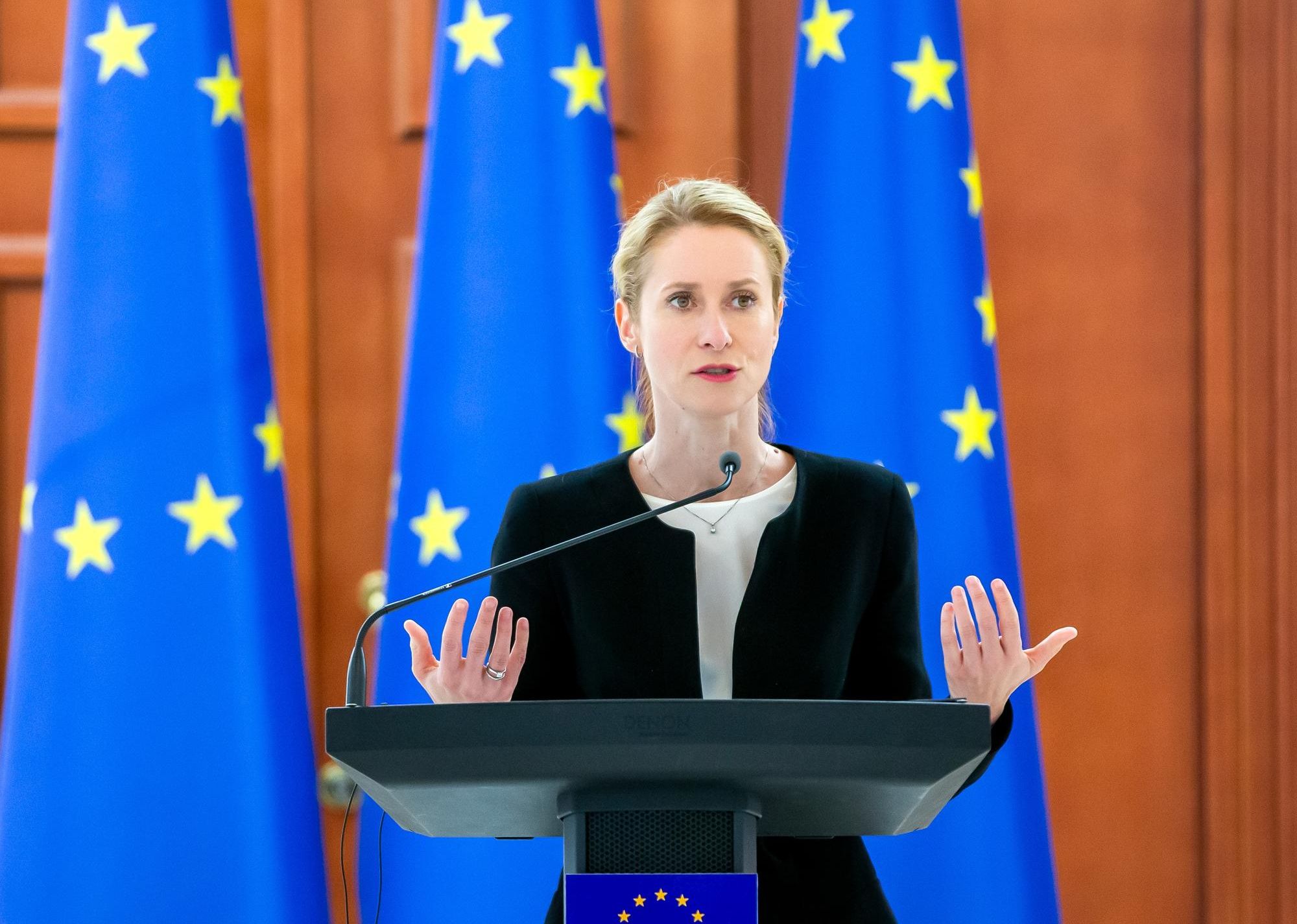
When Russia invaded Ukraine, the EU high representative for foreign affairs Kaja Kallas said that “sovereignty, territorial integrity and discrediting aggression as a tool of statecraft are crucial principles that must be upheld in case of Ukraine and globally.”
These were not mere words. The EU has adopted no less than 19 packages of sanctions against the aggressor — Russia — and allocated almost $200 billion in aid since 2022.
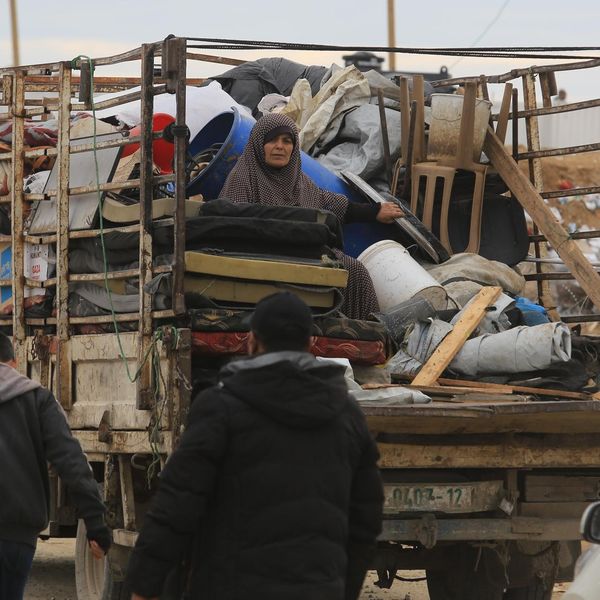
Surely one would expect, then, the EU to condemn the U.S. unilateral attack on Venezuela in early days of 2026, resulting in an abduction of its leader Nicolás Maduro? Yet, nothing of the sort happened. In fact, the EU has already demonstrated its selective approach to the international legality when it failed to condemn its violations in Gaza half as vociferously as it did in Ukraine, shredding Europe’s credibility in the Global South and among many European citizens as well.
Instead, the EU's response to President Trump’s attack on Venezuela was a masterpiece of evasion. European leaders issued vague carbon-copy statements committing to, above all, “closely monitoring the situation” in Venezuela. This “collective monitoring” may be the largest and most passive mission in the bloc’s history.
This lamentable spectacle included the German Chancellor Friedrich Merz asserting that the legal circumstances of the U.S. action were “complex.” His Greek counterpart Kyriakos Mitsotakis went even further, dismissing legal questions as untimely — a reckless stance for a leader locked in long-simmering sovereignty disputes with Turkey.
As a result of these contortions, Kallas produced a tepid statement on behalf of 26 EU states which somehow managed to avoid rejecting the U.S. attack on Venezuela as a primary cause of the “crisis.” Instead it appeared to endorse the Trump administration’s case for war with references to Maduro’s illegitimacy, drug trafficking and transnational organized crime despite U.S. national intelligence’s conclusion that Maduro did not have any operational role in running drug cartels.
Yet it would be a mistake to assume that this position (or rather, lack of it) speaks for all European states and, much less, populations. Hungary opted out as even the thinnest veiled criticisms of the U.S. actions proved too much for its Prime Minister Viktor Orban, a close Trump’s ally.
On the other side, Spain, in a move of significant diplomatic defiance, signed a separate statement with Mexico, Brazil, Colombia, Chile, and Uruguay. It expressed “a clear rejection of the unilateral military actions against Venezuela” (stopping short, however, of explicitly mentioning the United States) and, notably, concern about any intent of an external appropriation of sovereign natural and strategic resources, a clear reference to Trump’s talk about “taking Venezuela’s oil.”
The internal EU fracture over the response is perhaps even more telling. While the EU’s elites seem to be going out of their way not to anger Trump, there is also a growing rejection of this form of vassalage, on both political right and left.
Nowhere is this political realignment more potent than in France, the EU’s pre-eminent strategic power. President Emmanuel Macron, the self-styled champion of a “European strategic autonomy,” has de-facto endorsed the U.S. operation, choosing to emphasize Maduro’s lack of legitimacy.
In stark contrast Marine Le Pen and Jordan Bardella, the leaders of the right-wing National Rally, have stood up robustly for the principle of sovereignty and international law, condemning the operation as a dangerous overreach — as did the left-wing France Unbowed.
Notably, the former prime minister and foreign minister Dominique De Villepin, a Gaullist conservative who famously opposed the Iraq war at the U.N. Security Council in 2003, was equally scathing in his indictment of Macron’s position. He lambasted the French president for not seeming to realize that both Ukraine and Venezuela are “inter-connected.” He said that failing to stand up against the U.S. attack on Venezuela and “on what happens in the Middle East” (in reference to Israel’s wars) weakens the EU case on Ukraine.
De Villepin is right: Macron’s position looks even more awkward given that the new U.S. national security strategy chastises Europe by treating the liberal, centrist forces he represents as adversaries while backing his nationalist opponents.
Yet it is those putative Trump’s allies on the nationalist right who now criticize his actions. Macron’s submission to Washington enabled the Le Pen-Bardella camp to claim the mantle of true defenders of national dignity and sovereignty. The National Rally already tops the polls in France. The Venezuela debacle could further help to break the Atlanticist hold on the Élysée.
And then there is a Greenland corollary to the whole story. In the wake of the Venezuela operation, Katie Miller, the wife of the White House deputy chief of staff for policy Stephen Miller, posted on X a picture of Greenland, a Danish territory, covered by the American flag with a comment “soon.” This was deemed alarming enough for the Danish Prime Minister Mette Frederiksen to issue a strong rebuke. It doesn’t seem, however, to have impressed Trump, who promised to “deal” with Greenland in “two months.”
The question is what really the EU can do to deter the U.S., except issue more statements of concern? Having outsourced its security to the U.S., defined the Ukraine war as existential to its own future and refused to seek autonomous diplomatic solutions, the EU is now utterly dependent on the U.S. whims and — because of its position on Gaza and now Venezuela —devoid of any international sympathy.
In fact, if the U.S. did invade Greenland, the EU would likely simply issue another statement with generic concern. Some, like the president of Latvia, already suggested that the (unspecified, and arguably non-existent) “legitimate security needs of the U.S.” have to be addressed in a “direct dialogue” between the U.S. and Denmark.
He shouldn’t be surprised then if, at some point, other European leaders advise him to solve Latvia’s differences with Russia in a “direct dialogue with Moscow, taking into account Russia’s security needs.” This is how vassalage leads not only to Europe’s increasing irrelevance on the global stage, but now directly endangers NATO and EU’s own internal cohesion.
The EU now stands at a precipice. Going forward, it can continue down the path of “selective principles,” further consolidating into an entity whose word carries little weight beyond its echo chamber. Or, it can seize this moment to move from vassalage to leadership, which sometimes implies an ability to say “no” to a powerful ally. The precedents set out by the reactions to the attack on Caracas are not at all encouraging.
- US strikes are blowing up more than just boats in LatAm ›
- The EU's pathetic response to Trump's Iran attack ›
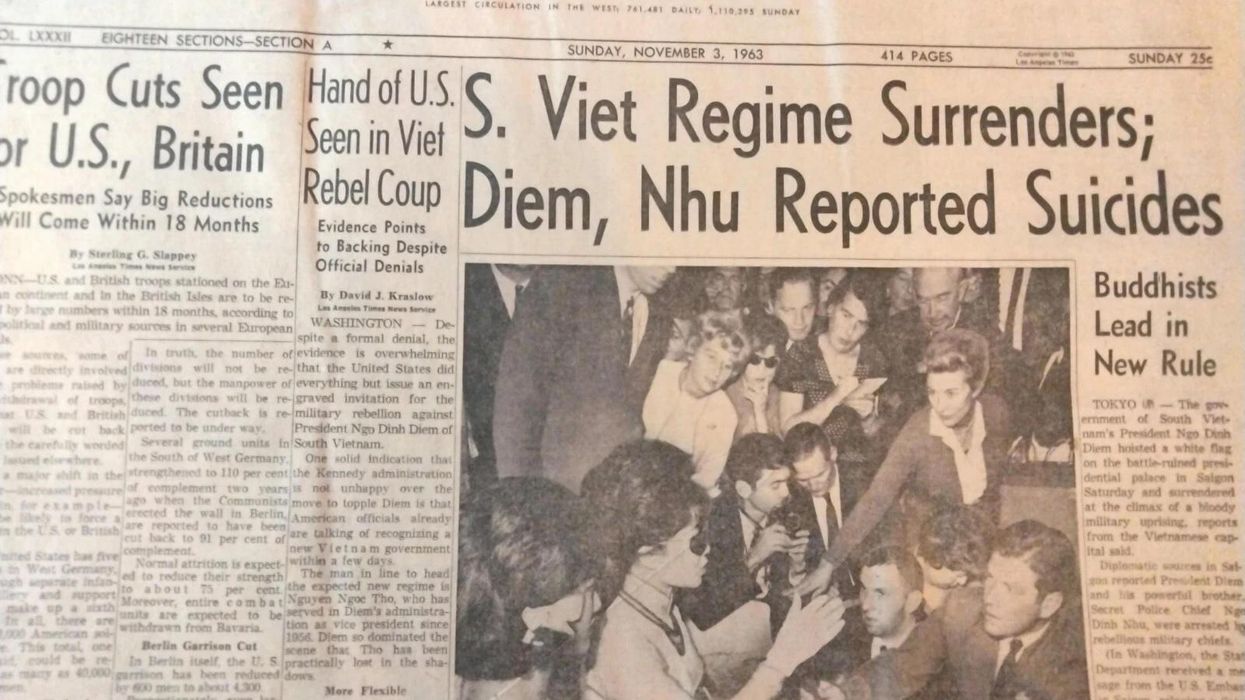
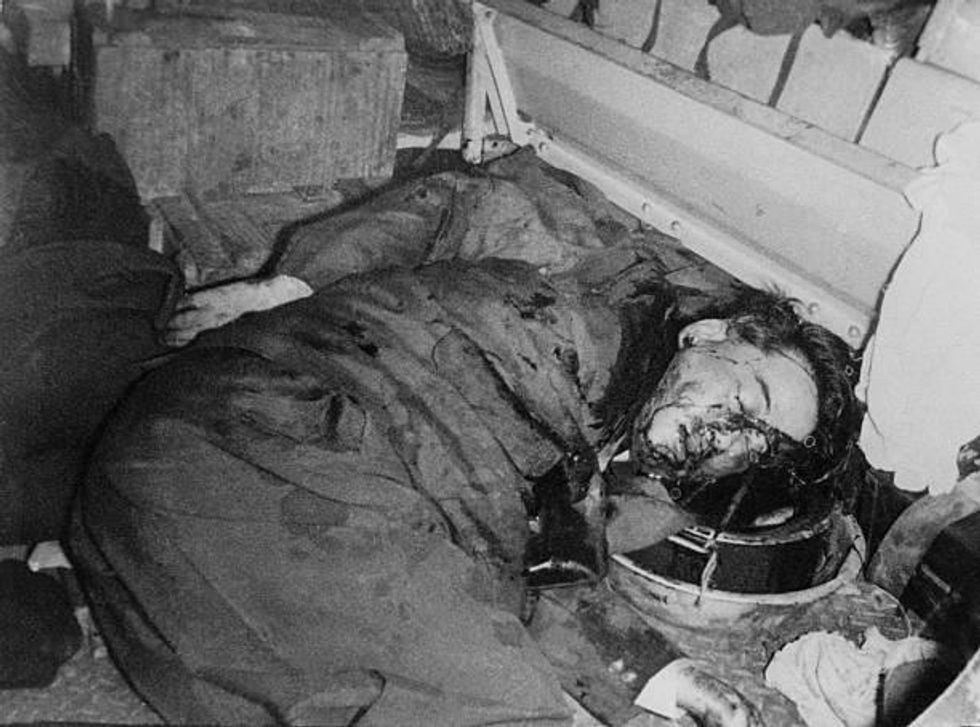 Top photo credit: Ngô Đình Diệm after being shot and killed in the 1963 coup (US National Archives)