

I take a back seat to no one in my disdain and loathing of state-sponsored socialism.
In fact, I wrote a book, The Case Against Socialism, describing the historic link between socialism, communism and state-sponsored violence.
I wish the people of Venezuela well and sincerely hope they will not repeat the mistake of electing the type of socialist regime that has plagued that nation since the 1970s.
Whether or not socialism is evil, however, is not the debate today. The debate to about one question and one question only. Does the Constitution allow one man or one woman to take the nation to war without the approval of Congress? Full stop.
That question is bigger than regime change in Venezuela, bigger than any claims of the ends justifying the means, bigger even than the depredations and evils that multiple socialist autocrats have perpetrated upon the once great country of Venezuela.
Even those who celebrate the demise of the socialist, authoritarian regime in Venezuela, as I do, should give pause to granting the power to initiate war to one man. The power to initiate war is so vast a power that it must be confined by checks and balances.
The debate today would not be happening if our leaders read and understood the Federalist Papers. The constitutional power to initiate war is placed squarely on the shoulders of Congress.
Current congressional leaders squirm and would like to shift the burden of initiating war to the President. Less than courageous members of Congress fall all over themselves to avoid taking responsibility, to avoid the momentous vote of declaring war.
But make no mistake, bombing another nation’s capital and removing their leader is an act of war plain and simple. No provision in the Constitution provides such power to the presidency.
No Supreme Court has allowed Congress to abdicate its role in the decisions of war and peace and no congressman of any self-respect will argue otherwise.
Our founders debated fully whether or not to grant the power to declare war to Congress or the president. To a man, from Jefferson to Hamilton, they all agreed with the words Madison wrote that the Executive is the branch of government most inclined to war, therefore, the Constitution with studied care, vested that power in the legislature.
Founding-era arguments in support of ratifying the Constitution demonstrate that our government does not entrust the decision to go to war to just one person.
At the Constitutional Convention, Charles Pinckney argued that uniting the war powers under a single executive would grant to the president monarchical powers.
James Wilson assured Americans at the Pennsylvania ratifying convention that the proposed Constitution would not allow one man, or even one body of men, to initiate hostilities.
In Federalist 69, Alexander Hamilton stated the Constitution gave the presidency fewer war powers than those of the British monarch and the American president would be restricted to conducting the operations of the armies and navies. The founding generation was largely united in the opinion that the American president would not be endowed with the monarchical power to initiate war unilaterally.
These founders were not just engaged in a sales pitch; they were accurately representing the Constitutional Convention’s decision on how to divide the war powers. An early draft of the Constitution gave the Congress the power to “make war” rather than the power to “declare war.”
During the debate over war powers at the Constitutional Convention, South Carolina’s Pierce Butler rose to defend the proposition that the new American government should vest the war-making power with the president.
Elbridge Gerry, a delegate from Massachusetts, was so aghast by Butler’s suggestion that he rose to say that he “never expected to hear in a republic a motion to empower the Executive alone to declare war.” In response to Butler’s proposal to vest all war powers with the President, Gerry joined with James Madison to successful propose amending the draft Constitution to give Congress the power to “declare war” to ensure the President would be able to defend the country against foreign attack without waiting for congressional action.
In other words, while the Constitution empowers the president to defend the country against sudden attacks initiated by a foreign power, the initiation of hostilities by the United States requires deliberation and authorization by the people’s representatives in Congress.
Our founder's intent is not a close call open to equivocation. Pundits argue that presidents have been ignoring this restriction for many decades. That is not an argument but more of an excuse.
The Constitution is clear — only Congress can declare war. The power to declare war was too important to be left in the confidence of one man. As Jefferson wrote, “in questions of power, then, let no more be heard of confidence in man but bind him down from mischief by the chains of the Constitution.”
Our founding fathers were explicit and yet they still worried that a branch of government might resist the chains of the Constitution.
In pondering how the Constitution would be enforced, our founders took to heart Montesquieu’s maxim that if the powers of the Executive and Legislature are combined, there can be no liberty.
Madison wrote that by dividing the powers, by separating the powers the Constitution would pit “ambition against ambition.”
The ambitions of a President would be checked by the ambitions of the legislature. The natural allure of power would be checked by each branch jealously guarding their prerogative of power.
Who among our framers would have ever guessed or conceived of a time when Congress would lack any ambition at all? Who would have predicted a time when Congress would be so feckless as to simply and obediently abandon all pretense of responsibility and any semblance of duty so as to cede the war power so completely to the President?
It’s as if a magical dust of soma has descended through the ventilation ducts of the Congressional office buildings.
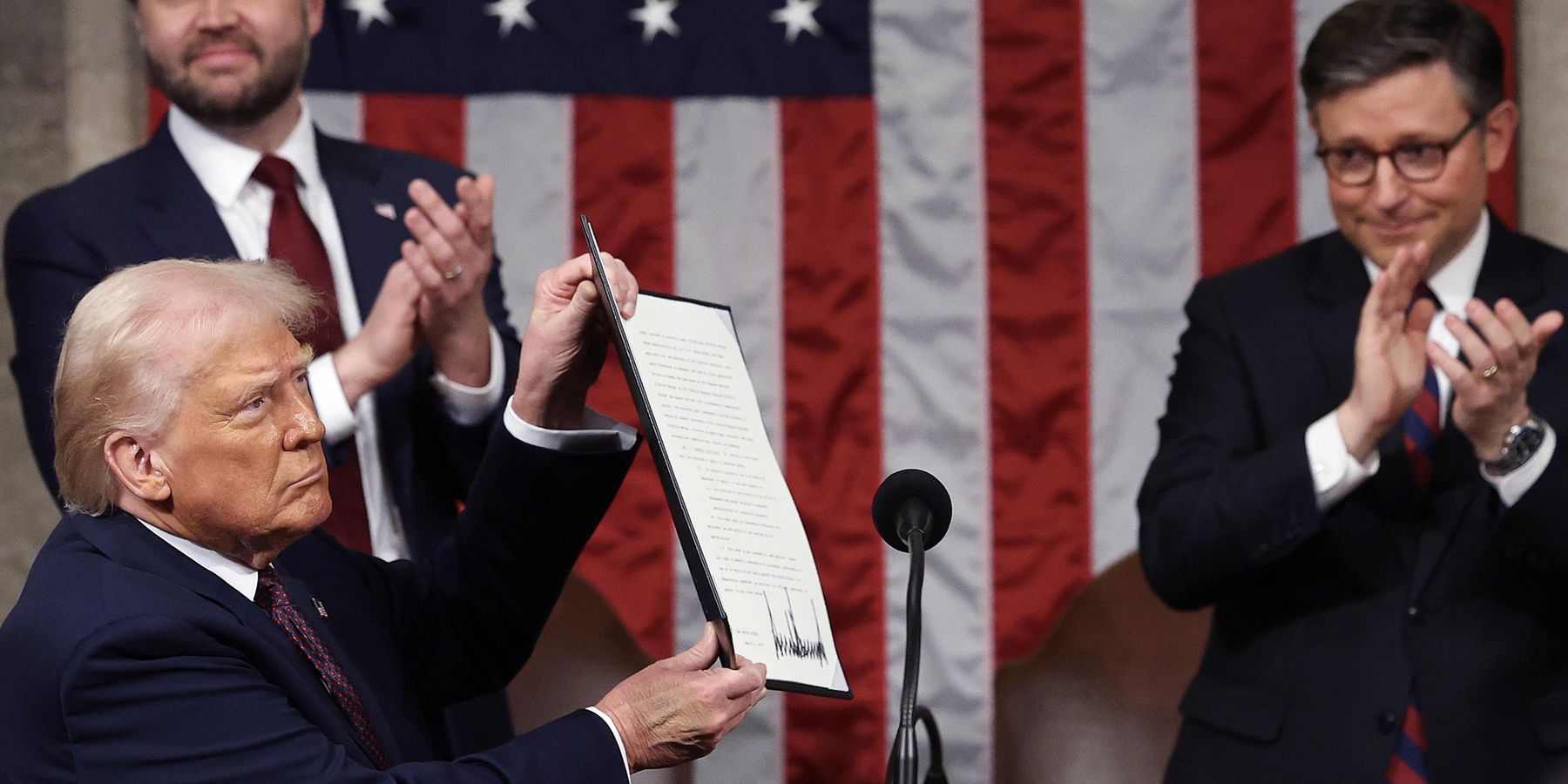
Vague faces, permanent smiles and obedient applause indicate the degree that the majority party has lost its grip and become eunuchs in the thrall of presidential domination.
A president is never truly checked by the minority party other than through elections. Meaningful checks and balances require the president’s party to stand up to and resist unconstitutional usurpations of power.
Until that happens, the dangerous precedent of unlimited, war-making power will continue to be abused by Presidents of both parties.This article was adapted with permission from Senator Rand Paul's floor speech on January 7, 2026. See here:
- Senate vote to exert war powers over Trump fails ›
- Rand Paul to Trump: Don't 'abandon' MAGA over Maduro regime change ›