
Follow us on social

google cta
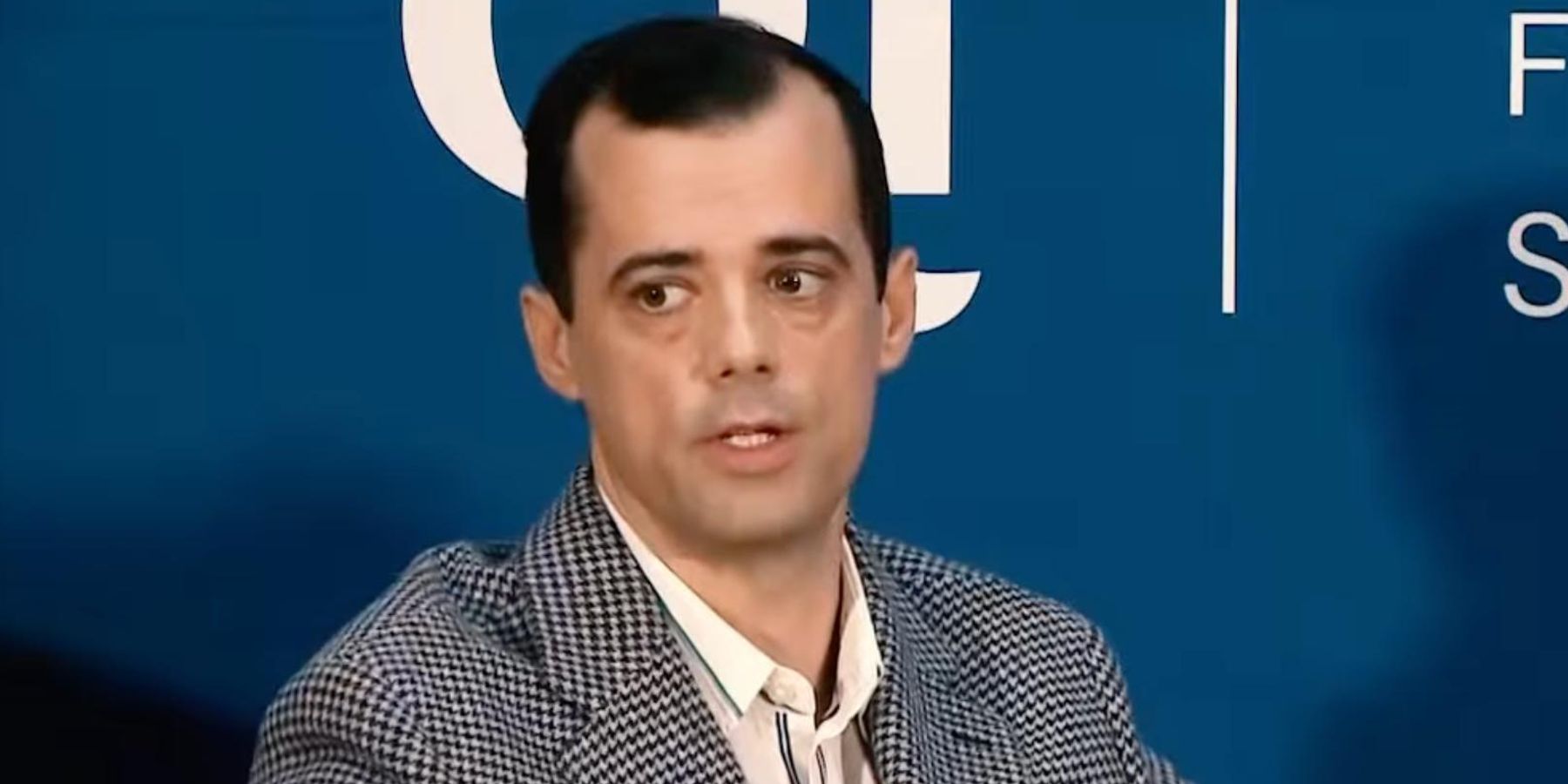
Seth Harp

Congress subpoenas journalist for sharing name of Venezuela op commander

The highly unusual move sparked outrage among press freedom advocates

Reporting | QiOSK
google cta
google cta

The House Oversight Committee voted to drag investigative journalist Seth Harp before Congress after he revealed the identity of a commander of Delta Force, the U.S. military special operations group that led the mission to abduct Venezuela’s president on Saturday.

“He should be held accountable for potentially leaking classified information and doxxing service members, potentially putting their lives and their family members at jeopardy by narco terrorists,” argued Rep. Anna Paulina Luna (R-Fla.), who sponsored the motion to subpoena Harp.

During a Wednesday mark-up, Rep. Robert Garcia (D-Calif.) amended Luna’s motion in order to include subpoenas for the executors of Jeffrey Epstein’s estate, bolstering support for the move among Democrats. The final measure passed the Oversight Committee with near unanimous approval in a voice vote.

Harp, who recently wrote a best-selling book about illegal activities carried out by Delta Force, vigorously contested the claim that he “doxxed” the commander, noting on X that his post, which contained a screenshot of a publicly available page about the officer, did not include “any personally identifying information about him.”

X forced Harp to remove the post in order to prevent the suspension of his account on the platform. When RS attempted to search the commander’s name on X, no results appeared, suggesting that the site is removing all posts that reveal his identity.

“It's pointless to try to educate these people on the law, but a civilian can't ‘leak classified intel,’” Harp wrote on X. “Those restrictions only apply to government employees.”

Press freedom groups were quick to condemn the decision to subpoena Harp, characterizing the move as an attack on the media as a whole. “Reporters have a constitutional right to publish even classified leaks as long as they don’t commit crimes to obtain them,” said Seth Stern of the Freedom of the Press Foundation. “Harp merely published information that was publicly available about someone at the center of the world’s biggest news story.”

Chip Gibbons, the policy director at Defending Rights & Dissent, said the subpoena is “clearly designed to chill and intimidate a journalist doing some of the most significant investigative reporting on U.S. Special Forces.”

Luna’s “own statement makes clear that far from having a valid legislative purpose, she seeks to hold a journalist ‘accountable’ for what is essentially reporting she dislikes,” Gibbon argued. “Harp did not share classified information about the U.S. regime change operation in Venezuela. And even if he had, his actions would firmly be protected by the First Amendment.”

Harp’s decision to publish the name of the Delta Force commander drew sharp backlash from many right-wing pundits, who argued that the post put the commander at risk. Harp, in response, made the case that the public has a right to know who is involved in major military operations abroad.

In 2024, the House voted unanimously to pass a bill that would have prevented Congress from issuing subpoenas to journalists for their reporting, but the Senate declined to vote on the bill after President Donald Trump lambasted it in a post on Truth Social.

The Quincy Institute, which publishes RS, hosted Harp in October of last year for a discussion of his book, The Fort Bragg Cartel.


Top photo credit: Seth Harp in 2025 (Quincy Institute/You Tube Screengrab)
google cta
Reporting | QiOSK
US trashed Somalia, can we really scold its people for coming here?
Top image credit: A woman walks past the wreckage of a car at the scene of an explosion on a bomb-rigged car that was parked on a road near the National Theatre in Hamarweyne district of Mogadishu, Somalia September 28, 2024. REUTERS/Feisal Omar

US trashed Somalia, can we really scold its people for coming here?

Africa

The relatively small Somali community in the U.S., estimated at 260,000, has lately been receiving national attention thanks to a massive fraud scandal in Minnesota and the resulting vitriol directed at them by President Trump.

Trump’s targeting of Somalis long preceded the current allegations of fraud, going back to his first presidential campaign in 2016. A central theme of Trump’s anti-Somali rancor is that they come from a war-torn country without an effective centralized state, which in Trump’s reasoning speaks to their quality as a people, and therefore, their ability to contribute to American society. It is worth reminding ourselves, however, that Somalia’s state collapse and political instability is as much a result of imperial interventions, including from the U.S., as anything else.

keep readingShow less
DC Metro ads
Top image credit: prochasson frederic via shutterstock.com

War porn beats out Venezuela peace messages in DC Metro

Military Industrial Complex

Washington DC’s public transit system, the Washington Metropolitan Area Transit Authority (WMATA), is flooded with advertisements about war. Metro Center station, one of the city’s busiest stops, currently features ads from military contractor Applied Intuition bragging about its software’s ability to execute a “simulated air-to-air combat kill.”

But when an anti-war group sought to place an ad advocating peace, its proposal was denied. Understanding why requires a dive into the ongoing battle over corruption, free speech, and militarism on the buses and trains of our nation’s capital.

keep readingShow less
Putin Trump
Top photo credit: U.S. President Donald Trump and Russian President Vladimir Putin hold a bilateral meeting at the G20 leaders summit in Osaka, Japan June 28, 2019. REUTERS/Kevin Lamarque
What can we expect from a Trump-Putin meeting

Trump on New Start nuke treaty with Russia: if 'it expires it expires'

Global Crises

As the February 5 expiration date for New START — the last nuclear arms control treaty remaining between the U.S. and Russia — looms, the Trump administration appears ready to let it die without an immediate replacement.

"If it expires, it expires," President Trump said about the treaty during a New York Times interview given Wednesday. "We'll just do a better agreement."

keep readingShow less
google cta
Want more of our stories on Google?
Click here to make us a Preferred Source.

LATEST

QIOSK

Newsletter

Subscribe now to our weekly round-up and don't miss a beat with your favorite RS contributors and reporters, as well as staff analysis, opinion, and news promoting a positive, non-partisan vision of U.S. foreign policy.