


I spent the last few weeks asking experts about the foreign policy books that stood out in 2025. My goal was to create a wide-ranging list, featuring volumes that shed light on the most important issues facing American policymakers today, from military spending to the war in Gaza and the competition with China. Here are the eight books that made the cut.
The Fort Bragg Cartel

By Seth Harp
There is a convenient fiction in American politics that war can be kept at arm’s length — that what happens in Kandahar can stay in Kandahar. “The Fort Bragg Cartel” is a page-turning, hair-raising refutation of that myth.
In his hit book, investigative journalist Seth Harp dives deep into a series of mysterious and often gruesome deaths at Fort Bragg, the headquarters of the U.S. military’s special forces. His investigation reveals that, during the War on Terror, the base became a hotbed of criminal activity, where a “cartel” of America’s most elite soldiers used their skills to traffick drugs, smuggle weapons, and kill anyone who stood in their way.
For Harp, the driving force behind this scandal is clear: Decades of brutal conflict, coupled with a culture of impunity, have led to a moral rot in America’s armed forces. The book doesn’t suggest a solution for this sorry situation. But it does offer a searing and highly readable account of the challenge before us.
(The Fort Bragg Cartel happens to be the only book that both RS and the New Yorker put on their respective books-of-the-year lists; we’ll let Harp decide which is the bigger honor.)
The Collapse of Venezuela
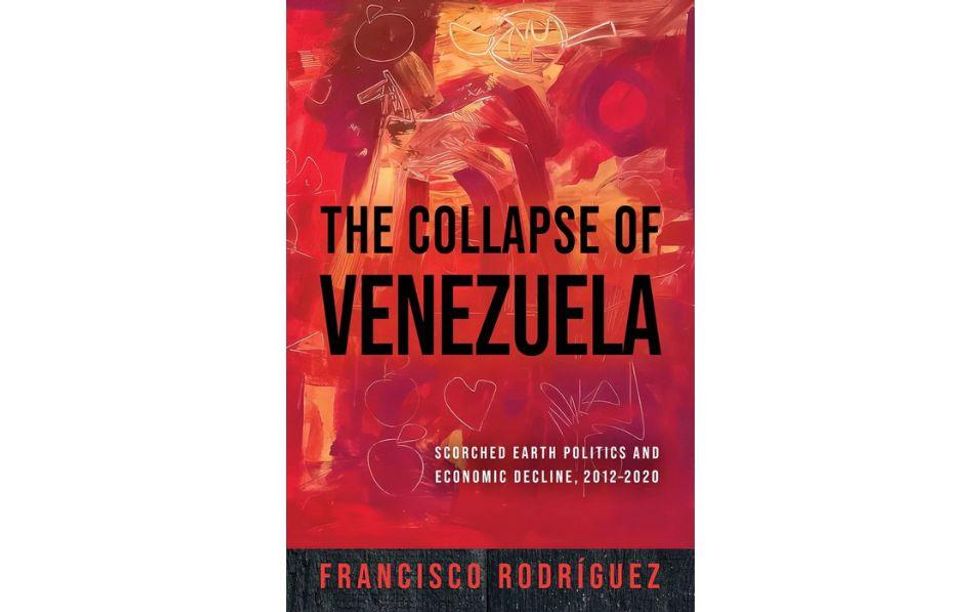
By Francisco Rodriguez
In 2012, Venezuela had a gross domestic product of $372 billion. In 2025, that had fallen all the way to $109 billion — a roughly 70 percent contraction in a little more than a decade. So what went wrong?
In “The Collapse of Venezuela,” Francisco Rodriguez, the former chief economist of Venezuela’s national assembly, offers a novel and insightful account of one of the most remarkable economic and political breakdowns in recent history. Rodriguez frames the problem as one of winner-take-all politics: Both the Maduro regime and the opposition, in jockeying for control of the all-powerful executive, carried out scorched-earth strategies aimed more at crushing their enemies than improving the lives of Venezuelans. For President Nicolas Maduro, this meant ratcheting up repression, and for the opposition, it meant backing an extraordinarily harsh regime of American sanctions.
Rodriguez’s book, which includes a blueprint for major institutional reforms, is essential reading as the U.S. steps up its efforts to oust the Maduro regime, with little apparent planning for what might come next.
The Trillion Dollar War Machine
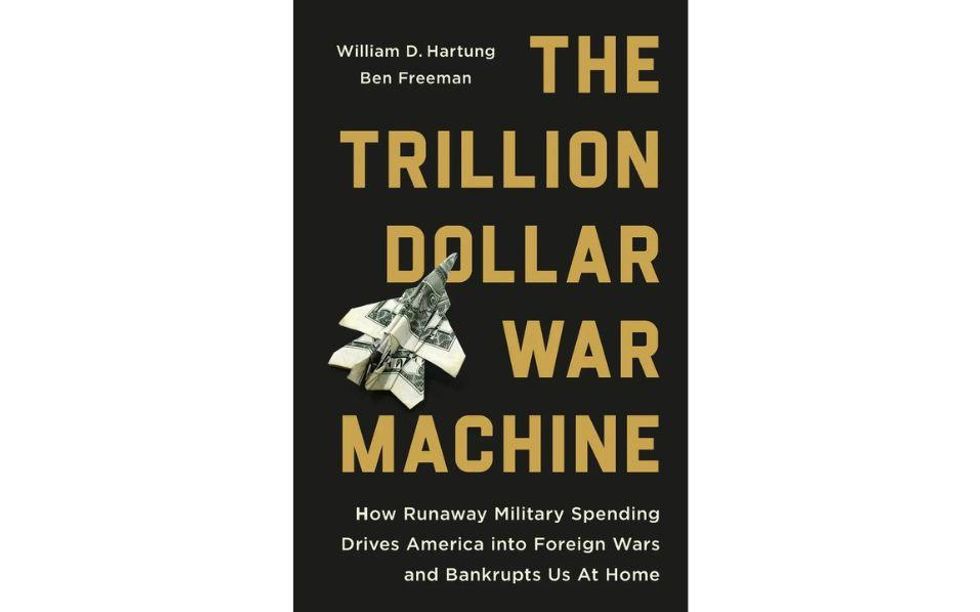
By William D. Hartung and Ben Freeman
It’s almost impossible to imagine a trillion dollars. In $1 bills, a trillion-dollar stack would wrap around the Earth 2.7 times. In $100 bills, it would stretch from Milwaukee all the way down to Atlanta. So how in the world does the U.S. military manage to spend this vast sum each year?
“The Trillion Dollar War Machine,” by Ben Freeman and William Hartung, is an invaluable attempt to answer this question. Freeman and Hartung provide a forensic look into the network of weapons makers, lobbyists, officials and politicians who have conspired to pour an ever-growing amount of taxpayer money into their own pockets (and campaign coffers). The book argues that all this investment in defense makes America less safe by increasing the incentive to enter costly wars abroad; to paraphrase Madeleine Albright, what's the point of having a massive military if we can't use it?
For those looking to break out of this cycle, Freeman and Hartung offer an incisive look at America’s military-industrial complex — and a clear roadmap for reigning it in. (Note: Both Freeman and Hartung work at the Quincy Institute, which publishes RS.)
First Among Equals
By Emma Ashford
American foreign policy hands agree that the post-Cold War unipolar moment, in which the U.S. bestrode the world like a colossus, is coming to an end. But few have seriously grappled with what that means for U.S. foreign policy.
In “First Among Equals,” Emma Ashford of the Stimson Center charts a path for a practical approach to an increasingly multipolar world — one that tries not to reshape the world order but to advance U.S. interests within it. Her proposed strategy of “realist internationalism” holds, among other things, that the U.S. should dramatically pare back its military presence in Europe in order to better focus on the balance of power in Asia. But this doesn’t mean a complete retreat from the rest of the world. Instead, Ashford argues that any military retrenchment should be accompanied by a doubling down on trade and diplomacy.
All in all, the book is a readable guide for navigating an increasingly tumultuous world. An ambitious reader may peruse it alongside the Trump administration’s recently released National Security Strategy, which defines its approach as “realistic without being ‘realist.’”
From Apartheid to Democracy
By Michael Schaeffer Omer-Man and Sarah Leah Whitson
The book sprang from a chance encounter. On a four-hour train ride from New York to Washington, DC, human rights activist Sarah Leah Whitson happened to sit next to a lobbyist from the American Israel Public Affairs Committee (AIPAC), and a heated debate over Israel-Palestine ensued. “Mr. AIPAC,” as Whitson calls him, concluded the discussion with a pointed question: “What’s your solution?”
“From Apartheid to Democracy” is Whitson’s answer. In the sweeping-yet-slim volume, Whitson and her co-author, journalist Michael Omer-Man, lay out an ambitious plan to transform the “undemocratic one-state reality into a democratic one,” with a focus on securing equal rights for all Israelis and Palestinians.
The book doesn’t claim to offer all the answers. Whitson and Omer-Man acknowledge that their plan could only be implemented after a dramatic shift in how Israelis view Palestinians, and they leave most of the details to the roughly 15 million people who live between the Jordan River and the Mediterranean Sea. But these caveats do little to undermine the boldness of their work. By offering a plan of their own, Whitson and Omer-Man are daring other analysts to reevaluate how they view the conflict — and maybe even propose some new ideas of their own.
Devils’ Advocates
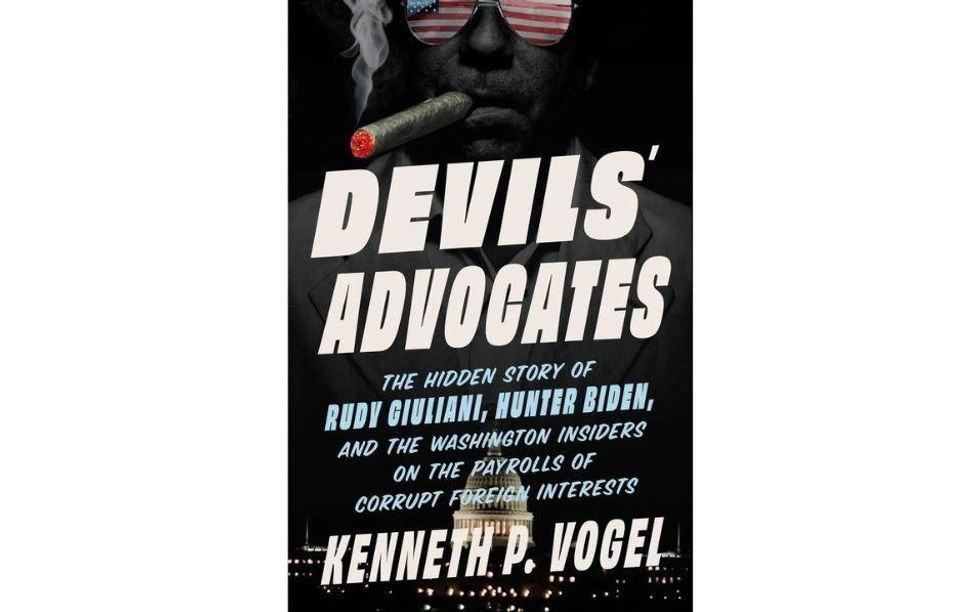
By Kenneth P. Vogel
There are a lot of ways to make money in D.C. But few are more controversial, or more lucrative, than lobbying on behalf of foreign powers.
In “Devils’ Advocates,” investigative journalist Kenneth Vogel takes readers on a ride through the seedy underworld of foreign influence in Washington. Hunter Biden and Rudy Giuliani receive title billing, but the true star is Robert Stryk, who openly claims to have “helped fix an election in a very important African country based upon U.S. interests.” Stryk alone earned some $19 million during the first Trump administration for lobbying on behalf of authoritarian states like Bahrain and Saudi Arabia — lobbying that helped ensure that American weapons kept flowing to these countries.
Were Stryk and his companions’ efforts necessary for securing the interests of these foreign powers? It’s hard to say, given the many factors that go into any political decision. But foreign states certainly think the lobbyists are worth the dough. “Such ambiguity and confusion about influence and deliverables is a defining feature of foreign lobbying, and it serves all involved,” Vogel writes. “Devils’ Advocates” is an essential book for the second Trump administration, in which Attorney General Pam Bondi, a former lobbyist for Qatar, is now in charge of deciding when foreign influence crosses from unseemly to illegal.
Retrench, Defend, Compete
By Charles L. Glaser
Since 1979, American policy toward Taiwan has rested on a policy of “strategic ambiguity,” whereby U.S. policymakers refuse to say whether they would defend the island nation from a Chinese invasion. In his provocative new book, political scientist Charles Glaser argues that it’s time for a new strategy — one based on a clear declaration that the U.S. will not start World War III over Taiwan.
“Retrench, Defend, Compete” offers policymakers a practical roadmap for a strategy that protects U.S. interests in East Asia while removing China’s biggest complaint about America’s presence in the region. Glaser writes that, even as the U.S. pulls back from militarily defending Taiwan, it should deepen its commitment to its treaty allies in the region, like South Korea and Japan. For Glaser, such an approach is crucial to ensuring U.S. credibility in the region, putting Washington on a stronger defensive footing and dramatically reducing the risk of catastrophic war.
Tomorrow Is Yesterday
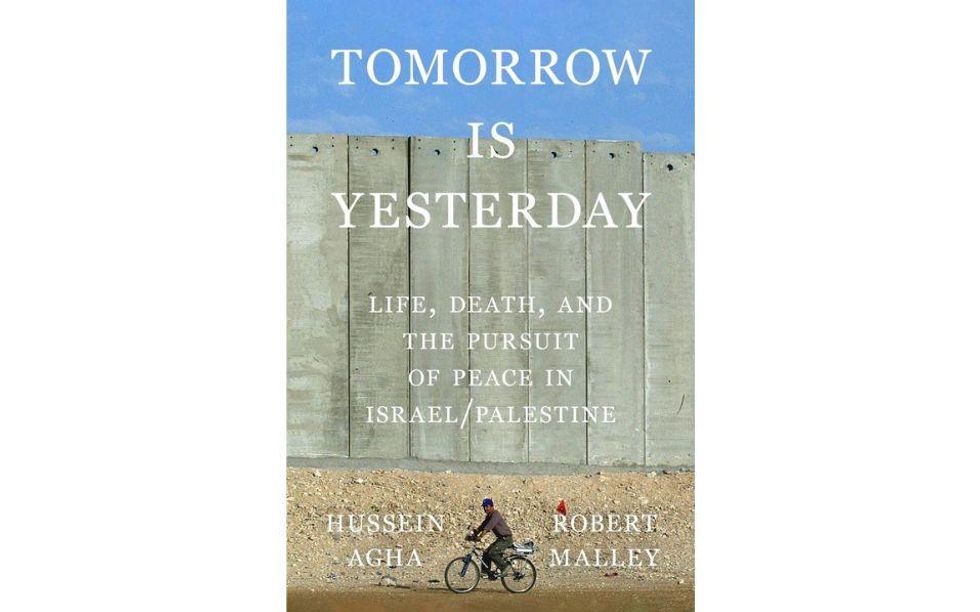
By Hussein Agha and Robert Malley
For three decades, world leaders have insisted that a two-state solution, based on a pair of documents quietly negotiated in Oslo in the 1990s, is the only way to end the Israel-Palestine conflict. “Tomorrow is Yesterday” reveals the corrosive nature of this diplomatic fiction.
Written by former advisers to American and Palestinian negotiating teams, the book provides a uniquely balanced look at this failure. Hussein Agha and Robert Malley reserve most of their scorn for the U.S. and its “pernicious” approach to the conflict, which casts aside the dueling historical narratives of Israelis and Palestinians in favor of “fables” about the inevitability of a two-state solution. Agha and Malley argue that the U.S. chose time and again to double down on a delusional policy, which rested on the false premise that a deal could be reached through technocratic negotiations that included secular elites at the expense of more complex characters, like Palestinian Islamists and Israeli settlers.
The book’s most important contribution is its powerful rebuke of the idea that conflict can be solved through technocratic deal-making. As my colleague Khaled Elgindy wrote in a review for Foreign Policy, the book is “a treatise on the importance of empathy—not simply in moral terms but, perhaps more crucially, as a practical and analytical tool essential for successful diplomacy and statecraft.”