

The economic costs of the U.S. and Israel’s decision to start a war with Iran have already reverberated throughout the international economy. Oil prices rose, the stock market fell, and U.S. mortgage rates jumped sharply, raising the cost to buy a home for Americans. Unsurprisingly, public opinion polls have found that Americans are resoundingly opposed to Trump’s Iran war.
Yet, one sector has profited massively from the devastating conflict: Pentagon contractors. Arms supplier stocks as a whole rose 1.5% on Monday, but the largest Pentagon contractors and the contractors with the greatest stake in the conflict saw their share prices rise even more.
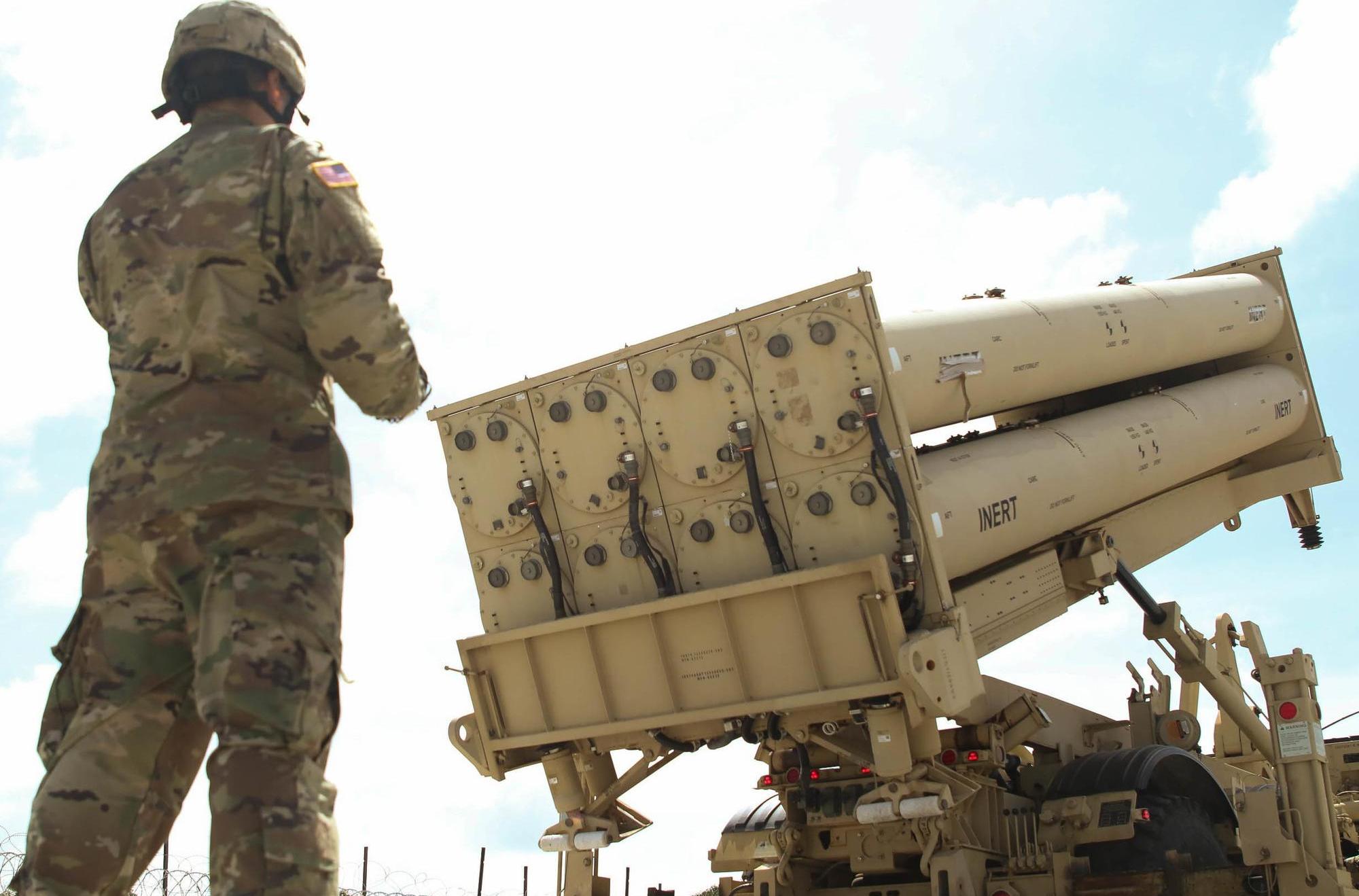
Lockheed Martin — the largest Pentagon contractor, which regularly receives more taxpayer dollars than the entire State Department — saw its stock price rise 3.4% Monday. Since the beginning of 2026, Lockheed’s stock price has increased nearly 40%, as tensions between the U.S. and Iran grew. Lockheed makes the THAAD system which has been used to intercept Iranian missiles. In January, Lockheed Martin signed a deal with the Pentagon to quadruple production of the THAAD interceptors — which each cost $12.77 million — from 96 to 400 per year.
RTX (previously Raytheon) stock rose 4.7% in the first day of trading since the Iran war began. RTX makes the Patriot radar and ground systems (Lockheed makes the $4 million Patriot missiles the system fires) that have been widely used in the conflict, which cost as little as $250,000. Multiple Patriot missiles are sometimes used to intercept every Iranian missile. In one case, for example, 11 Patriot missiles were reportedly used to intercept just one Iranian missile.
Of all the major Pentagon contractors, Boeing saw its share price rise the least on Monday, inching up just 1%. This relatively limited, though still sizable, gain is at least partially explained by the firm being the only major Pentagon contractor that does not derive a majority of its revenue from the Defense Department. The firm does, however, make the F-15 EX fighter jet, three of which crashed after being accidentally attacked by Kuwait’s air defense system. The cost of those three jets alone was around $300 million.
The biggest winner on Wall Street yesterday was Northrop Grumman, whose share price rose a remarkable 6%, increasing the company's market value by billions of dollars in just one day of trading. Northrop’s B-2 Stealth Bombers were used in the recent Iran strikes, as well as in the strikes on Iran six months ago. The B-2s cost taxpayers around $2 billion to buy and more than $150,000 per hour to fly.
U.S. weapons makers certainly weren’t alone in cashing in on the conflict. European defense companies, like BAE Systems, Saab, and Thales also saw their market value soar.
For investors and stock analysts, this was all to be expected. After all, the ticker for the global defense sector ETF is literally “War”.
As Jonathan Siegmann, a market analyst at the firm Stifel, succinctly explained to clients Monday, “Defense spending was already set to surge in 2026 and a protracted war with Iran will make the spending more urgent and less controversial.” As Marketwatch summed up the financial markets’ zeal for firms that will profit from the Iran war: “war can be good for business.”
The greatest threat to investors in these firms? Peace. When peace talks begin during prolonged conflicts, investors in defense firms tend to sell, as they did late last year when Russia, Ukraine, and the U.S. were in peace talks. But investment analysts are confident there’s no imminent threat of peace breaking out soon in the current Iran conflict. “Given the U.S. has assembled the largest set of military assets since the 2003 invasion of Iraq, we anticipate this conflict will be unfortunately more extended and violent than we have seen in recent years,” Siegmann said Monday.
In short, while more than 100 children were murdered in a strike on an Iranian school and the number of U.S. service members killed in the conflict continues to climb, war profiteering has a bright future ahead.
- Weapons stocks blast off as bombs drop, troops invade Lebanon ›
- Israel's wars mean 'massive' returns for US arms company investors ›
- Prediction markets are a national security threat | Responsible Statecraft ›
- Lockheed's new Pentagon deal makes a bad bargain worse | Responsible Statecraft ›
- Five outrageous ways defense contractors have buttered up Trump | Responsible Statecraft ›
- Trump acquired at least $10 million in defense stocks last year | Responsible Statecraft ›