

Why and how did three American military personnel get killed in Syria?
The first reason is that the U.S. has had a military presence in Syria for nearly a decade as its contribution to the international campaign to uproot the Islamic state from Iraq and Syria, or D-ISIS. The number of troops in Syria has ebbed and flowed over the years, reaching 2,000 at its height during the Biden administration from about 900 earlier in the campaign.
Officials from different administrations have discussed a range of missions apart from the hunt for ISIS. The first was to block the notorious, so-called land corridor connecting Iraq to Lebanon through which Iran was funneling supplies to its proxies in Syria and Hizballah in Lebanon. This mission, mainly conducted from U.S. installations in southeast Syria, lost its relevance with the collapse of the Assad regime and Iran's subsequent loss of access to Syria owing to the hostility of the new regime in Damascus. Another was to weaken the Assad regime by exercising physical control over oil fields and reinforcing the Kurds’ autonomy in the northeast.
Recently, the new Syrian government formally signed on to the D-ISIS campaign and a mechanism for coordinating its participation in ongoing D-ISIS plans and operations was set up within Syria. Thus, Syrian and American military and security officials entered into direct contact.
The Americans were killed by an Islamist militant during a meeting between U.S. and Syrian personnel. Why were they drawn from the National Guard and not highly trained regular forces? Probably because U.S. regular forces are stretched thin and in recent months, the security situation has been relatively quiet. So, to carry out routine military tasks and leaving high intensity operations, such as raids or risky reconnaissance missions or aggressive patrolling to special operators, the regional commander opted for or acquiesced in a National Guard detachment. It is also possible that the National Guard personnel were such operators, but the National Guard reddit site does not suggest this. That's the ground level reason the Americans lost their lives.
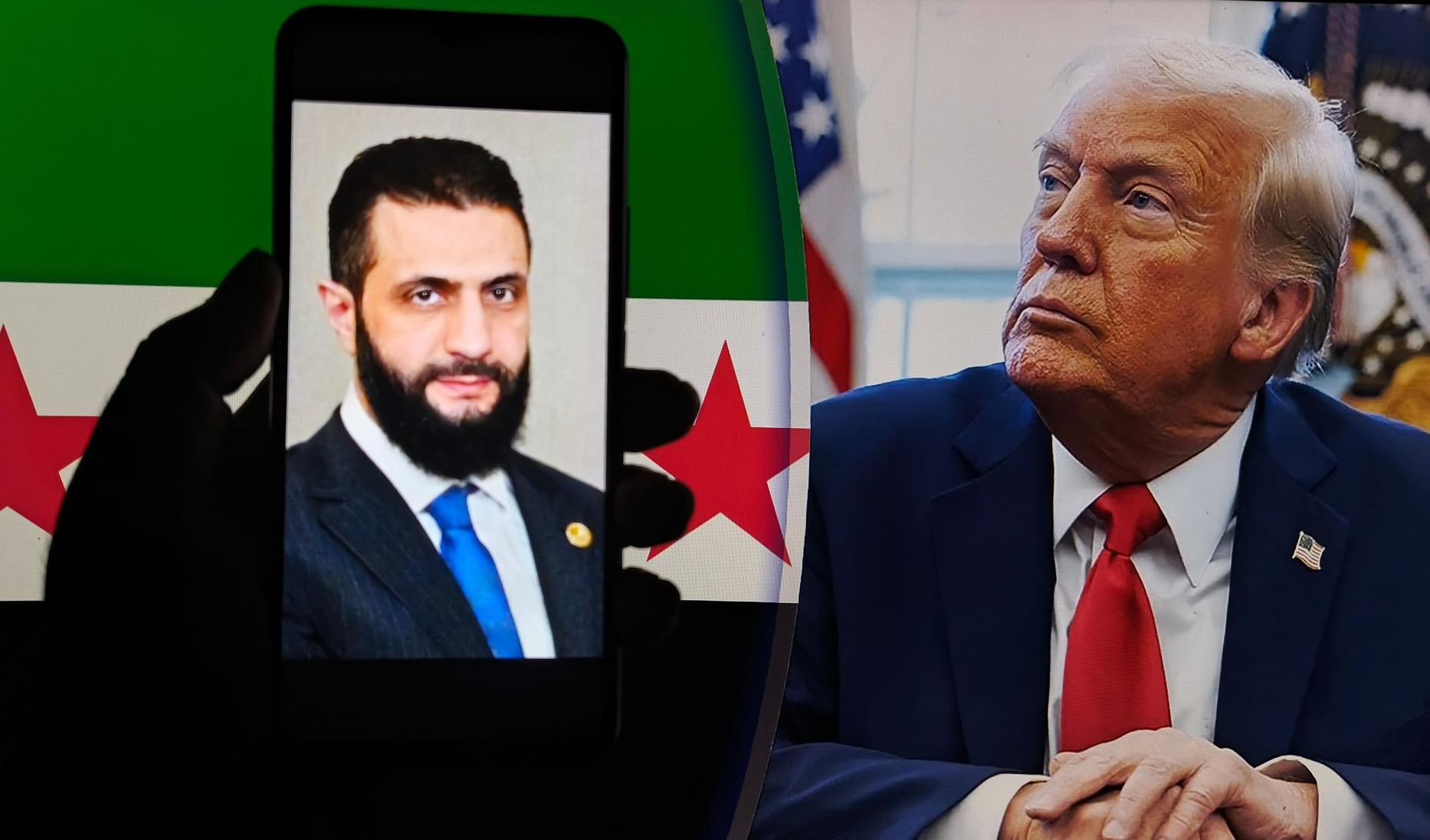
From a somewhat higher altitude, they were killed because of a combination of strategic interest, as envisaged by the Trump administration, and Syrian politics as they emerged from the Assad era. When Syrian interim president Ahmed al-Sharaa led the coalition forces of Hayat Tahrir al-Sham (HTS) out of its home ground of Idlib governate in northwestern Syria, he was at best the first among equals. His coalition encompassed perhaps as many as 120 smaller groups with their own weapons, fighters and financial interests. These groups elected Sharaa as their political leader, but they did not confer coercive authority on him or HTS. These groups had their entrenched interests and objectives and by electing Sharaa, had no intention of abandoning them.
Recalling that the movement spilling out of Idlib in December 2024 was Islamist and shaped by a brutal civil war they waged as jihadists, and bearing in mind their isolation and provincialism within a state that was already cut off from the world, their preference for a strictly conservative and xenophobic Islamic state should come as no surprise. Yet the leader they elected has acted in profoundly transgressive ways in relation to this perspective.
Paying court to the U.S. president at the White House as a supplicant, negotiating directly with Israel and talking about the possibility of normalization even as Israel occupied Syrian territory, failing to crack down on heterodox minorities within Syria; all these things raise questions in Jihadist eyes about Sharaa's rule. The fact that the new army — the old one had been dissolved almost immediately — and the security services are now composed of Islamist militants from Idlib explains how and why they are permeated by hardened fighters who are more than a bit irritated by the direction Sharaa is trying to take the country. This is why the killer was on that rooftop in Palmyra with a machine gun on the fateful day.
As for the administration strategy's role in the arrival of those National Guard personnel in line of sight from the rooftop: the United States has never cared very much about Syria except for its pivotal role in the Arab-Israeli peace process in a bygone era. Syria was on the enemy side during the Cold War and before then had been a French mandate. It is true that the Obama administration launched a vast program to arm and train the opposition to Bashar Assad, it petered out under Trump, who shuttered it 2017. Trump had observed on social media that Syria's problems were not America's. He has also sought to draw down U.S. forces in Syria, but the Pentagon was unconvinced, even after Trump fired his defense secretary, Jim Mattis, over the latter's insistence on keeping troops in Syria. Trump's view repudiated the belief in Washington that a unified and stable Syria would prevent the kind of predatory international maneuvering within a weak state, which might prove destabilizing to the region as a whole.
Donald Trump's courtship of Saudi Crown Prince Muhammad bin Salman led him to reverse his skepticism about U.S. involvement in Syria. The crown prince considers Syria to be in his kingdom's sphere of influence and is unhappy with Turkey's significant ties to Sharaa and its penetration of Syria. He therefore enlisted Trump in exchange for arms and a great deal of money for his family to reverse the U.S. stance on Syria, suspend and ultimately end sanctions on Syria so that Saudis and others could invest, and back Sharaa's controversial and potentially explosive insistence on centralized rule.
This reversal of fortune had implications for the D-ISIS campaign, which the administration is probably still working out. It was expected that least some of the Islamist hardliners in Syria would be gunning for Sharaa and understood that — to the extent Sharaa was now Washington's man — the D-ISIS campaign was also the Sharaa survival campaign.
The convergence of these factors in Palmyra led to the killing of the National Guardsmen providing force protection for the U.S. team scheduled to meet their Syrian counterparts in the desert city on that sad day. It was not mission creep at all, just the mission.
- Why are US National Guardsman getting killed in Syria? ›
- US troops should have left Syria and Iraq long ago ›