
Follow us on social

google cta
Africa trade

House passes sweeping ‘duty free’ pact for African imports

This is one of those rare measures in which the Trump administration is supporting tax breaks, not tariffs, for the Global South

Reporting | QiOSK
google cta
google cta

Yesterday, the House of Representatives passed a bill that would extend the African Growth and Opportunity Act (AGOA) for three years, through the end of 2028. Known as the AGOA Extension Act, the bill was introduced in the House by Representative Jason Smith (R-Mo.) in early December. It passed the House with wide bipartisan support, with 340 members voting in favor and 54 opposed.

AGOA — a preferential trade agreement between the United States and certain eligible countries in sub-Saharan Africa — allows over 1,800 products from these countries to enter the United States duty free, including in the leading African export industries of textiles and oil. It was last renewed in 2015 for 10 years, and expired at the end of September 2025.

The bill, which would offer qualifying products that have been imported since AGOA’s expiration retroactive tariff benefits, now heads to the Senate. If passed there, it will arrive at President Trump's desk for him to sign into law. Although the president has largely opposed free and preferential trade deals that provide tariff benefits for non-Americans, the president has come out in support of short-term AGOA renewal while debates take place over the agreement’s details and its long-term future.

Smith’s bill was the second of two introduced last year seeking to extend AGOA. The other was introduced by Senator John Kennedy (R-La). Though mostly similar to Smith’s bill, Kennedy’s included a provision that would mandate a review of the United States’ bilateral relationship with South Africa. This follows on last year’s rift between President Trump and South African President Cyril Ramaphosa, during which Trump accused the South African government of expropriating land from white South Africans without fair compensation as well as failing to stop a genocide against the country’s white population, for which there is no evidence.

Originally passed by Congress in 2000 and signed into law by President Clinton, AGOA’s success has been debated in recent years amid questions about what an AGOA renewal should look like, or even if it should be renewed at all. The preferential trade deal has largely failed to meet the heavy expectations placed upon it in its early years, evinced in part by the fact that exports from Africa to the United States have failed to increase substantially in the two-and-a-half decades since the agreement’s inception.

But AGOA remains the United States’ most visible effort to support Africa’s economic goals. In a world of great power competition, with the Chinese investing heavily in China’s trade and infrastructure development, losing AGOA would signal further American retreat from a continent questioning the United States’ commitment as a partner. Since Trump took office, he has frustrated many Africans by shuttering the United States Agency for International Development, implementing widespread tariffs (some of which apply to goods that would otherwise enter the U.S. duty free through AGOA), and instituting a travel ban, which bans or restricts travel to the United States from 26 African countries.


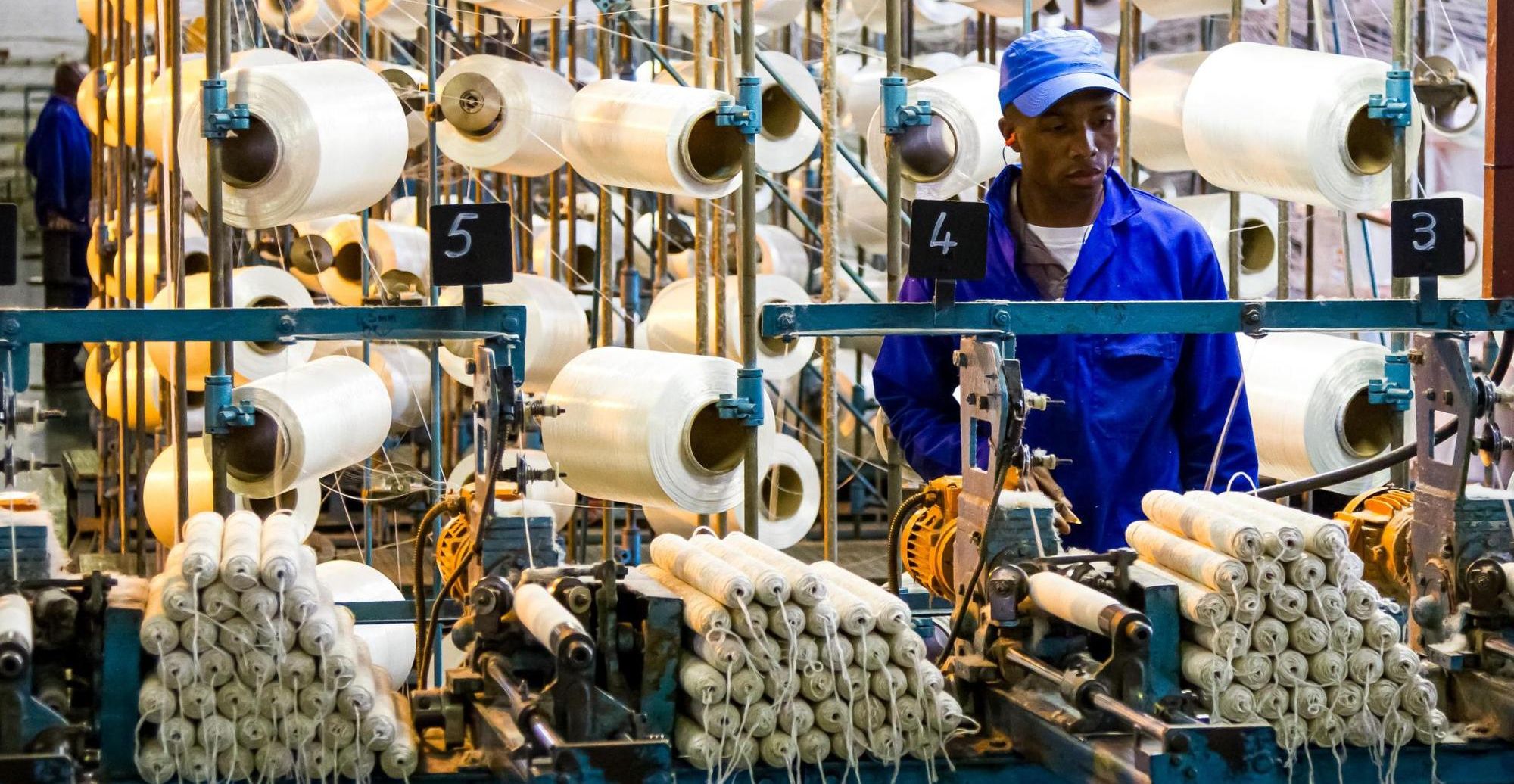
Top photo credit: Factory worker on a copwinder weft assembly line loom in South Africa. (shutterstock/sunshine seeds)
google cta
Reporting | QiOSK
Trump will be sore when Cuba domino refuses to fall
Top photo credit: President Trump and Secretary of State Marco Rubio at White House meeting oof oil executives in wake of the Venezuela invasion Jan. 9, 2026 (Reuters/Evelyn Hockstein); A man carries a photo of Fidel Castro in Revolution Square , Havana, the day after his death in 2016 (Shutterstock/Yandry_kw)

Trump will be sore when Cuba domino refuses to fall

Latin America

Of the 100 or more people killed in the U.S. military operation that abducted Venezuelan President Nicolás Maduro and his wife Cilia Flores, 32 were Cuban security officers, most of them part of Maduro’s personal security detail who died “in direct combat against the attackers,” according to Havana.

How did Cubans come to be the Praetorian Guard for Venezuela’s president, and what does the decapitation of the Venezuelan government mean for Cuba?

keep readingShow less
Sheikh Mohammed bin Zayed al-Nahyan and Saudi Crown Prince Mohammed bin Salman
Top photo credit: UAE President Sheikh Mohammed bin Zayed al-Nahyan receives Saudi Crown Prince Mohammed bin Salman at the Presidential Airport in Abu Dhabi, United Arab Emirates November 27, 2019. WAM/Handout via REUTERS

Is the Saudi-UAE rivalry heading for more violence?

Middle East

On January 7, Saudi-backed forces established control over much of the former South Yemen, including Aden, its capital, reversing gains made by the UAE-backed Southern Transitional Council (STC) in early December.

Meanwhile, the head of the STC, Aidarous al-Zubaidi, failed to board a flight to Riyadh for a meeting with other separatists: he seems to have fled to Somaliland and then to Abu Dhabi. The STC is a secessionist movement pushing for the former South Yemen to regain independence. The latest turn of events marks a major setback to the UAE’s regional ambitions.

keep readingShow less
Monroe Doctrine
Top photo credit: Political cartoon depicting Uncle Sam as a large rooster protecting smaller roosters—Latin American countries—and Europe “cooped up” by the Monroe Doctrine. Library of Congress, Artist J.S. Pugh 1901

Nostalgia isn't strategy: Stop the Monroe revisionism and listen

Latin America

“[T]herefore you may rest assured that if the Nicaraguan activities were brought to light, they would furnish one of the largest scandals in the history of the country.”

Such was the concluding line of a letter from Marine Corps Sergeant Harry Boyle to Idaho Senator William Borah on April 23, 1930. Boyle’s warning was not merely an artifact of a bygone intervention, but a caution against imperial hubris — one newly relevant in the wake of “Operation Absolute Resolve" in Venezuela.

keep readingShow less
google cta
Want more of our stories on Google?
Click here to make us a Preferred Source.

LATEST

QIOSK

Newsletter

Subscribe now to our weekly round-up and don't miss a beat with your favorite RS contributors and reporters, as well as staff analysis, opinion, and news promoting a positive, non-partisan vision of U.S. foreign policy.