

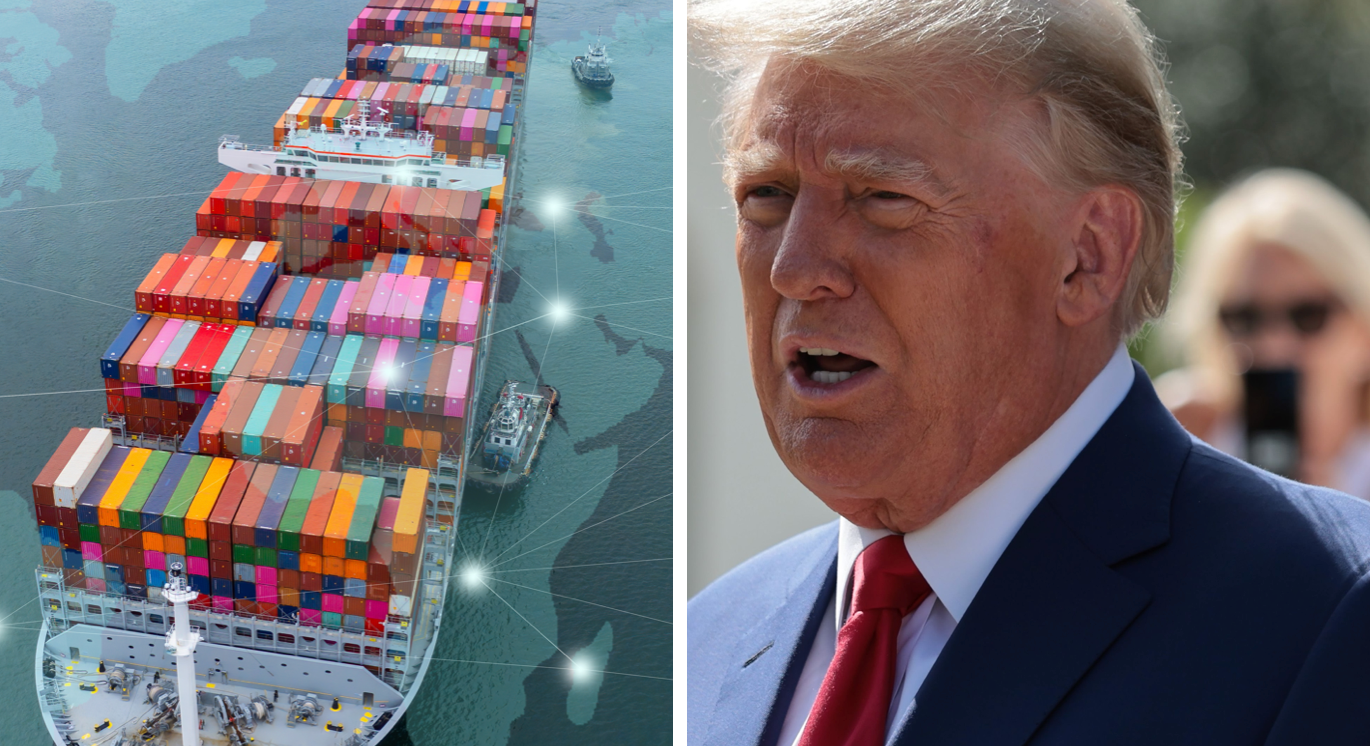
In an unexpected move, the Trump administration has announced publicly that it supports renewing the African Growth and Opportunity Act (AGOA) for one year, and is interested in considering entering discussions on the long-term renewal of AGOA.
AGOA, which expired on September 30, was originally passed by Congress in 2000 and signed into law by President Bill Clinton. The legislation allows sub-Saharan African countries duty-free access to American markets, and gives the U.S. president the power to suspend countries that he believes fail to meet AGOA’s requirements, particularly as they relate to governance issues, human rights standards, and a failure to provide American companies beneficial access to African markets. It was last renewed in 2015.
As such, AGOA serves as the most comprehensive preferential trade arrangement between the United States and sub-Saharan African countries today, allowing duty-free access for over 5,000 goods from 32 African countries. That said, Rwanda’s AGOA eligibility remains partially restricted due to its government’s decision to increase trade barriers on American apparel products. Meanwhile, a group of 17 sub-Saharan countries have been entirely suspended from AGOA due to their failure, as determined by the U.S. president, to meet eligibility requirements.
AGOA is quite popular among African diplomats and business leaders, as well as Africans employed in AGOA-eligible businesses, as it affords African businesses who sell to the American market major advantages over competitors from wealthier countries. The duty-free access allows African businesses the opportunity to compete with multinational corporations from wealthier countries which, through economies of scale and other advantages, can produce goods at a cheaper price than can smaller African-based companies.
Without AGOA, many of these African businesses would be unable to compete with larger international corporations, and would be forced to shift their focus away from the American market, risking a dramatic decrease in revenue for these businesses. For this reason, governments of AGOA-eligible countries have been steadfast supporters of the legislation, even though Trump’s recent slew of tariffs between 10% and 30% has diluted some of AGOA’s duty-free advantages.
Although many factors have contributed to the struggle African countries have faced in trying to improve their economic condition, connecting African businesses to American markets through AGOA has been a net positive for African countries, and in some ways has counteracted other challenges stifling African economies.
In a paper for the National Bureau of Economic Research, economists Garth Frazer and Johannes Van Biesebroeck found that “in the context of the preferences offered under AGOA, none of the other limitations frequently cited in the African context — poor infrastructure, distorted product and credit markets, high risk, inadequate social capital, and poor public services — proved to be binding constraints to expanding exports under AGOA.” In other words, Africa’s other challenges are not holding back AGOA from increasing African exports to the United States, which helps enrich African businesses and improves local economies.
Trump’s interest in extending AGOA by a year is further evidence that the president is actively trying to find where American and African interests intersect, and to pounce on it as an opportunity to improve U.S.-Africa relations and advance American interests.
In June, the president signed a peace agreement that his administration helped broker between the Democratic Republic of Congo (DRC) and Rwanda to attempt to end a decades-long conflict between the two countries, though fighting has continued between rebel groups and the DRC since. As a corollary to the peace deal, the Trump team is negotiating mineral deals with both countries.
According to reports, the president’s leading Africa advisor Massad Boulos is also trying to achieve a lasting peace agreement between rival factions in the devastating Sudanese Civil War, though no serious progress has been made in efforts there.
Extending AGOA would continue to keep the United States relevant in African geopolitical and geoeconomic affairs in the face of inevitable great power competition with China, which is implementing its own set of free trade agreements with all African countries without conditions, as announced during last year’s Forum on China-Africa Cooperation.
According to Gracelin Baskaran, director of the Critical Minerals Security Program at CSIS, a Washington-based think tank, AGOA’s “real value lies in the realm of soft power.” Baskaran says that letting AGOA expire sends “a damaging signal about the future of U.S. commercial diplomacy on the continent. When African governments see comparable opportunities from both the United States and China in the mining sector, they will be more likely to lean toward Beijing.”
Although AGOA has historically received bipartisan support in the United States it is not without its controversies.
Some experts have lamented the fact that AGOA eligibility can be unilaterally suspended by the U.S. president if he determines an African country has committed human rights or governance abuses. They argue that as a trade agreement, AGOA should remain principally focused on economic exchange, and not focused on subjective, Washington-defined considerations about human rights and governance.
Further, AGOA is not a traditional free trade agreement (FTA). Unlike FTAs, AGOA isn’t reciprocal, meaning that it does not require all parties to reduce or remove tariffs on imports from all other treaty countries. Although AGOA allows the president the right to suspend a country if he feels it is unfairly implementing barriers to American companies, it only requires the United States to remove trade barriers for listed goods coming from AGOA-eligible countries. American businesses, on the other hand, continue to face barriers when exporting to African markets.
If AGOA is to be extended long-term, these are among the concerns that will have to be resolved during negotiations in Congress.
In the meantime, though, the fact that the president is interested in extending AGOA for one year while debate over its long-term future takes place is a positive step in ensuring the United States remains relevant for African commercial and diplomatic partners.
- China and the US battle it out over Africa ›
- Could Trump's Congo-Rwanda mineral deals actually save lives? ›
- House passes sweeping ‘duty free’ pact for African imports | Responsible Statecraft ›
- ‘Duty free’ Africa trade deal extended — for now ›
- This Trump-approved trade deal is no tariff, in fact, it's duty free | Responsible Statecraft ›