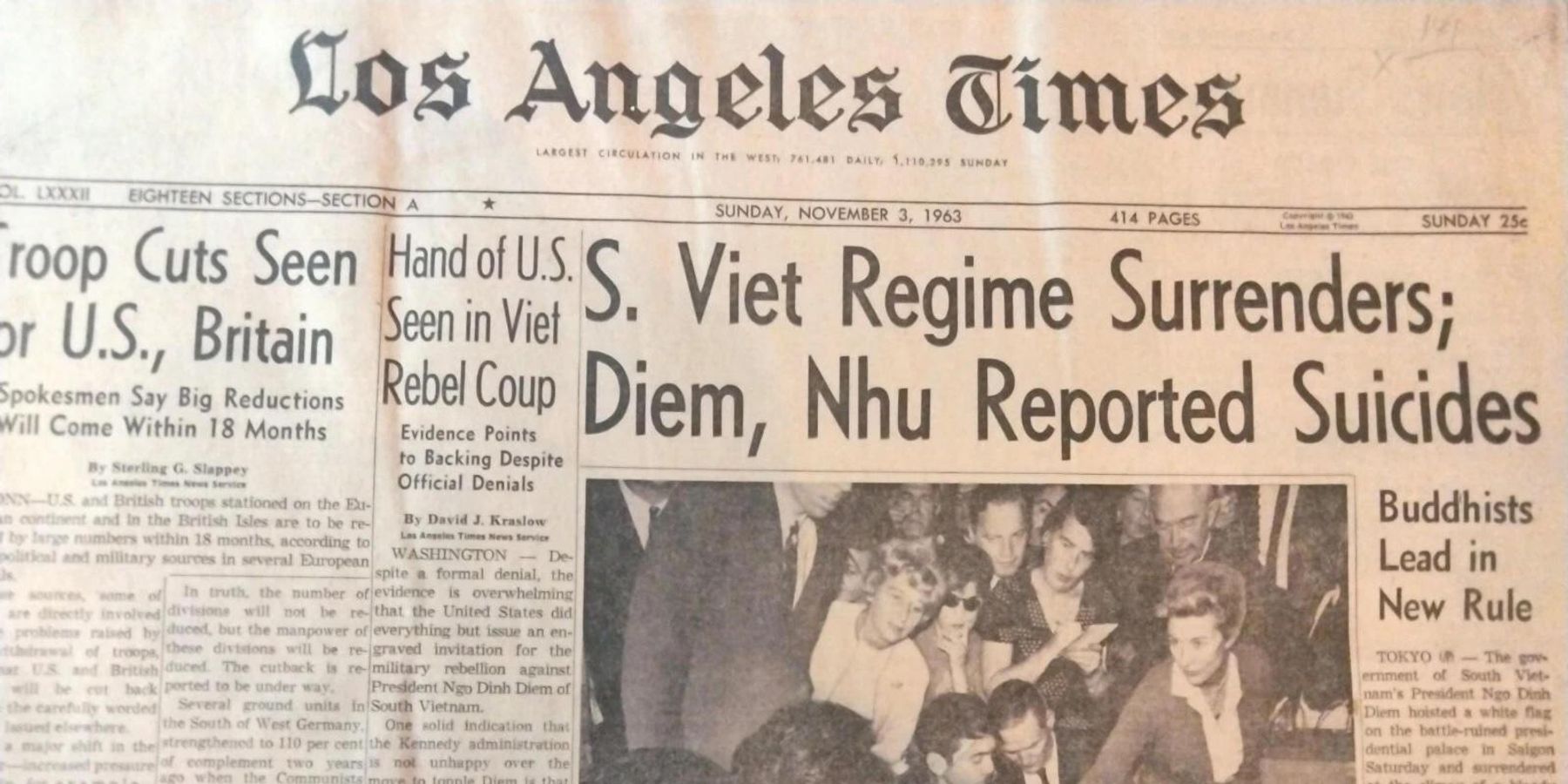
American presidents have never been shy about unseating foreign heads of state, by either overt or covert means. Since the late 19th century, our leaders have deposed, or tried to depose their counterparts in Iran, Cuba, Iraq, Afghanistan, the Philippines, Guatemala, Honduras, Panama, and elsewhere.
Our presidents indulge in regime change when they perceive foreign leaders as inimical to U.S. security or corporate interests. But such efforts can backfire. The 1961 attempt to topple Fidel Castro, organized under President Eisenhower and executed under President Kennedy, led to a slaughter of CIA-trained invasion forces at the Bay of Pigs and a triumph for Castro’s communist government. Despite being driven from power by President George W. Bush in retribution for the 9/11 attacks, the Taliban roared back in 2023, again making Afghanistan a haven for terrorist groups.
Now that President Trump has upended Nicolás Maduro, he faces the possibility that events may unfold in very unpredictable ways in Venezuela.
One of the least known but most consequential U.S.-backed coups occurred in 1963, when the Kennedy administration secretly encouraged South Vietnam’s generals to rise up against their authoritarian president, Ngo Dinh Diem. Diem was murdered during the revolt along with his brother Ngo Dinh Nhu, who ran the country’s counterinsurgency program against the communist Viet Cong. Their demise had far-reaching consequences that U.S. officials did not foresee.
Though a staunch U.S. ally, Diem had become a thorn in JFK’s side. In 1961, Kennedy launched a massive aid program, Operation Beef-Up, to help Diem fight the Viet Cong. American arms and combat advisers poured into South Vietnam, along with hundreds of millions of dollars in economic assistance. In exchange, Washington insisted that Diem reform his government – a demand the South Vietnamese leader resisted.
Diem’s recalcitrance made Kennedy a target for critics in Congress and the press. Why was the United States giving such generous help to someone who rebuffed its efforts to strengthen his government and ability to fight the communists?
The criticism grew louder after Diem’s soldiers massacred eight people outside a government radio station in Hue in May 1963. Most of the victims were Buddhists protesting the station’s refusal to air a commemoration of Buddha’s 2,507th birthday.
About 70 percent of South Vietnamese identified, at least nominally, as Buddhists. (Some 10-12 percent were Catholic, including Diem.) Diem’s refusal to punish those responsible for the killings and resolve other Buddhist grievances touched off nationwide demonstrations against him.
The breaking point came in August 1963, when Diem’s troops and police barged into pagodas in Saigon, Hue, and elsewhere, manhandling and arresting hundreds of Buddhist monks and nuns.
Outraged, Roger Hilsman, the assistant secretary of state for Far Eastern Affairs, drafted what became known as the “green light cable” to the U.S. ambassador to South Vietnam, Henry Cabot Lodge. Lodge was instructed to pressure Diem to get rid of Nhu, who Hilsman viewed as the architect of the pagoda raids. (Nhu denied this.) If Diem refused, Lodge was to surreptitiously contact his generals and promise them full U.S. military and economic support if they overthrew Diem.
Kennedy regarded the green light cable as a mistake, drafted and sent without sufficient high-level review, but never rescinded it.
When Kennedy later publicly criticized Diem, other State Department bureaucrats took action without his knowledge, quietly shutting off the U.S. aid pipeline to Diem’s government, army, and police.
Pro- and anti-Diem factions among JFK’s top advisers argued bitterly in meeting after meeting at the White House. At one point, Averell Harriman, the under secretary of state for political affairs, yelled “shut up!” at Frederick Nolting, Lodge’s predecessor as U.S. ambassador and a strong coup opponent.
The generals mistrusted the Americans and refused to provide details of their plans. They insisted on communicating exclusively through one of the few Americans they did trust, Lucien Conein, a swaggering, hard-drinking CIA agent in Saigon. Conein had been friends with South Vietnamese military men since his days as an anti-Japanese guerilla in Vietnam during World War II. But even Conein could find out little about the coup scheme, leading Secretary of State Dean Rusk to bemoan that the White House was “operating in a jungle.”
With no advance notice to the U.S. embassy, rebel troops swept into Saigon on November 1 and laid siege to Diem’s palace. Diem and Nhu surrendered the next morning, and were brutally bayoneted and shot to death inside a U.S.-supplied armored personnel carrier.
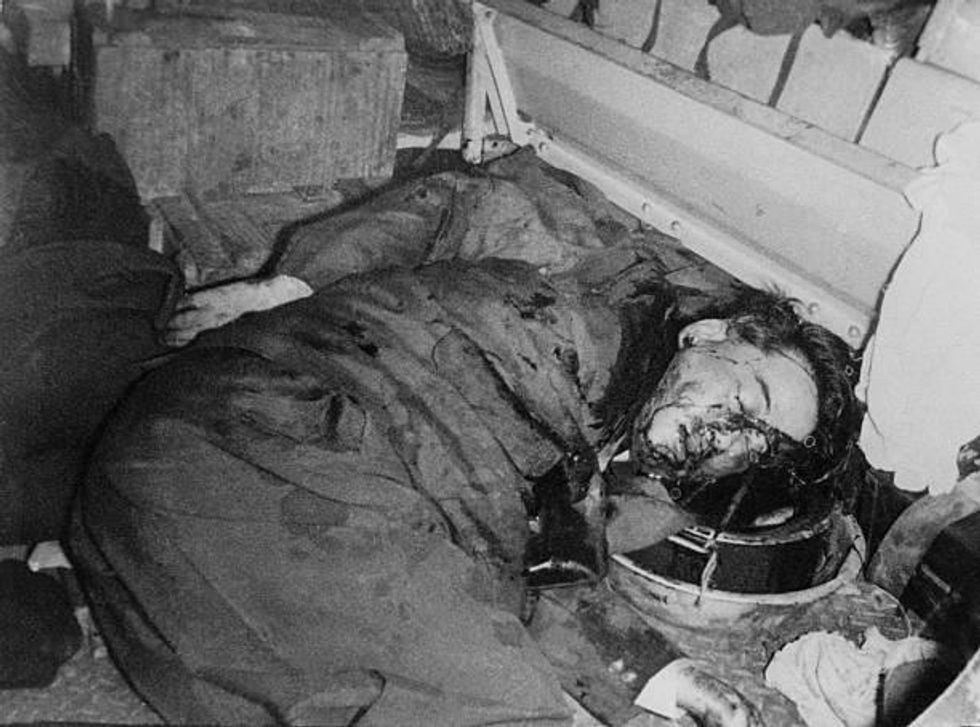 Top photo credit: Ngô Đình Diệm after being shot and killed in the 1963 coup (US National Archives)
JFK recognized that the United States had a special obligation to post-coup South Vietnam and urged Lodge to do everything possible to help stand up a more effective government. But the patrician ambassador had little taste for nation building, and was distracted as supporters at home touted him as a 1964 Republican presidential candidate. Three weeks after Diem’s assassination, Kennedy lay dead in Dallas.
The generals had promised to turn power over to a civilian government but reneged, imposing a junta instead. As Washington had been warned, they proved incapable of running the government and, just three months after killing Diem, they were ousted by another general, Nguyen Khanh. Under Khanh, however, South Vietnam spiraled into political and religious chaos, with Buddhists and Catholics battling in the streets with knives, clubs, and grenades.
JFK was succeeded by Lyndon Johnson, who, as vice president, had visited South Vietnam in 1961 and recommended that U.S. combat forces not be committed there. But in Johnson’s first year as president, South Vietnam continued to unravel politically and militarily. Different governments rose and fell. The Viet Cong targeted Americans, both civilian and military, inflicting mounting casualties. And ominously, North Vietnamese army units appeared in South Vietnam for the first time.
Under unrelenting pressure from the Pentagon, LBJ initiated strategic bombing of North Vietnam in March 1965, the first step in what would become full-fledged Americanization of the war. That same month, he also deployed two Marine battalions to South Vietnam. By 1968, more than half a million U.S. troops were fighting there. In March 1968, Johnson announced he wouldn’t run for reelection, and would use his remaining months in office to end the war. He failed, and the last American forces weren’t withdrawn until 1973. By then, more than 58,000 U.S. personnel were dead, and another 306,000 wounded.
The Diem coup effectively decapitated the South Vietnamese government, unleashing a host of long-suppressed blocs – military, political, and religious – whose ensuing competition badly destabilized the country. President Trump has decapitated the Venezuelan regime, with consequences yet to be known.
While he has pledged to “run” Venezuela, we have few details of how he plans to do that. He says he is open to the introduction of U.S. troops. Before he takes such perilous action, he should carefully study the U.S. record on removing foreign leaders. Because, like JFK, he may soon find himself operating in a jungle.
 Screengrab via niacouncil.org
 Screengrab via niacouncil.org