

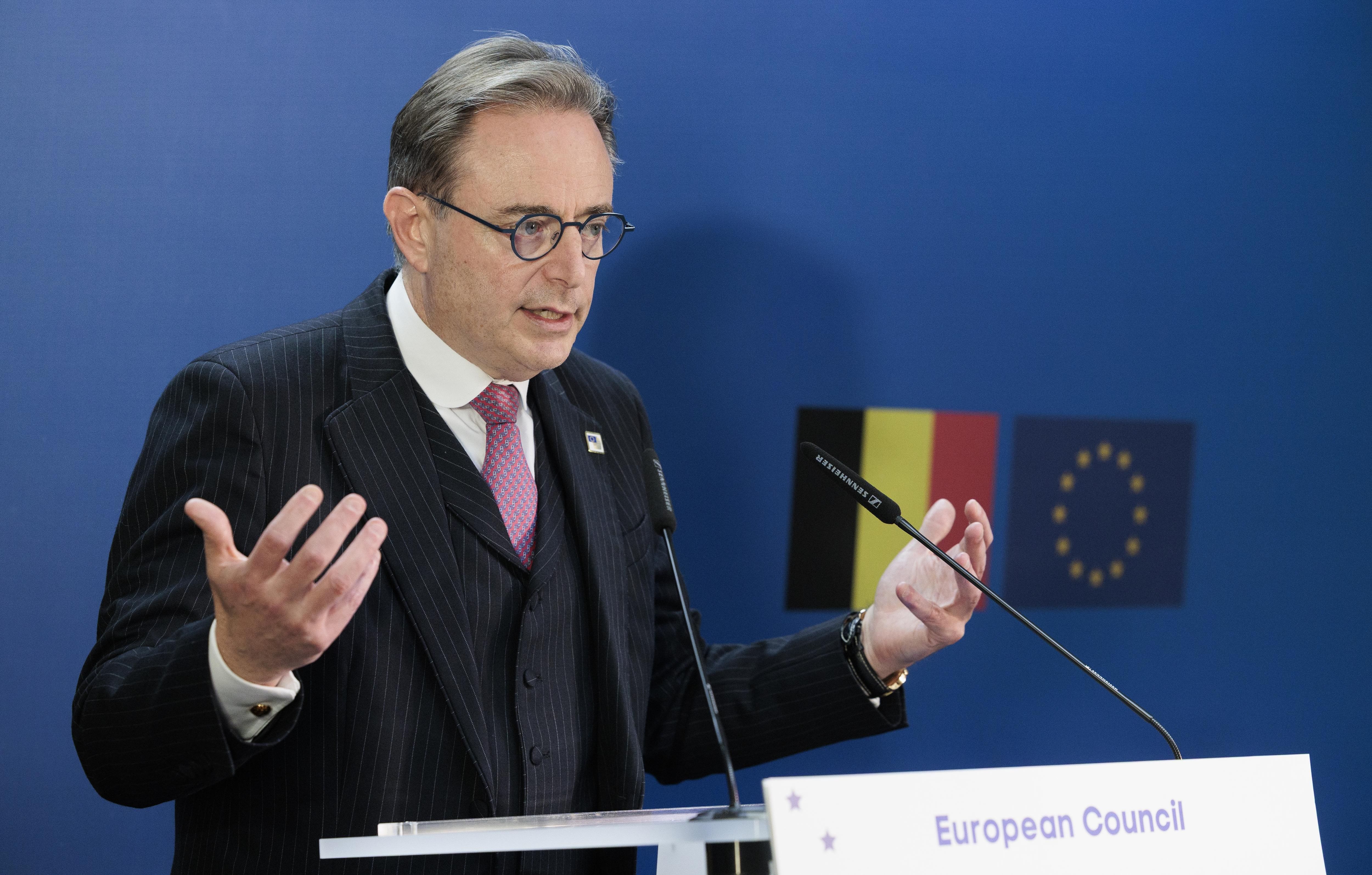
The European Union’s leaders began their crucial summit on Thursday aimed at converging around the Commission’s proposal to use Russian funds frozen in Europe to guarantee a “reparations loan” to Ukraine. In the early hours on Friday, they opted instead to extend a loan of €90 billion backed only by the EU’s own budget. The attempt to leverage the Russian assets opened a breach within the EU that could not be overcome. As the meeting opened, seven members — Belgium, Italy, Hungary, Slovakia, Czechia, Bulgaria and Malta — had opposed the proposal. Germany, Poland, Sweden, Finland, Denmark and the three Baltic countries were its main supporters.
Proponents of the reparations loan — above all Commission president Ursula von der Leyen and German Chancellor Friedrich Merz — argued that approval would make the EU indispensable to any diplomatic settlement of the war in Ukraine. The EU as a whole recognized that Ukraine’s war effort and governmental operations require substantial new financing no later than the first quarter of 2026.
Russian reserves held in EU banks amount to about €210 billion, of which €185 billion are held by Brussels-based depository Euroclear. A loan to Ukraine guaranteed by all or some of the Russian assets held in the EU would, it was argued, be repaid by Russia in postwar reparations.
Belgium and Euroclear saw this scheme as exposing them to unacceptable risks, including litigation by Russia or confiscation of frozen assets of European companies in Russia. In the end, France joined Italy to lead opposition to the reparations loan scheme, and Belgium’s demands for legally binding guarantees could not be accommodated. Politico had even called Belgian Prime Minister Bart De Wever a Russian asset for standing firm against the frozen asset scheme.
Lines are drawn
Those opposed to using Russian financial assets in European banks have distinctive motivations. Belgium sees financial risks posed to Euroclear and to Belgium itself in the (not unlikely) event that Russia does not recognize any obligation to pay reparations when the war ends. Belgium has asked for and not received what it considers to be legally binding undertakings from the rest of the EU nations to guarantee to share in compensating Russia in the event of a successful legal challenge to Euroclear’s allowing the reparations loan to be backed by the Russian assets held there.
Next, the Trump administration reportedly urged EU members not to adopt the reparations loan scheme, because the U.S. may want Russia to authorize the use of some or all of its frozen assets in Europe to fund reconstruction in Ukraine as part of a peace settlement.
And several EU countries above all Hungary and Slovakia, but also Czechia and Italy, have a particularly close affinity with the U.S. administration and saw the EU Commission’s proposal as too risky.
Failure to win support
The IMF estimates that Ukraine will need around €140 billion to fill a financing gap in 2026 and 2027. The Commission sought to issue a loan backed by Russian reserves frozen in Euroclear to Ukraine of around €70 billion in early 2026 and 2027.
The obvious alternative, which the Commission had considered and discarded, was to for the EU to lend its own funds with repayment guaranteed by the EU budget. Under EU law, this kind of financing requires unanimous support from all members. Hungary pledged to veto this idea, leaving the reparations loan as the preferred alternative of Ukraine’s strongest supporters.
EU leaders considered this question under qualified majority rules. This could in principle have allowed the scheme to be adopted without the agreement of Belgium and the other opponents. As a practical matter, however, even the strongest supporters agreed that the proposal could not be adopted over Belgium’s objections. All parties represented in Belgium’s parliament backed the country’s determination to refuse the reparations loan unless the EU member states gave legally binding guarantees to share the legal liability with Belgium.
Because Euroclear underpins the position of the Euro as a reserve currency, any action that amounted to confiscation of euro-denominated assets could harm confidence in the currency and raise borrowing costs of EU governments.
The reparations loan would be paid back by Russian reparations, only if Russia could be compelled to pay. Since this was unlikely, the ultimate repayment obligation would ultimately fall on EU member countries. This would be made more explicit if the EU member states agreed to be legally bound to share liability with Belgium.
Giving war a chance?
Proponents of the failed reparations loan scheme hoped to ensure the EU is at the table in settlement of conflict. But this effort was evidently at cross purposes with U.S. mediation efforts and in fact seemed to set back any progress toward an early end to the war. In the end, opponents of any new funding for Ukraine — Hungary, Czechia and Slovakia — agreed not to obstruct an EU loan to Ukraine, demonstrating that this alternative was never out of reach.
The failure of the single-minded drive of the Commission, Germany and other major supporters of the reparations loan scheme to use the frozen Russian assets may well have damaged the EU’s ambitions to become a geopolitical actor on an equal footing with the United States, Russia, or China.
- Seizing Russian assets: A feel good bill that will absolutely boomerang ›
- Europe's latest seized Russian asset scheme is as dumb as ever ›