

The U.S. bombing of Caracas, a capital of three million people, of the port of La Guaira, as well as other targets in the states of Miranda and Aragua, together with the kidnapping of President Nicolas Maduro and his wife, represents a further escalation in the war-like operations that the United States has conducted over the past five months against the land of the Liberator, Simon Bolivar.
It is also the first U.S. military attack on the South American mainland in 200 years. Such attacks have been common in Mexico, Central America and the Caribbean (most recently in Panama in 1989), but had never taken place in South America. A threshold has been crossed, and the consequences are unpredictable.
The United States has not declared war on Venezuela, and Venezuela does not represent a national security danger to the United States in any way, shape or form. Yet, since August, Washington had been amassing a veritable “Armada” in the Caribbean, with its largest aircraft carrier, the USS Gerald Ford, at least seven other warships and 15,000 troops, to pressure for regime change in Venezuela.
This was followed by the imposition of a de facto closing of Venezuelan air space, and the seizure of several tankers carrying Venezuelan oil. The bombing of Caracas, with a yet undetermined number of victims, raises to a new level the 20-plus attacks that the U.S. Navy has undertaken against alleged drug-trafficking vessels in international waters off the Venezuelan and Colombian coasts. Despite the administration’s failure to provide concrete evidence that the boats were indeed carrying drugs, more than 100 people have been killed in these attacks, making them essentially the equivalent of murder on the high seas.
But Operation Absolute Resolve, the name of the operation to extract Maduro and his wife, Cilia Flores, ups the ante in this extraordinary offensive against the country with one fifth of the world’s oil reserves, 300 billion barrels of them. There is little doubt that this was a well-planned and precisely executed military assault, involving 150 warplanes, all branches of the U.S. Armed Forces and considerable intelligence gathering. It is still unclear how and why Maduro’s security apparatus and the Venezuelan Air Force failed to such a degree that the whole operation was completed in a mere two hours. But Maduro and his wife are now in New York City preparing to stand trial.
Perhaps most remarkable has been the Trump administration’s shifting justifications for these extraordinary actions. According to legal experts, the latter not only violate international law and of the U.N. Charter, but also U.S. domestic law, which does not permit extrajudicial killings. What separates war from murder is the law.
Front and center in the White House media campaign to justify the attacks on Venezuela have been the accusations of drug smuggling to the United States, especially of fentanyl, the deadly drug that has wrought so much havoc in the country. “25,000 Americans die as a result of the drugs carried in any of those boats,” Trump has asserted.
Yet no boat carrying fentanyl has ever been detained in the Caribbean, and Venezuela, by all accounts, is not a major drug-producing country (as are Colombia and Mexico), although its territory has been used by Colombian traffickers as a transshipment point for cocaine to Europe, rather than the U.S. In short, fentanyl is to the attack on Venezuela what the non-existent Weapons of Mass Destruction (WMD) were to the 2003 invasion of Iraq. In fact, without missing a beat and no sense of irony, the Trump administration promptly designated fentanyl a WMD.
At various other points, the Trump administration has invoked the infiltration of Venezuelan gangs and illegal immigration into the United States to justify its actions. The latest reason being adduced for the attack on Venezuela has been the 1976 nationalization of the Venezuelan oil industry, “an industry built by the United States” that will now “take it back.”
What happens next?
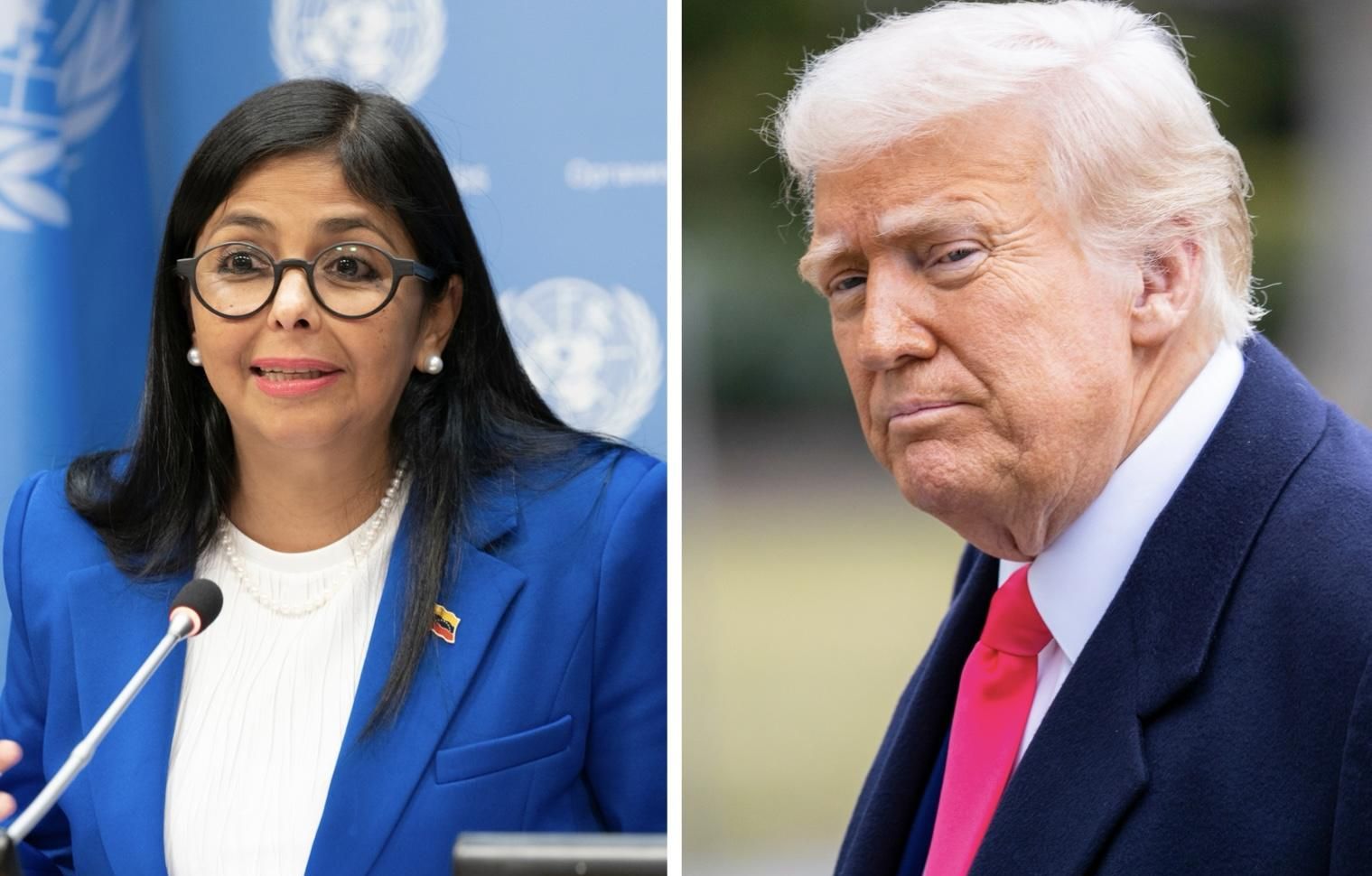
For much of the recent past, the expectation in Latin America and elsewhere had been that, after Maduro’s ouster, there would be a seamless and idyllic transition of power, with the opposition led by Maria Corina Machado, the 2025 Nobel Peace Prize winner, poised to take over and run the country. Yet, in an extraordinary press conference held on January 3 in Mar-a-Lago, one that left us with more questions than answers, President Trump threw Machado under the bus and stated that the United States would from now on “run Venezuela,” liaising with Delcy Rodriguez, Maduro’s vice president and now acting president, to those ends.
When asked how that would work, Mr. Trump referred to “the people standing behind me,” apparently meaning Secretary of State Marco Rubio and Secretary of Defense Pete Hegseth. The precise mechanics of that arrangement and whether to run a country of nearly 30 million people by phone from an office in the State Department or the Pentagon is viable is anybody’s guess, but that is where we are.
Yet, beyond Venezuela, the broader questions raised by Operation Absolute Resolve and what it means for the future of U.S.-Latin American relations are dead serious. Far from being a one-off, isolated act (as the 1989 U.S. invasion of Panama arguably was), the attack on Venezuela may portend similar actions in the future. In the January 3 press conference, Trump referenced Colombia and Mexico as countries that should “watch out,” and Rubio, who has long had Havana in his sights, said the same about Cuba.
While for much of the immediate post-Cold War period, the United States championed democracy and free trade in the Americas, what we are seeing now is something very different. It is articulated in the revival of the Monroe Doctrine proclaimed by The White House and the newly minted Trump Corollary, asserting that the United States must be “preeminent in the Western Hemisphere.”
Hegemony, of course, is one thing; dominance is another. The notion that, in 2026, the United States will succeed in recreating the days of empire and colonialism and subjugate the 33 countries of Latin America and the Caribbean imposing its will by the sheer exercise of military force to appropriate their resources and otherwise subjugate them would strike many not just as outlandish but as doomed to failure.
- Team America is back! And keeping with history, has no real plan ›
- Tracking congressional criticism of Trump's attack on Venezuela ›
- Hubris: When the US military is feeling invincible, that's dangerous | Responsible Statecraft ›
- How Trump's oil plans could end up benefitting Venezuelans | Responsible Statecraft ›