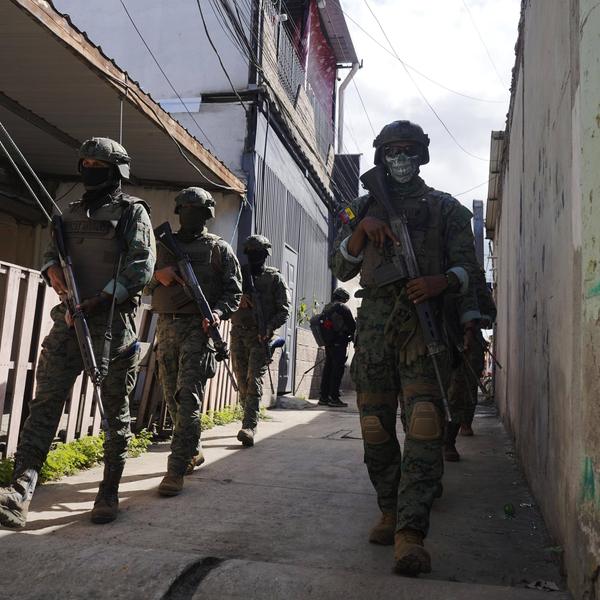
Of the 100 or more people killed in the U.S. military operation that abducted Venezuelan President Nicolás Maduro and his wife Cilia Flores, 32 were Cuban security officers, most of them part of Maduro’s personal security detail who died “in direct combat against the attackers,” according to Havana.
How did Cubans come to be the Praetorian Guard for Venezuela’s president, and what does the decapitation of the Venezuelan government mean for Cuba?
After Hugo Chávez was elected president in 1998 and launched his “21st Century Socialism,” Venezuela became Cuba’s closest ally in the Americas. Chávez and the late Fidel Castro developed a close personal relationship, and built a robust economic and security alliance. Cuba sent Venezuela thousands of medical personnel to serve the Venezuelan poor, Chávez’s political base, and in exchange Cuba received cheap Venezuelan oil. After the failed coup attempt against Chávez in 2002, Cuba organized his personal security and provided intelligence assistance to forestall another coup.
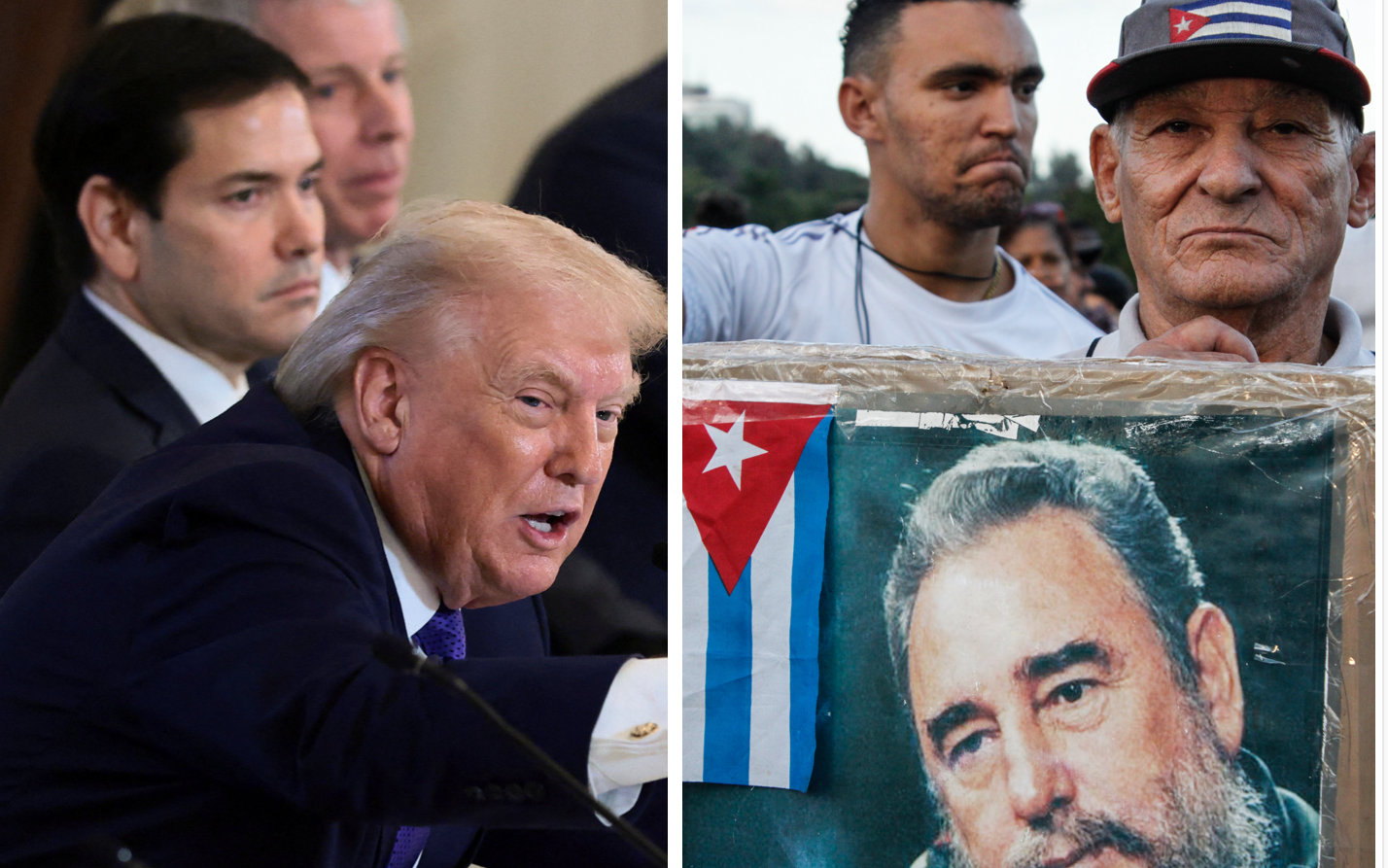
By deposing Maduro and threatening that interim President Delcy Rodríguez will “pay a very big price, probably bigger than Maduro,” if she refuses to do his bidding, President Donald Trump believes he and his foreign policy team will be able to “run” Venezuela. With Secretary of State and National Security Advisor Marco Rubio leading this project, one of Washington’s top demands is that Caracas sever its special relationship with Havana.
“Venezuelans…have to declare their independence from Cuba that tried to basically colonize it from a security standpoint,” Rubio said at the president’s press conference announcing the Delta Force strike on Venezuela.
The United States, Rubio later explained, will control the distribution of Venezuelan oil by imposing an “oil quarantine,” giving Washington “tremendous leverage” over the new Venezuelan leadership. None of that oil will go to Havana. The Cuban regime survived on the largesse of donors like Venezuela, Rubio explained, “That’s now gone.” Trump himself confirmed it. “Cuba lived, for many years, on large amounts of OIL and MONEY from Venezuela,” he posted on Truth Social. “THERE WILL BE NO MORE OIL OR MONEY GOING TO CUBA - ZERO!”
The blow to Cuba’s economy will be devastating. That prospect has led to widespread predictions that the Cuban government, already in the midst of the worst economic downturn since the collapse of the Soviet Union in the 1990s, will not survive.
Rubio outlined the administration’s theory of the case: “The people in control in Cuba have a choice to make. They can either have a real country with a real economy where their people can prosper, or they can continue with their failing dictatorship that's going to lead to systemic and societal collapse.”
At the same time, there is a reluctance to intervene militarily in Cuba the way the administration did in Venezuela. Asked by reporters if he would strike at Cuba next, the president replied, “It looks like it’s going down. I don’t think we need any action.” He repeated that sentiment several days later in response to a suggestion that the U.S. increase pressure on Havana: “I don't think you can have much more pressure other than going in and blasting the hell out of the place.” Cuba, he continued, would “go down…of its own volition.”
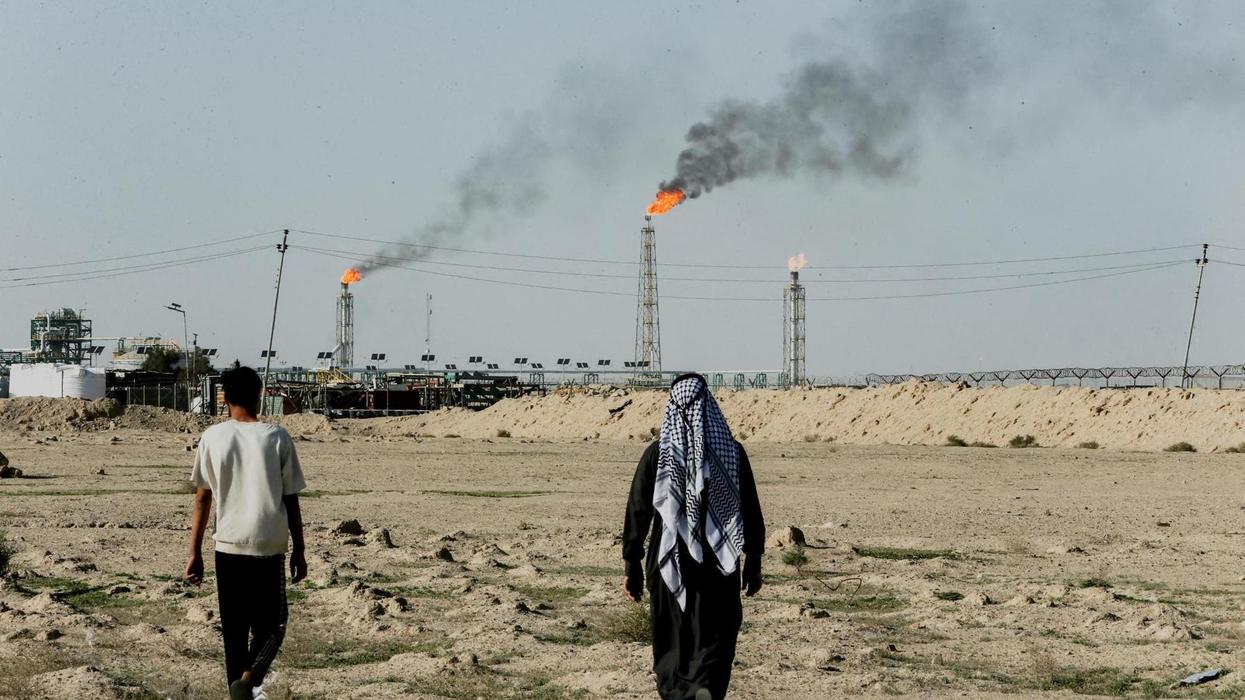
What would a sudden and complete cutoff of Venezuelan oil mean for the Cuban economy? Before COVID, Cuba consumed about 120,000 barrels of oil per day (bpd). The economy has been stagnant or in decline since then and currently consumes about 100,000 bpd because that is all it can afford. That level is below what is needed to keep the domestic economy operating at anything near capacity or to power Cuba’s thermoelectric plants fulltime. For the past several years, Cubans have suffered daily scheduled (and unscheduled) power blackouts of increasing lengths.
A decade ago, Venezuela was providing Cuba with more than 100,000 bpd, but that has gradually fallen by between 75 and 90 percent due to Venezuela’s declining production. By some estimates, Mexico, which has its own doctors-for-oil deal with Havana, provided Cuba with more oil in 2025 than Venezuela did. Washington has pressured Mexico to stop, but President Claudia Sheibaum has pushed back, calling the shipments, “humanitarian aid.” Russia provides only about 5,000 bpd compared to Mexico’s 13,000 bpd.
Nevertheless, for Cuba to replace the oil it currently gets from Venezuela would be a Herculean task, perhaps an impossible one. Cuba might implore Mexico and Russia to increase their shipments, and hope that other friendly oil-producing countries around the world — like Brazil, Angola, or Algeria — will step up with smaller contributions. But even the generosity of its friends has limits, and Cuba has no money to pay for additional petroleum imports, so it seems certain that the Cuban economy — and the Cuban people — are destined for further suffering.
Back in 2014, economist Pavel Vidal estimated that if Venezuelan oil were suddenly cut off, the Cuban economy would drop 7.7 percent. Today, when Venezuela provides far less than it did then and the price of oil is about half of what it was, the impact would be less.
But Cuba’s GDP has already fallen about 15 percent since the COVID pandemic. Another 4 or 5 percent drop would exacerbate the vicious circle of declines in domestic production reducing export earnings, and widening the gap between what Cuba needs to import and what it can afford.
Would that be enough to collapse the Cuban government? Trump certainly seems to think so. At his press conference, Trump called Cuba “a failing nation right now, very badly failing nation,” and he elaborated two days later: “Cuba looks like it is ready to fall,” he told reporters. Sen. Rick Scott (R-Fla.), Rubio’s fellow Florida Republican, is equally certain. “It’s going to be the end of the Díaz-Canel regime, the Castro regime, it’s going to happen,” he said. “I think it will probably happen maybe this year, maybe next year. It’s going to happen.”
Such confidence is not new. Washington officials have been predicting the imminent end of the Cuban government since 1959. The Eisenhower administration was certain that cutting the Cuban sugar quota would do it. Kennedy thought that covert CIA operations plus an economic embargo would do it. Lyndon Johnson thought that getting Latin America and Europe to join the embargo would do it. George H. W. Bush thought the collapse of the Soviet Union would do it. George W. Bush thought that the death of Fidel Castro would do it. And ever since the first Trump administration, Republicans have been predicting that the loss of Venezuelan oil would do it.
They have been so consistently wrong because although economic despair often causes political discontent, it does not automatically give rise to an opposition movement capable of overthrowing the government. Foreign diplomats in Havana, excluding those in the U.S. Embassy, generally agree that organized opposition in Cuba is weaker today than at any time in recent memory and poses no threat to the regime.
One reason is that disaffected Cubans have always found it easier to emigrate than to confront the government. When the economy sinks, they don’t rise up, they leave. Another reason is that the government has been increasingly intolerant of dissent as the economy has deteriorated, encouraging outspoken opponents to leave and jailing those who don’t.
A deepening economic crisis may well unleash spontaneous social unrest (like the Maleconazo riot on the Havana waterfront in 1994) and anti-government demonstrations (like the nationwide protests on July 11, 2021). But absent some organized opposition to channel discontent into a sustainable political movement, security forces can contain occasional outbursts. The Catholic Church, the only independent civil society institution with a nationwide presence, shows little ability or inclination to play such a role. Cuba is not Poland or the German Democratic Republic in 1989.
If cutting off Venezuelan oil shipments does not bring down the Cuban government, will the Trump administration decide to take direct military action? Nothing is beyond the realm of possibility for a president who threatens to attack Denmark, a NATO ally, if it refuses to surrender Greenland.
But Trump seems to realize that Cuba is a harder case than Venezuela. “They're tough people,” he has said repeatedly in recent days, even acknowledging that Cuba has defied past predictions of collapse. If pacifying Venezuela proves to be more difficult than Trump expects, he may be reluctant to take on a second nation-building project while the first is still festering.
With the “Donroe Doctrine” shaping U.S. policy in Latin America, it appears the United States will have to relearn the central lesson of colonialism: no people want foreigners telling them how to run their affairs. They will resist, passively, then actively, and in the end, successfully. No matter that the foreigners have superior military force. Eventually they tire of the endless war and go home, just like the British did in 1783.
- Trump's sphere of influence gambit is sloppy, self-sabotage ›
- After ousting Maduro, Trump and Rubio put Cuba on notice ›
- The new Trump Doctrine: Strategic domination and denial | Responsible Statecraft ›
- A deal that Cuba (and Trump) cannot refuse? | Responsible Statecraft ›
 Screengrab via niacouncil.org
 Screengrab via niacouncil.org