

When the George W. Bush administration invaded Iraq in March 2003, that war had 72% support among Americans, according to Gallup.
If Donald Trump now wants to start a U.S. war with Iran, the president would not remotely enjoy that level of support. He doesn’t even have half of it. Scratch that, not even a quarter of Americans want him to bomb Iran today.
A SSRS/University of Maryland poll asked participants earlier this month: “Do you favor or oppose the United States initiating an attack on Iran under the current circumstances?” Only 21% favored, 49% opposed, and 30% answered “I don’t know.”
Republicans were the most favorable toward war with 40%, but 25% of GOP voters said they oppose it, and 35% answered “I don’t know.” So there is not even a consensus in Trump’s own party. It’s split. Only 6% of Democrats favor an attack on Tehran at this time. 21% of independents favored intervention.
The survey, which was taken between February 5-9 is not a one-off, however.An Economist/YouGov poll taken the week before revealed that between January 30 and February 2, 48% to 28% of Americans oppose rather than support the U.S. taking military action in Iran.
This was after the Iranian government was cracking down on protesters, and a chorus of war proponents here in the United States were demanding that Washington intervene militarily to protect them. When poll respondents were asked if they supported or opposed the U.S. bombing Iran over its treatment of protesters, that number rose four points to 52% opposing, with 25% supporting and 23% “not sure.”
A Quinnipiac University survey taken two weeks before the Economist/YouGov poll also asked if the U.S. should intervene to protect protesters in Iran. This poll was taken a week after Trump said that the U.S. was “locked and loaded” if Iran killed peaceful protesters. Between January 8 and 12, 70% believed the U.S. should not become involved in Iran, 18% favored U.S. intervention, and 12% had “no opinion.”
Let’s jump back even further, after Trump ordered strikes on Iran in late June. At the time David Vine reported on Responsible Statecraft that “polling both before and immediately after Trump launched attacks on Iran showed broad opposition to U.S. involvement in Israel’s unprovoked war including among Trump’s base. Most strikingly, 85% of people surveyed nationwide said they don’t want the U.S. to be at war with Iran, while only 5% do, according to YouGov polling conducted in the wake of the bombing.”
These numbers are not a good starting point for support should Trump decide to go to war.
On the 10th anniversary of the U.S. invasion of Iraq in 2013, 53% of Americans saw that war as a mistake, according to Gallup. On the 20th anniversary of that war, 61% of Americans believed the U.S. did not make the right decision by invading Iraq, according to an Axios/Ipsos poll.
The Bush-Cheney administration drove a hard propaganda campaign to get Americans behind its foreign policy agenda, something that worked, at least in the beginning. Over 20 years later, recognizing that the Iraq war was a mistake has become something of an American consensus, even in GOP presidential primaries just 13 years after the invasion led by a Republican president.
Does Donald Trump plan to make another colossal blunder in Iran? The same people who thought the Iraq war was a good idea (and still think this) are urging him to.
George W. Bush enjoyed strong support in 2003, and it turned out disastrous, both in the aftermath of the invasion and for his own popularity. Unlike Team Bush, current Iran war advocates are trying to drum up support, but their messaging behind bombing Iran, centering mostly on the protection of Iranian protesters (though that has shifted back some to Iran's nuclear program), is shown by these polling numbers to be a flop.
Donald Trump has a choice to make: The Iraq war is today considered one of the dumbest wars in American history. Is the current American president looking to up the ante with Iran?
Most Americans are not if the polls are any indication.
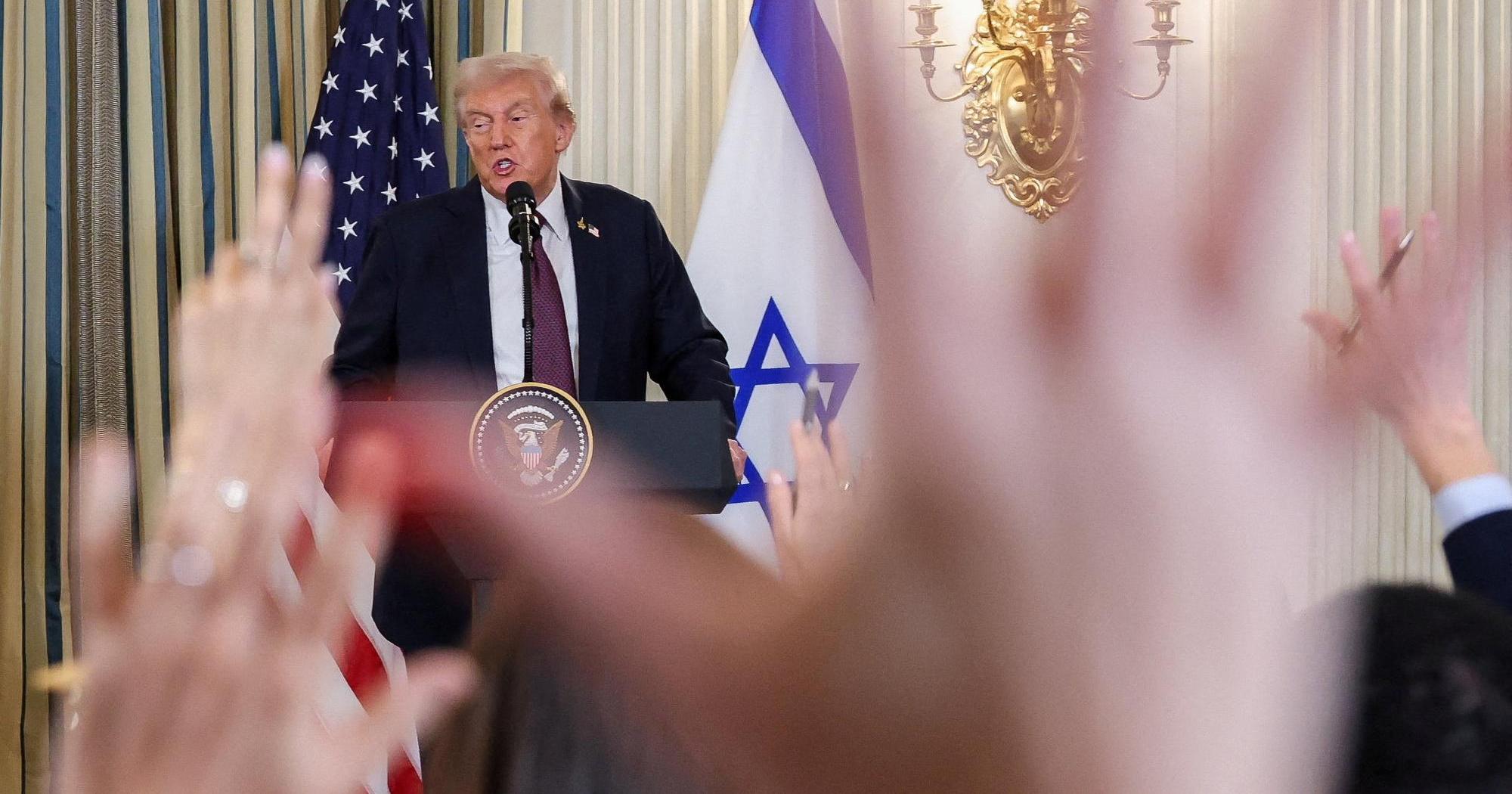
So far, Trump has stayed his hand. Even when Israel’s Prime Minister Benjamin Netanyahu visited the White House on Wednesday, the president insisted he wants to keep talking to Iran. Public opinion and his own popularity must still matter to Trump. He must be aware of the writing on the wall.