

As the Trump Administration continues to kill so-called Venezuelan "narco terrorists" through "non-international armed conflict" (whatever that means), it is clear it is doing so without Congressional authorization and in defiance of international law.
Perhaps worse, through these actions, the administration is demonstrating wanton disregard for centuries of Western battlefield precedent, customs, and traditions that righteously seek to preserve as many lives during war as possible.
Continuing down this path will not only be a stain on our national honor that will spread like spilled ink, but will also ensure reciprocal treatment of our troops.
The most egregious example of this abandonment of American civility on the battlefield is the now-infamous "double tap" incident, which occurred in September off the coast of Venezuela. The U.S. military guided a missile that effectively vaporized two unarmed men as they allegedly called for help by radio. As Senator Rand Paul (R-Ky.) said on Dec. 2 about the unarmed survivors who were deliberately killed in that second strike: "It's a debate if they ever were a threat."
According to the Pentagon's own Laws of War Manual, this is a gross violation: "Persons who have been incapacitated by wounds, sickness, or shipwreck are in a helpless state, and it would be dishonorable and inhumane to make them the object of attack."
However, even if it is deemed legal under Hegseth's Rules of Engagement, in which he has called boat crews calling for help post-strike a "hostile act," it is ethically and morally unconscionable and severely damaging to America's reputation. Simply, this kind of action is not in line with the U.S. military's tradition or ethical standards. Instead, it is the kind of act that made German U-Boat crews infamous in the 20th Century.
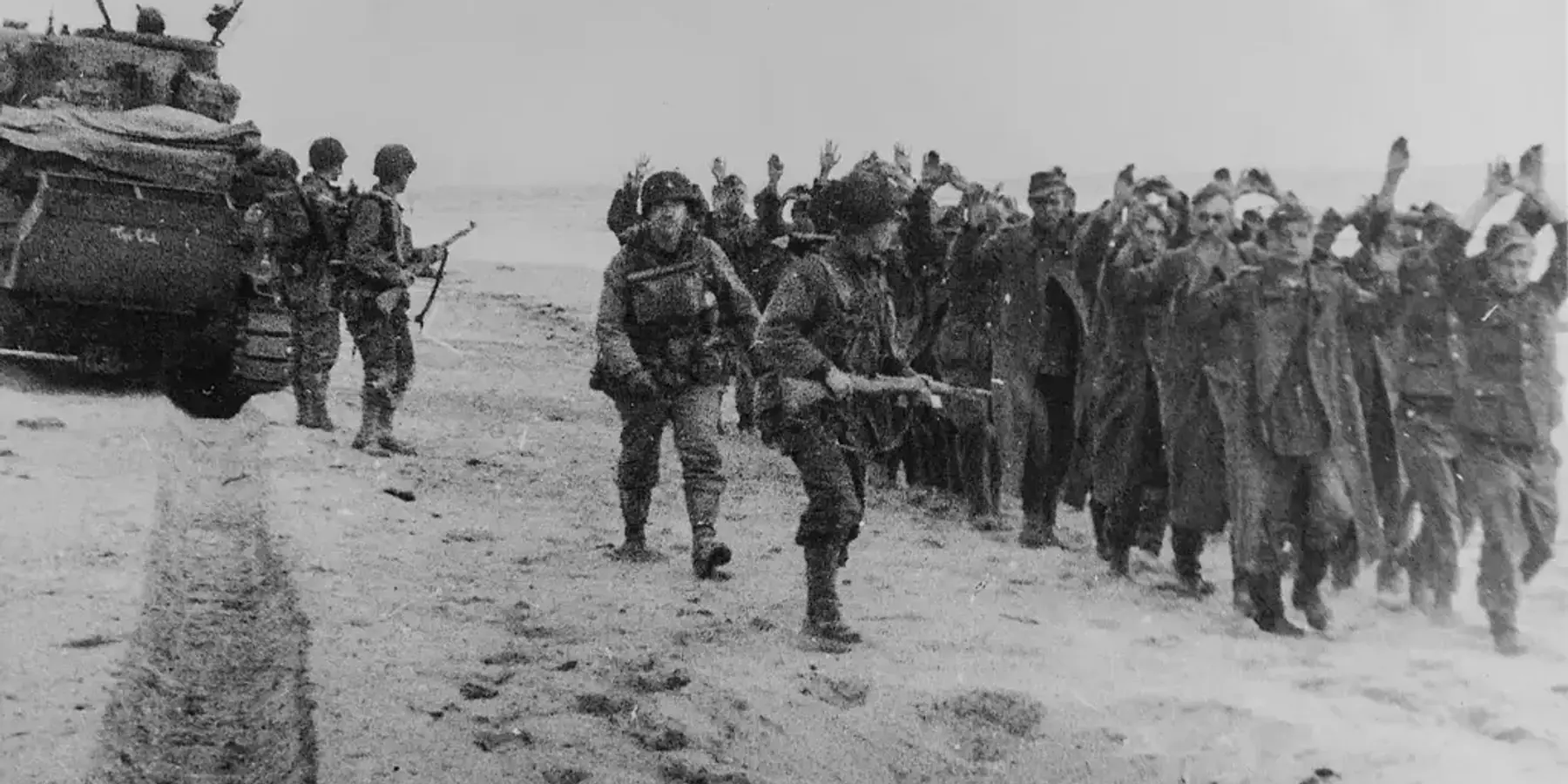
During WWII, our reputation for just and humane treatment of our adversaries led directly to millions of German soldiers surrendering to the U.S., undoubtedly shortening the war and preventing additional American casualties. It should be noted that less than 1% of Germans captured by the US died in captivity. Overall, the number of surrendered Germans dwarfs the number of Germans that U.S. troops killed on the battlefield. Further, many of these Germans intentionally fled away from a Soviet Army known for its barbarism, to the Western Front, to surrender to advancing Americans.
Prussian General and Theorist Carl von Clausewitz may have summed it best when he said, "War is a continuation of politics by other means." In other words, the objective is not just to kill or simply slaughter. Without question, during war violence must be and is used, but it is applied to achieve a specific political outcome, i.e., the capitulation, not the massacre of an adversary. In short, violence is tailored, and you kill only when it is necessary. It is your legal, moral, and ethical duty to preserve life, both civilian and combatant, whenever you can.
For most of our history, Americans have adhered to Clausewitz's perspective and have rightfully earned a reputation as both tenacious warriors on the battlefield and as magnanimous victors. Why? Not only because it's the morally correct thing to do, but also because doing so is practical and protects our own troops should they find themselves in a position where their lives are at the mercy of an adversary.
A particularly evident historical example of how this reciprocity works was again in WWII. Over the duration of the conflict, nearly 99% of U.S. POWs captured by the Germans and Germans captured by the U.S. returned from captivity unharmed. This was not the case in other theaters of war. For example, it was rare for the Japanese to take American prisoners, and if they did, more than 40% perished in brutal captivity. The numbers on the eastern front, which was the scene of a clash between two of the most violent ideologies in human history, saw even greater disregard for human life.
While there are considerable legal and ethical ramifications for the killing of so-called 'narcos' at sea, an unspoken one is of potential moral injury to the servicemembers carrying out the orders. Our military is full of good men and women who want the best for their country. They trust that their leaders, all the way up to the Commander in Chief, have their best interests at heart.
Only those who have not seen war up close and personal would dare to revel in the bloodshed and violence it produces. While sometimes necessary, it is preferable to avoid such encounters, even if they are entirely justified. Once you participate, it never leaves you. As such, it is the responsibility of senior leaders to ensure their troops only engage in lethal violence when essential and justified.
Nearly 20 years ago, my father and I had a conversation that remains crystalized in my mind as if it were yesterday.
During a sweltering late-summer North Carolina afternoon in 2006, my father and I soaked up the AC in his hotel room, clinging to the final moments before I deployed to Ramadi, Iraq, as a Marine infantryman. Attempting to avoid what was to come for a few more precious moments, my brain wanted to focus on baseball, fishing — anything other than the impending immersion into a world of violence.
My father, a heavily decorated Vietnam Marine, had other ideas. Interrupting eventually, while locking me in with almost an electric stare, he said coolly, "When you pull the trigger, make sure it's for the right reason. The decision will stay with you the rest of your life."
The Administration would be wise to absorb that kind of wisdom before moving further down a path from which neither lives, souls, nor national honor can be reclaimed.
- Hegseth: 'Defense' is out, 'killing people and breaking things' is in ›
- If they are not human, we do not have to follow the law ›