

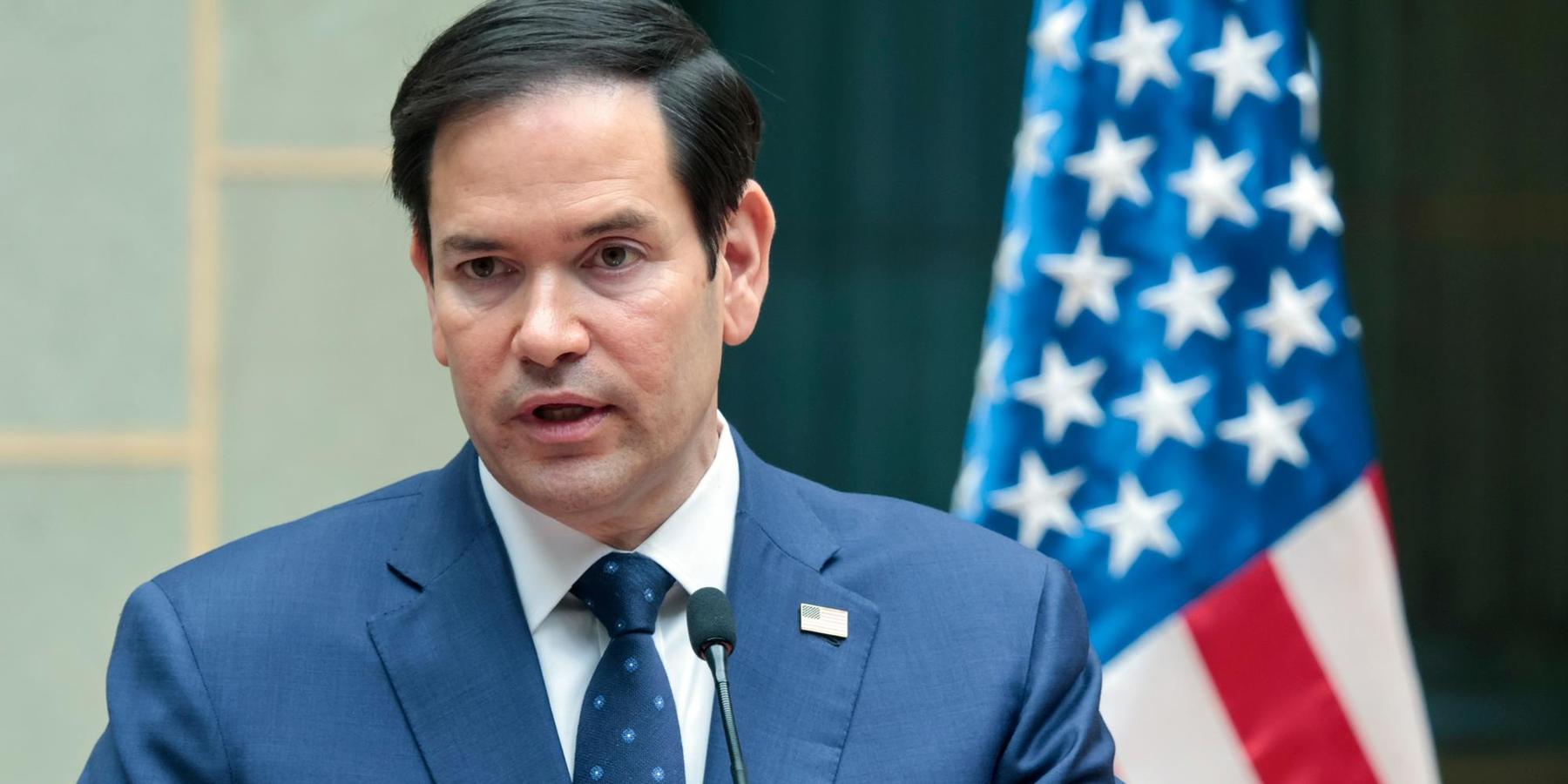
As the Trump administration's de facto oil blockade of Cuba brings life on the island to a grinding halt, several factors may be causing Secretary of State Marco Rubio to think twice about pursuing immediate regime change in Havana.
Rubio's potential future presidential aspirations and the humanitarian implications of full-fledged government collapse must be weighing heavily here. Meanwhile, reports that the administration is issuing U.S. licenses for oil shipments to the island's private sector, and that unconfirmed informal “discussions” are now taking place with power-brokers in Havana, seem to indicate that Rubio might be playing a longer game that leaves the current government in place while seeking greater leverage over the economic direction the country takes.
All this suggests that Rubio may end up pursuing a Venezuela-style accommodation with the Cuban government given his own political ambitions and the existing realities and constraints he faces as the chief executor of U.S. foreign policy under President Trump.
Of course this would frustrate or at least delay one of his main objectives for the past 20 years: the overthrow of the Cuban regime.
William LeoGrande, a Cuba expert at American University and a non-resident fellow at the Quincy Institute, said last month that Rubio, whether he likes it or not, may be compelled to go along with Trump’s plans for Cuba — which is to hammer out a deal. As has occurred in Venezuela, sources say Trump prefers not to seek wholesale regime change given memories of the disastrous de-Baathification campaign after the 2003 invasion of Iraq.
If Rubio were to run for president, his need to win his first-ever national — not just Florida — election, could make his potential role in the outright collapse of Cuba a liability, not an asset.
This could be why Rubio responded cautiously at a recent Senate hearing when asked about Cuba policy: "I think we would like to see the regime there change. That doesn’t mean that we’re going to make a change, but we would love to see a change," he said.
While hardliners in South Florida are increasing the pressure on both Washington and Havana by urging the Treasury Department to prohibit all flights and remittances to the island, the Justice Department to indict Raul Castro over a 30-year-old incident, and the Commerce Department to revoke almost all licenses for U.S. firms doing business on the island, Rubio has not endorsed those appeals.
In fact, last weekend Rubio told Bloomberg that Cuban government economic reforms — “not just political freedom” — could offer a path toward lifting the U.S. oil siege and improving bilateral relations. RS previously reported that such a deal, whereby the Cuban government pursues economic reforms while remaining largely in power, as has occurred in Venezuela, is an arrangement Havana officials have expressed openness to, and it would likely prove less chaotic than immediate regime implosion, a popular overthrow of the government, or U.S. military action.
This approach would be “the most sensible, prudent, and humane path,” said former Joe García, a former Florida congressman who has tried to mediate between the two governments in the past.
Rubio’s Bloomberg interview came after The Economist reported last week that if the administration's oil siege on the island continues, Rubio could become the public face of an induced humanitarian crisis that could lead to another wave of "boat people" ending up on Florida's shores during a crucial election year.
The Economist cited several sources indicating that Washington, as a result, is considering supplying small quantities of cooking gas and diesel fuel to sustain the island's water infrastructure. When contacted by RS, the report’s author clarified that it seems the administration would allow some Caribbean countries, like Jamaica or Curaçao, to sell Cuba propane or diesel without facing 30% U.S. tariffs, as threatened in Trump’s January 29 executive order.
As mentioned above, to avoid outright collapse and island-wide destabilization — which CIA officials, an anonymous U.S. official and Rubio himself have warned against — some private companies on the island have been granted U.S. licenses to import fuel for their own operations, numerous sources tell RS. Cuba’s Foreign Trade Minister reportedly authorized such imports earlier this month after the Trump administration cut off shipments from Cuba’s two biggest suppliers, Venezuela and Mexico.
More recently, Axios reported that Rubio has held conversations with Raúl Guillermo Rodríguez Castro, the grandson, bodyguard, and caretaker of former Cuban president and Army General Raúl Castro. Also known as “El Cangrejo” (The Crab), Raúl Guillermo, according to Axios, is considered by “Trump advisers” to be “the most important figure on the island to cultivate” as the administration looks for the “next Delcy [Rodríguez] in Cuba.”
One source described Rubio’s conversations with El Cangrejo — which, like secret talks under the Obama administration, have reportedly bypassed official bilateral channels — as "surprisingly" friendly, saying he represents more pragmatic, business-minded Cubans who see value in rapprochement with the U.S.
On X, the report’s author clarified that El Cangrejo, who is a lieutenant colonel in Cuba’s military, may be Rubio’s current interlocutor but is not necessarily the island’s “next Delcy Rodríguez,” presumably because the embargo cannot be lifted while a Castro is in power, per Title II of the 1996 Helms-Burton Act.
Not everyone sees the situation the same way. Drop Site News charges that Rubio is intentionally misleading Trump about the nature of current contacts with Cuban leadership. The New York Times and the Miami Herald cite U.S and Cuban sources, claiming that substantive negotiations are not currently taking place between the two governments.
Rubio may not be having talks with the government but all signs point to him talking with people close to it, including Havana’s military and business elite. As author Peter Kornbluh has said, “dialogue, even under duress, is preferable to overt U.S. aggression and offers a potential off ramp for both sides."
While Rubio undoubtedly wants to get rid of the current regime, existing conditions, his own political ambitions, and pressure to deliver a deal to the president may make a Venezuela-style accommodation more likely for now than induced regime collapse and its potentially explosive consequences for which Rubio would likely be held responsible.
- A deal that Cuba (and Trump) cannot refuse? ›
- After ousting Maduro, Trump and Rubio put Cuba on notice ›
- Exile attack: Deliberate attempt to spur US action against Cuba? | Responsible Statecraft ›
- Vatican quietly steps up role in US-Cuba talks | Responsible Statecraft ›