
Follow us on social

google cta
Israel Trump Netanyahu

Did Netanyahu just ask Trump for another war — and get it?

The 'America First' president said he would now back an attack on Iran's ballistic missile program. How much more does Israel want to take from us?

Analysis | QiOSK
google cta
google cta

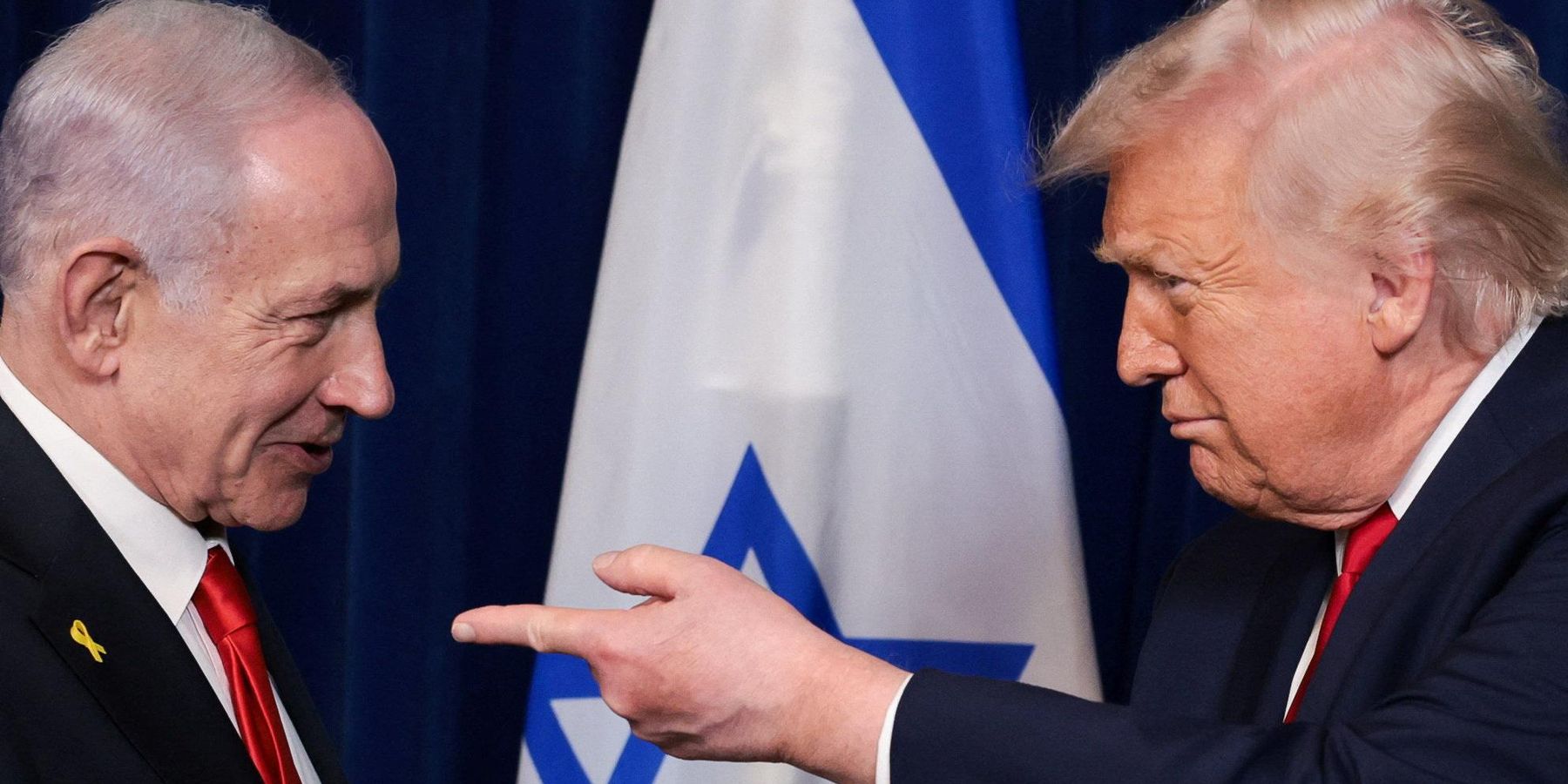
During a meeting with Israeli Prime Minister Benjamin Netanyahu, President Trump said that he will allow Israel to attack Iran once again to strike its ballistic missiles.

But what exactly does that mean? Will the U.S. be involved in the actual strikes? Will it "limit" its involvement to shooting down Iran's retaliatory missiles?

If the former, Trump is not just "allowing" Israel to strike; the U.S. will actually be at war with Iran. This would be a betrayal of his promise to his base to keep America out of wars (he has, of course, violated that already).

Moreover, unlike the nuclear program, which incorporates a small number of known facilities, the missile program is spread throughout the country in a large number of hidden facilities, many of them probably unknown to the U.S./Israel.

Thus, Trump will likely not be able to frame this as mere "military action" rather than war. Nor will he likely be able to negotiate with Tehran a limited Iranian response since the missiles are Iran's last line of defense — the last leg of its deterrence.

Tehran has gone to great lengths to avoid a military confrontation with Washington, but just because it has shown restraint in the past does not mean that it can afford to do so in this scenario. Indeed, given that Iran will be totally exposed without its missiles, it will likely reckon that it has no choice but to strike directly at U.S. targets.

Even if Trump opts to "only" support Israel defensively in yet another Israeli choice of war — which is the position Biden took — it nevertheless incentivizes Israel to restart war, as the U.S. is lessening the cost for Israel to do so.

The cost to the United States is great even in this scenario. Washington depleted 25% of its THAAD interceptors in the course of 12 days this past summer — for Israel's war of choice, in a region four American Presidents have declared no longer is vital to U.S. national security.

As I wrote last week, every time Trump caves to Netanyahu and agrees to another war, it only prompts Israel to come back to Trump after a few months with another war plan for Americans to give their blood and tax dollars to.

This will go on endlessly until Trump decides to end it.


Dear RS readers: It has been an extraordinary year and our editing team has been working overtime to make sure that we are covering the current conflicts with quality, fresh analysis that doesn’t cleave to the mainstream orthodoxy or take official Washington and the commentariat at face value. Our staff reporters, experts, and outside writers offer top-notch, independent work, daily. Please consider making a tax-exempt, year-end contribution to Responsible Statecraftso that we can continue this quality coverage — which you will find nowhere else — into 2026. Happy Holidays!

Top photo credit: U.S. President Donald Trump points his finger towards Israeli Prime Minister Benjamin Netanyahu during a press conference after meeting at Trump’s Mar-a-Lago club in Palm Beach, Florida, U.S., December 29, 2025. REUTERS/Jonathan Ernst
google cta
Analysis | QiOSK
The 8 best foreign policy books of 2025
Top image credit: Dabari CGI/Shutterstock

The 8 best foreign policy books of 2025

Media

I spent the last few weeks asking experts about the foreign policy books that stood out in 2025. My goal was to create a wide-ranging list, featuring volumes that shed light on the most important issues facing American policymakers today, from military spending to the war in Gaza and the competition with China. Here are the eight books that made the cut.

keep readingShow less
Why Russians haven't risen up to stop the Ukraine war
Top image credit: People walking on Red square in Moscow in winter. (Oleg Elkov/Shutterstock)

Why Russians haven't risen up to stop the Ukraine war

Europe

After its emergence from the Soviet collapse, the new Russia grappled with the complex issue of developing a national identity that could embrace the radical contradictions of Russia’s past and foster integration with the West while maintaining Russian distinctiveness.

The Ukraine War has significantly changed public attitudes toward this question, and led to a consolidation of most of the Russian population behind a set of national ideas. This has contributed to the resilience that Russia has shown in the war, and helped to frustrate Western hopes that economic pressure and heavy casualties would undermine support for the war and for President Vladimir Putin. To judge by the evidence to date, there is very little hope of these Western goals being achieved in the future.

keep readingShow less
Pope Leo's crack team of diplomats face war in Venezuela
Top image credit: Pope Leo XIV prays in front of Nacimiento Gaudium, a nativity scene donated by Costa Rica, in which the Madonna is represented pregnant, at the Paul VI Hall in the Vatican. (Maria Grazia Picciarella / SOPA Images via Reuters)

Pope Leo's crack team of diplomats face war in Venezuela

Latin America

Earlier this month, Venezuelan Cardinal Baltazar Porras was supposed to fly to Madrid to accept his appointment as the spiritual protector of the Order of St. Lazarus, an ancient Catholic organization. But his trip ended before it really began.

When Porras arrived at the airport in Caracas, Venezuelan authorities moved quickly to detain him and take away his travel documents. The cardinal sat through two hours of questioning before being forced to sign a form acknowledging that he was now banned from leaving Venezuela because he attempted to fly on a Vatican passport. Once the interrogation ended, officials simply dropped off the elderly religious leader at the baggage claim.

keep readingShow less
google cta
Want more of our stories on Google?
Click here to make us a Preferred Source.

LATEST

QIOSK

Newsletter

Subscribe now to our weekly round-up and don't miss a beat with your favorite RS contributors and reporters, as well as staff analysis, opinion, and news promoting a positive, non-partisan vision of U.S. foreign policy.