

“We must abandon the failed policy of nation building and regime change that Hillary Clinton pushed in Iraq, Libya, Egypt and Syria,” then-candidate Donald Trump said in his acceptance speech at the Republican National Convention in 2016.
This wasn’t the first time he eschewed the foreign policies of his predecessors: “We’re not looking for regime change,” he said of Iran and North Korea during a press conference in 2019. “We’ve learned that lesson a long time ago.”
There were numerous such signals to the America First movement that the days of the U.S. neoconservative-led regime change wars were over. But it’s less than half a month into the new year and the president is already boasting about a U.S.-led coup in which the president of Venezuela and his wife were captured by gun point and brought to the U.S. on criminal charges. Trump might have left Nicolas Maduro’s “regime” in place but he insists that its vice president is a mere placeholder while Washington is “in charge” and “running” the country now.
Meanwhile, by Day 14 of 2026, Trump has already threatened to attack cartels in Mexico, collapse the regime in Cuba, and is using the protests in Iran to warn the Islamic Republic of U.S. intervention too. He is even saying things like “We’re not afraid of boots on the ground.”
What happened?
Or as former Republican congresswoman and MAGA lodestar Marjorie Taylor Greene asked on Monday: “Call me old fashioned but I’m still against regime change and fighting and funding foreign wars.”
“How did that go out of style in only one year?” Greene pondered.
Good question. America First antiwar populism was a feature and not merely a bug for many in MAGA early on, even if Trump did not stick to it, in word or actions.
Congressional restrainers like Greene, Sen. Rand Paul, and Rep. Thomas Massie have all vocally opposed these interventions and threats. So has influential pundit Tucker Carlson, and at times podcasters Steve Bannon and Matt Gaetz.
But Vice President JD Vance, on whom restrainers pinned a lot of hopes when he was brought onto Trump’s ticket, now seems eager to justify attacking Venezuela for its oil and because the Maduro regime is “communist.” Longtime opponent of Venezuela regime change, Director of National Intelligence Tulsi Gabbard, has been silent and sidelined.
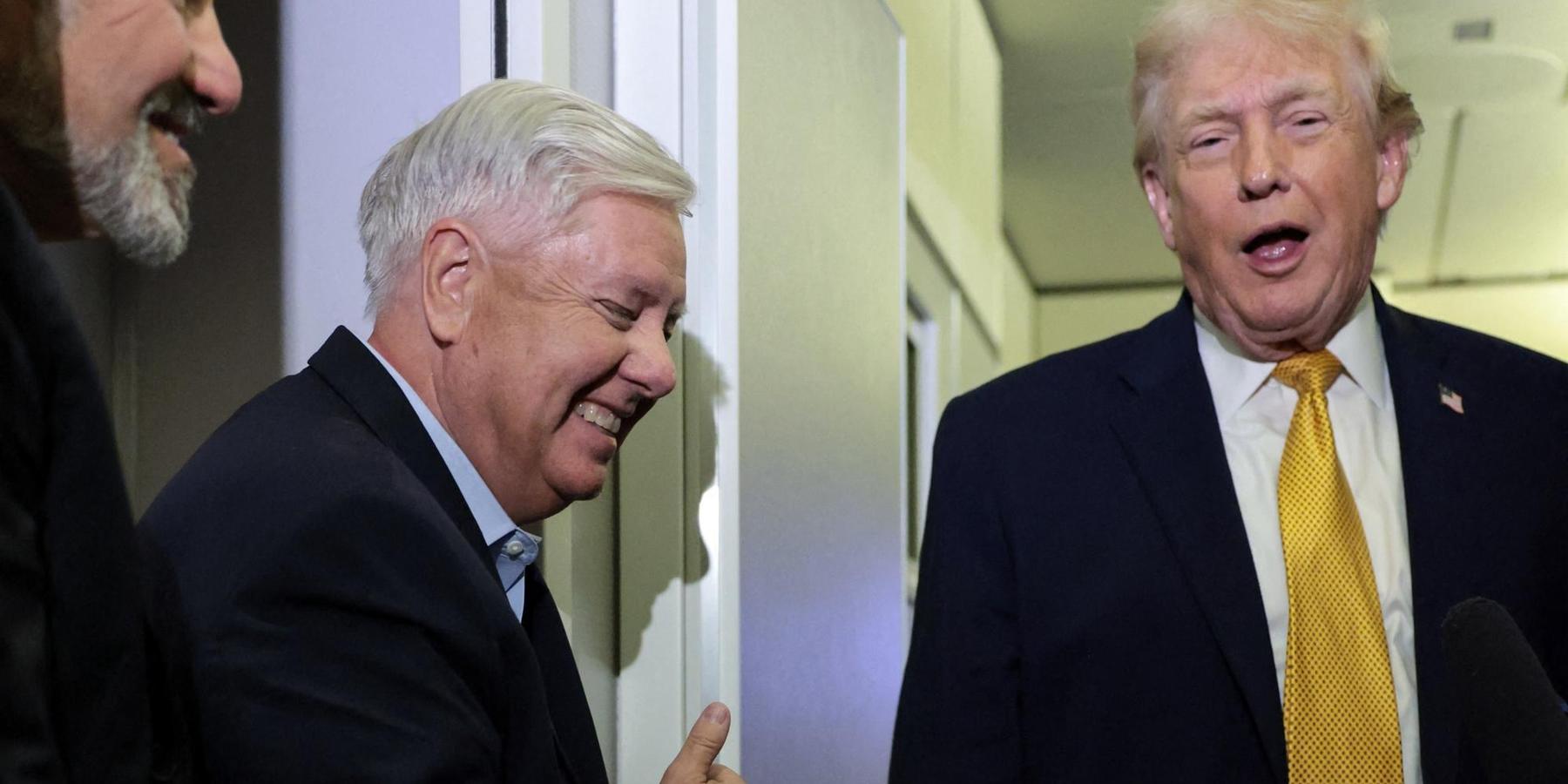
Secretary of State Marco Rubio, who has been gunning for regime change in Venezuela, Cuba, and Nicaragua for his entire political career, appears to be having the most influence on the president today. Meanwhile, Sen. Lindsey Graham, who has been enthusiastic about putting U.S. bombs and bodies in various war zones, is Trump’s golf buddy these days. Sen. Paul has accused Trump of being “under the thrall of Lindsey Graham” (though it is not entirely clear who is in the thrall of whom).
Trump’s hawkish former secretary of state, Mike Pompeo, seems happy all around, especially when he is giving interviews like this to Israeli think tanks.
While much of American foreign policy today reads like a militarist’s or a neoconservative’s wish list, Trump and some in his administration are trying hard to redefine regime change and intervention to be more palatable to the base, scrambling to make their own actions different from the Iraq and Libya regime change wars of the past.
“We’ve got this phobia built up” around regime changes and that “people need to stop ascribing apples and oranges here — the apples of the Middle East, or the oranges of the Western Hemisphere,” Secretary Rubio said on Meet the Press January 4.
“Venezuela looks nothing like Libya. It looks nothing like Iraq. It looks nothing like Afghanistan. It looks nothing like the Middle East,” he added.
Meanwhile, Vice President Vance — an Iraq War veteran who has in the past used his service to promote the idea of no new regime change wars — added on X, “We also have to remember, this is in our neighborhood. This is not Iraq. This is not 7,000 miles away. This is in our neighborhood.”
Is this switcheroo working with MAGA supporters who claim they are normally non-interventionist and against regime change? Maybe.
The Daily Wire’s Matt Walsh said after the Venezuelan ousting that he is “reflexively non-interventionist” but also that “Venezuela appears to be a resounding victory and one of the most brilliant military operations in American history. As an unapologetic American Chauvinist, I want America to rule over this hemisphere and exert its power for the good of our people.”
On its face that sentiment appears closer to Bush alumni and neoconservative David Frum, for whom there seems to be no U.S. intervention he doesn’t reflexively support.
Walsh isn’t alone. Former Trump adviser Steven Bannon, who has been a war skeptic more recently, sees a difference in Trump’s interventions too. “People are down for it as long as you don’t make the mistakes in Venezuela that the neocons made in Iraq — and every indication is that the president and his core team have studied this deeply and are implementing those lessons,” Bannon said in his own social media posting.
So should restrainer holdouts reconsider their positions too?
Senior Rand Paul adviser Doug Stafford doesn’t think so, telling RS, “Opposing endless wars, foreign aid and regime change was the bedrock of our founders foreign policy, and a lesson we would do well to keep trying to emulate today.”
“Just because the administration seems to have lost their focus, doesn’t mean we shouldn’t keep fighting,” he insisted.
“There are some hostile governments that look like they are hanging by a thread. I think Trump has been sold on the idea that he can topple them, or at least pull on the loose threads, without getting in too deep,” Jim Antle, executive editor of The Washington Examiner told RS in an email.
Antle added, “The lessons Trump and those who appear to be winning the internal fights in the administration took from Iraq are more limited than those learned by the restrainers in his orbit.”
On Greene’s concern that being anti-regime change has gone out of style, Curt Mills, Executive Director of the American Conservative, told RS that “opposition to regime change war didn't go out of style with the American people, however. Take a look at the polling on the Venezuela operation, which from a tactical perspective couldn't have gone more sterling for the administration.”
“It's still unpopular,” Mills said. “Neocon-lite foreign policy might be having a winter in the sun among some of the president's courtiers, but this nonsense remains hated in the broader public, and is likely poison for any politicians who embrace it or run firmly on its legacy.”
While Mills is right — in this YouGov poll, 51% of American adults opposed the Venezuela invasion while only 39% supported it — Republicans are largely still hawkish. In fact, 74% of self-identifying Republicans in that poll approved of the attack.
None of this bodes very well for foreign policy in 2026. The friends Trump keeps, and keeps closest, do seem to matter.
This week, reliable restraint advocate Tucker Carlson was present at a White House Venezuela oil executives meeting, where the president reportedly introduced him as “a very conservative guy, a very good guy.”
But Carlson once called Sen. Graham a “f***ing lunatic” for wanting the U.S. to strike Iran.
These personal relationships shouldn’t mean so much for American foreign policy. But they have, and likely will continue to in the future. Whether Trump is truly making “regime change great again,” therefore, is an open question.- Déjà coup: Iran war activates regime change dead-enders ›
- Rand Paul to Trump: Don't 'abandon' MAGA over Maduro regime change ›