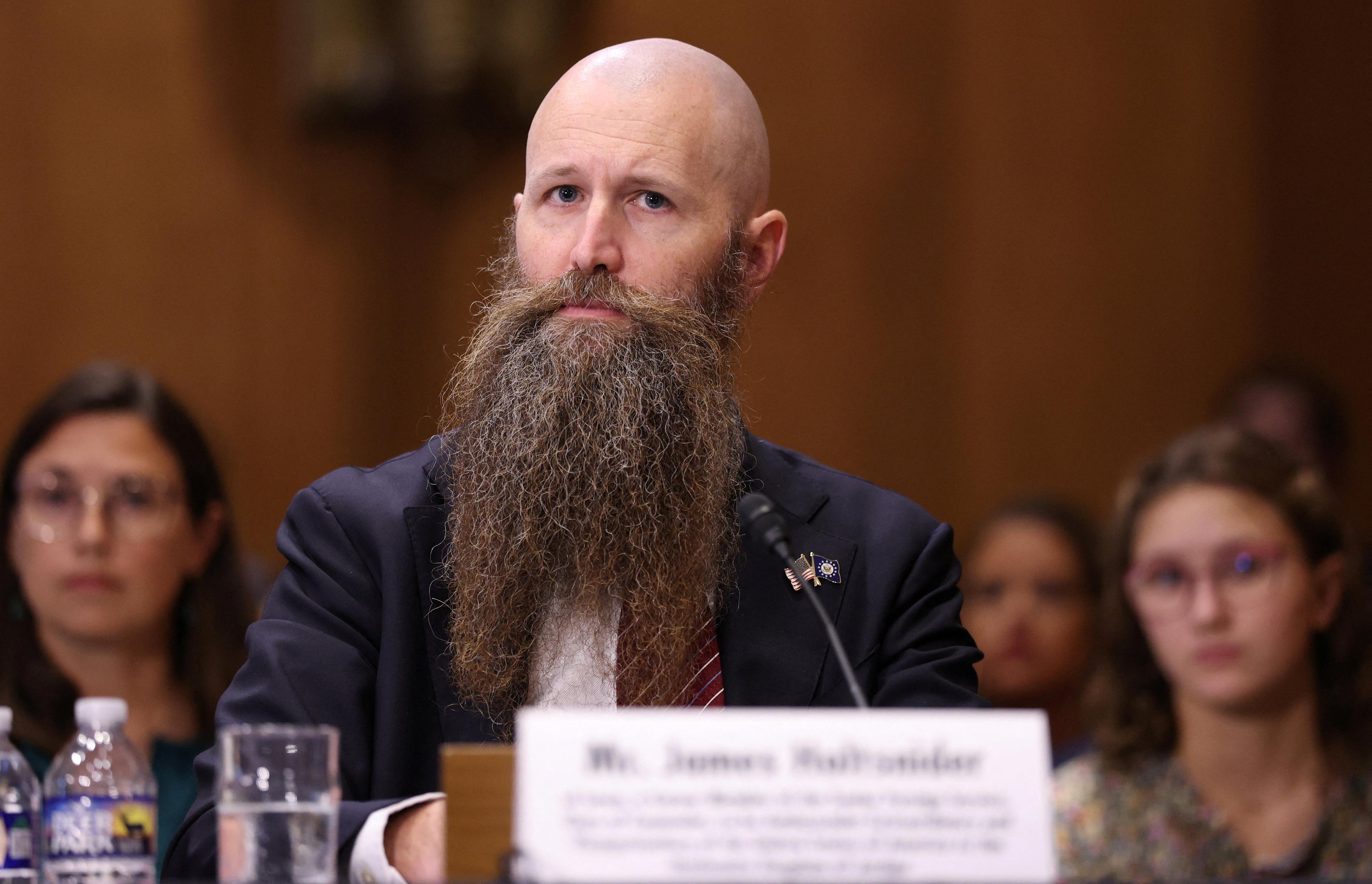
Since arriving in Amman around three months ago to serve as the U.S. Ambassador to Jordan, James Holtsnider quickly became one of the highest-profile envoys in the Hashemite Kingdom. In addition to presenting his credentials to King Abdullah II, Holtsnider has met with Jordanian soccer players, attended weddings, and joined tribal gatherings.
However, a January 14 request by a U.S. Embassy delegation for the ambassador to offer condolences at the family home of former Karak mayor Abdullah Al-Dmour showed that many Jordanians have little interest in participating in Holtsnider’s public relations initiative. Dmour’s relatives rejected the U.S. ambassador’s wish to visit. Dmour’s tribe issued a statement noting Holtsnider’s request “violates Jordanian tribal customs, which separates the sanctity of mourning from any political presence with public implications.”
Veteran Jordanian journalist Lamis Andoni explained in an interview that the Dmour family’s refusal to welcome the senior U.S. diplomat was motivated by Jordanians’ outrage over U.S. support for Israel during the Gaza war.
“Honorable Dmour family, you have done what pleases your Lord,” said Jordanian lawmaker Basem al-Rawabdeh of the Islamic Action Front party. “Anyone who welcomes and honors murderers and criminals is complicit in their actions.” (In 2024, a shawarma restaurant opened in Karak named “October 7.”) The U.S. Embassy in Amman declined interview requests with Holtsnider.
In July 1997, Holtsnider enlisted in the U.S. Marine Corps because, he said, he sought a break from school. He served for six years, including as a Marine security guard at U.S. Embassies in Zimbabwe and Turkey. After leaving the military, Holtsnider earned an undergraduate degree in physics at the University of Colorado before joining the State Department as a career foreign service officer in 2007.
Many in Amman were surprised by the U.S. ambassador’s request to visit Dmour since the former mayor was a Ba’athist and a harsh critic of Washington.
“Ignoring this political and human dimension reflects a serious misreading of local context,” explained former Jordanian parliamentarian Tarek Khoury in an interview. “Such actions elevate tension and reinforce the perception that U.S. diplomacy often lacks the necessary sensitivity to memory, dignity, and political identity within Jordanian society.”
The Dmours were not the only Jordanian family to spurn Holtsnider. One week later, relatives of deceased Major General Ibrahim Al-Sarayeh also spurned a January 21 request from U.S. officials for the ambassador to visit their house of mourning. Such actions are consistent with Jordanian public sentiment, as a 2025 poll revealed that 57 percent of Jordanian students view the United States as an enemy.
It is worth noting that during President Donald Trump’s first administration, then-U.S. Ambassador to Amman, Alice Wells, also faced troubles. Foreign Policy reported in August 2017 that Trump cut Wells’ tenure short after the Hashemite monarch expressed misgivings. A former U.S. official said that Abdullah was unhappy with the Obama administration’s response to ISIS’s brutal killing of Jordanian pilot Muath al-Kassasbeh shortly after Wells, a career foreign service officer, began her tenure in 2014.
Under the dome of parliament, Jordanian lawmaker Hussein al-Amoush asked Foreign Minister Ayman al-Safadi whether Holtsnider’s frequent field visits were in coordination with the Jordanian government and complied with diplomatic norms. Safadi responded that the U.S. envoy’s tours were routine, and Jordanian ambassadors overseas hold similar meetings. Under both Democratic and Republican presidents, the United States has provided the Jordanian government with over $10 billion in aid during the past decade.
Then, there is Holtsnider’s distinctive, lengthy brown beard. Local journalists have devoted entire articles to Holtsnider’s facial grooming, which is unusual for a Western ambassador posted to Amman. One commentator on X wrote, “I swear if he were an Arab, they’d call him an ISIS member.” Khoury, the former Jordanian lawmaker, added, “The beard has been perceived by many as evoking an orientalist or performative image rather than a modern diplomatic one.”
For some Jordanians, Holtsnider’s outreach specifically with Jordanian tribes was controversial. Dr. Hasan Al-Dajah, a professor of strategic studies at Al-Hussein Bin Talal University, noted, in an interview “Critics argued that the ambassador, intentionally or unintentionally, was granting international legitimacy to traditional structures rather than the modern state, thus weakening the concept of citizenship and reinforcing the logic of the tribe at the expense of the rule of law.”
However, Rana Sabbagh, a former Jordan Times editor-in-chief, contended in an interview that foreign officials interacting with Jordanian tribes is standard diplomatic practice, as the tribes are an integral part of Jordanian society.
Finally, some in the Hashemite Kingdom have focused on Holtsnider’s Marine service, especially after U.S. troops stationed in Jordan recently shot down Iranian drones fired at Israel. Jordanian activist Kameel al-Zoubi posted on social media, “Sending a military man to Jordan is a clear message: that Washington considers us a base, not a state, and a subordinate government, not an independent one.” At the same time, Dr. Dajah noted that several ambassadors have security backgrounds, and such military service does not imply hostile intentions.
Holtsnider also faced controversy in his previous Middle East posting. In June 2022, the Kuwaiti Foreign Ministry summoned Holtsnider, who was serving as Charge d’Affaires, for a reprimand over a U.S. Embassy in Kuwait social media post that contained a rainbow flag. Kuwait’s Foreign Ministry demanded the “need for the embassy to respect the laws and regulations in force in the State of Kuwait and the obligation not to publish such tweets.” The U.S. Embassy in Kuwait’s account said President Joe Biden was a “champion for the human rights of LGBTI persons.” Holtsnider did not publicly respond at the time to Kuwait’s censure.
With roughly half of Jordan’s population of Palestinian origin, many citizens have a deep connection to the Gaza conflict. Despite their large street protests, Andoni asserted that Jordanians feel “helpless” as Washington continues to provide advanced weapons to Israel. Given their limited options, Andoni said Jordanians are forced to show their resentment by rejecting Holtsnider’s “publicity campaign.”
- Is the Gaza war destabilizing Jordan? ›
- Jordan’s Abdullah at White House, looking down the barrel of a gun ›
- US diplomat accuses Belgian officials of anti-semitism on X | Responsible Statecraft ›
 Screengrab via niacouncil.org
 Screengrab via niacouncil.org