

The White House published its 2025 National Security Strategy on December 4. Today there are reports that the Pentagon is determined to develop new combatant commands to replace the bloated unified command plan outlined in current law.
The plan hasn't been made public yet, but according to the Washington Post:
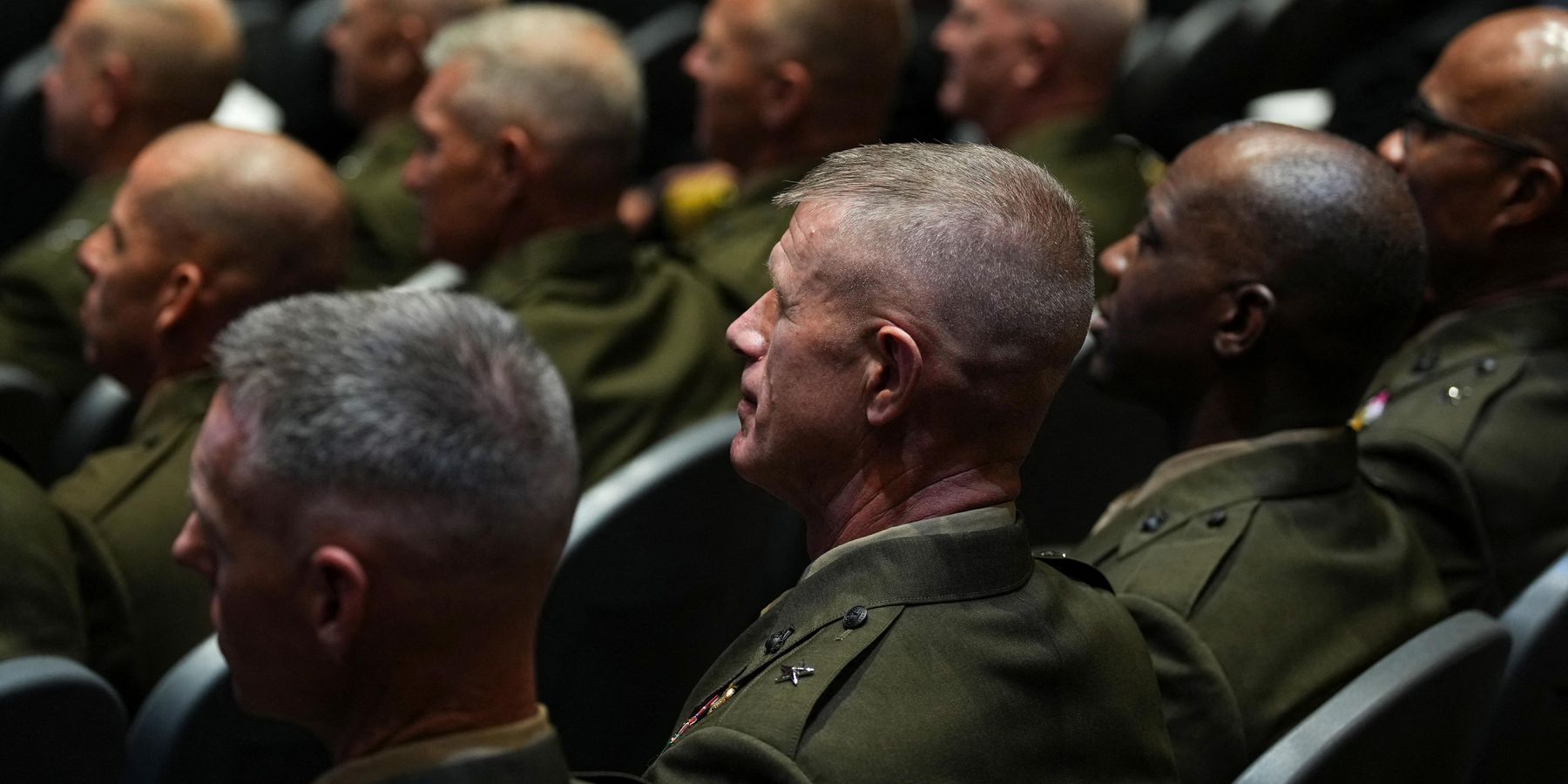
If adopted, the plan would usher in some of the most significant changes at the military’s highest ranks in decades, in part following through on Defense Secretary Pete Hegseth’s promise to break the status quo and slash the number of four-star generals in the military. It would reduce in prominence the headquarters of U.S. Central Command, U.S. European Command and U.S. Africa Command by placing them under the control of a new organization known as U.S. International Command, according to five people familiar with the matter.
In addition, the plan reportedly calls for realigning U.S. Southern Command and U.S. Northern Command under a new headquarters to be known as U.S. Americas Command. As a result of these moves, the number of combatant commands would be reduced from 11 to 8 and would shrink the number of four-stars who report to Hegseth.
Chairman of Joint Chiefs of Staff Dan Caine is supposed to roll this out in detail to the secretary this week. “Those familiar with the plan said it aligns with the Trump administration’s national security strategy, released this month, which declares that the ‘days of the United States propping up the entire world order like Atlas are over,’” the Post reported.
The text of the NSS is short and frank. It renounces the pursuit of global domination, downgrades the Middle East to a peripheral concern, and announces that American military power will concentrate on the Western hemisphere unless the homeland comes under direct attack. On paper this looks like a sensible retreat from overstretch. In practice, it is a vague plan for a halfway house. Halfway houses seldom survive because they try to keep one foot in the past while pretending to step into the future.
Concrete measures are absent from the so-called strategy and the command structures to support it.
The following points must be addressed if anything is to change:
First, defend America first. Keep ground and air forces at home or close to it except when the United States or its treaty partners in this hemisphere face direct attack. In the 80 years since WW II, National Strategy relied on forward deployed armed force, a dangerous practice in a world where precision strike and surveillance are ubiquitous. At this point in the history of the United States, America’s global warfare state is both a strategic liability and a financial crash waiting to happen.
Second, secure the global commons without subsidizing everyone else on the planet. America must retain enough naval and space power to keep sea lanes, air routes, and orbits open. This commitment benefits everyone. Everyone can contribute. Start charging or at least stop calling the current arrangement charity.
Third, it is a good idea if the Pentagon streamlines command structures as mentioned in the above Washington Post report. New commands should be theater command structures designed for defense, not offensive warfare. They should be associated with directions—North, South, East and West. Functional command structures should be consolidated into fewer, more agile headquarters.
Fourth, freeze all promotions to three- and four-star rank until a proper review is complete. The military currently boasts more admirals than ships and more generals than maneuver brigades. The goal should be to cut overhead by at least 30 percent and restore clear civilian control. Keep in mind that true lethality begins with the creation of new fighting formations consisting of Soldiers, Sailors, Airmen and Marines with new equipment who’ve lived and trained together for long periods under competent leadership.
Fifth, cultivate partnerships with major states that share an interest in access to the global commons and the suppression of criminality. For instance, the Indian Navy already patrols vast areas of the Indian Ocean from the Strait of Malacca to the Red Sea. American Naval Power does not need to always be present in the region to perform this task.
Sixth, rebuild the national industrial base. Identify the shipyards, factories, and supply chains needed for great-power competition and protect them. Closing many of the overseas bases that no longer serve a strategic purpose would free roughly 10 billion dollars a year according to Congressional Budget Office estimates. Spend the money on steel mills and semiconductor fabs instead of glossy programs that promise miracles and deliver slide decks.
Seventh, Operation Southern Spear illustrates the danger of old habits colliding with new rhetoric. Attacking Venezuela because Washington has the capability to do so is reminiscent of the decision to intervene in Vietnam. American military and economic hegemony are prohibitively expensive because Washington persists in confusing foreign intervention with national defense. Unless there is an identified, attainable political-military objective for American Military Power, Washington should avoid its use.
The new national security strategy and the interest in reducing the numbers of unified commands admits in principle that America’s current military posture is unsustainable, but more than the admission is needed. Washington has spent over half its tax dollars on military operations since World War II, and by 2022, its military budget alone exceeded that of the next ten countries combined. This massive military spending diverts resources from domestic infrastructure, education, and social programs.
Apart from nuclear arsenals, no foreign adversary poses an existential threat to the American homeland. Terrorism and transnational criminality persist, but both are matters for border security and police work. In most cases, they do not entail carrier strike groups or the commitment of World War II-style Army Divisions.
The new national security strategy and the concept of fewer unified commands is a step in the right direction, but it remains a halfway house that won’t crush the swollen headquarters or the single service parochialism that stifles innovation. Halfway houses fail because they compromise with conservative habits of mind that are tied to the status quo.
The above-mentioned points can advance the goals outlined in the new National Security Strategy, but without them, the problems afflicting American military performance since 1965 will not be solved.
- Yes, US generals should be fired ›
- Cut bloated military commands, get rid of ‘mission creep’ | Responsible Statecraft ›