“As everyone knows, the oil business in Venezuela has been a bust, a total bust, for a long period of time. … We're going to have our very large United States oil companies, the biggest anywhere in the world, go in, spend billions of dollars, fix the badly broken infrastructure, the oil infrastructure, and start making money for the country,” said President Donald Trump the morning after U.S. forces invaded Caracas and carried off the indicted autocrat Nicolàs Maduro.
The invasion of Venezuela on Jan. 3 did not result in regime change but rather a deal coerced at the barrel of a gun. Maduro’s underlings may stay in power as long as they open the country’s moribund petroleum industry to American oil majors. Government repression still rules the day, simply without Maduro.
In his second inaugural address, Trump claimed he wanted to be remembered as a peacemaker. Instead, he’s practicing what the scholar Alex de Waal calls “global mafia politics,” the new rules of an unraveling order that render familiar debates between realists and idealists, or restrainers versus primacists, somewhat stale.
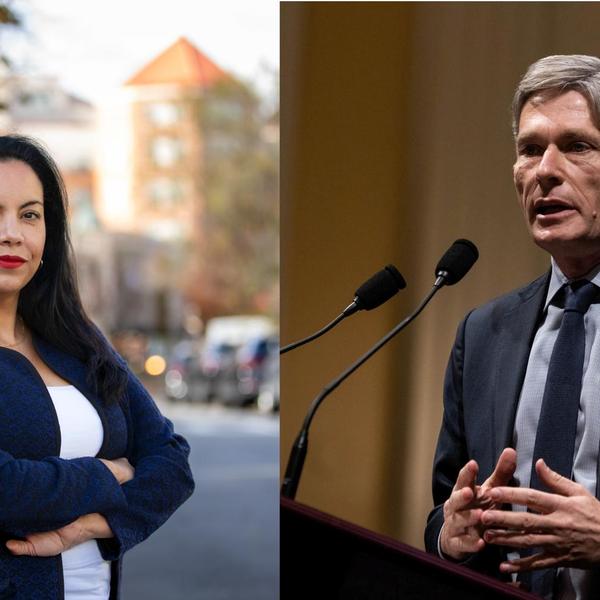
To better understand this dynamic, I spoke to de Waal about his thesis that the “political marketplace” now dominates international relations. De Waal is the Executive Director of the World Peace Foundation. He is an expert on Sudan and the Horn of Africa.
During our conversation, which has been edited for length and clarity, we talked about why the sovereignty of poor, weak countries at the periphery of world politics is being “sliced, diced, ranked, and traded.”
Di Caro: Where did you come up with the framework of the “political marketplace” to understand international relations and the exercise of power?
De Waal: I was tutored in this by some very disagreeable but very skilled operators in Sudan. At the Darfur peace talks 20 years ago, the head of the Sudan government delegation, who was a master operator — and a ruthless one — had two terms which he used in Arabic. Sandouk alsiyasia is the political pocket or political budget, the money he had for buying up members of the rebel delegations and for keeping the militia commanders in his own delegation onside. The other term was souq alsiyasia, which is a bazaar or marketplace.
His public job was to get a document, a peace agreement that he could wave. His real job was to use his political budget in the political market in order to secure his government’s position by buying off enough of the rebels.
This is the most rudimentary form of a market, where it’s cash in direct exchange for political allegiance, political service, political office. As you go up from an individual case like Sudan to the region and to the world, the financial means get a lot more sophisticated, and the commodity of power itself becomes more complex. And this is where you begin to see the state-based, realist system for understanding the world break down.
Di Caro: Today, the rules-based order is being shredded on multiple fronts. Are you saying it’s already been subsumed by the political marketplace, or can they coexist?
De Waal: I would argue that the imperial political marketplace, in its 18th- and early 19th-century manifestation, never went away. The legal precepts were created in the 17th century, and it matured with European maritime colonialism, in the Indian Ocean especially. The way the imperial powers treated decolonization, basically Britain and France, was to try to hold on to those elements of sovereignty that they still valued, particularly the financial and security sovereignty [of their colonial dominions]. And so the post-1945 era always had these two layers, these two tiers, and for much of the world outside Europe and North America, the second tier [the political marketplace] was a legacy of empire that still counted.
The political marketplace became the dominant logic in much of the world, stage by stage. It happened in countries when they fell apart, like when Sudan fell apart in the 1980s. It became a more regional phenomenon about 15 years ago with a couple of key developments, including the financial crisis. That so squeezed the public finances of poor countries that those in power could no longer credibly promise to deliver on basic public welfare programs. Also, the withdrawal of the so-called U.S. military hegemony over the Greater Middle East meant that other actors, especially the Gulf States, stepped into that vacuum.
Di Caro: So does this mean the political marketplace thrives in a world where U.S. hegemony has been waning?
De Waal: It’s where a particular type of U.S. hegemony is waning. If you look at the way the U.S. ran Afghanistan, it was an official state-building program. The CIA had a lot of political money, and it would dole out that political money to whatever warlord was going to cooperate with them in the fight against the Taliban and al-Qaida, even though those warlords were profoundly corrupt, out for their own good, and undermining the institutional state-building. The U.S. was a very unscrupulous user of this mechanism.
Di Caro: You’ve also said that kleptocracy is merging with gangsterism. Is that what’s happening in Venezuela now?
De Waal: It has all the hallmarks of being a crystalline example. In the Bush era, regime change meant you removed someone the U.S. didn’t like, and you experimented in constitutional democracy and free markets. In the political market era, where you have a regime that’s essentially run as a kleptocratic cartel, as Venezuela has been under Maduro — a regime run on the basis of gangsterism, payouts, bribes, and coercion, and does business with transnational organized crime — if you want to take over that, you want to keep the same operators. The operators have no loyalty other than to the principles of making money and preserving themselves. I would argue Venezuela looks very much like the new doctrine of “regime change” in the era of kleptocracy, keeping the structure intact and bringing in a new “mafia don” at the top.
Di Caro: You’ve said that “global mafia politics” renders national sovereignty of secondary importance, if it’s important at all. We know international law has been trampled in the past, but what’s the novel danger posed to the rule of law and human rights in the era of the political marketplace?
De Waal: What we now have under President Trump is that the subtext — there are always some dirty dealings going on — becomes the headline. Trump is totally disinhibited. The big message is not that “we will stand by the rules but will break them.” It’s “there are no rules. It’s up to whatever we say.” Trump has taken what was already implicit in the system and made it very overt.
Di Caro: Do the familiar debates over foreign policy, such as restrainers vs. interventionists, fall short when it comes to making sense of the world today? Is your framework of global mafia politics closer to the mark? Or do they overlap?
De Waal: There is certainly overlap. If I were to put my thesis strongly, I would say geokleptocracy has swallowed geostrategy and geopolitics. They still exist, but the driving force, the logic that makes things tick at the moment, is geokleptocracy. Take the political bazaar in Sudan to a global scale, and what really counts is deploying political money backed up with coercion in order to create a system that will generate almost unlimited wealth for those at the top. That doesn’t mean countries. It means particular political-business enterprises, often attached to countries or sometimes owning countries, but are not identical to nation-states.
Di Caro: I want to return to Venezuela. Is there something more to this than the deal? Venezuela’s rulers get to stay without Maduro, the U.S. gets the oil. Is there also a theatrical nature to this? Use of overwhelming force to make a point?
De Waal: I think that’s absolutely correct. The economics of it don’t really add up. What’s interesting is that Trump, alone amongst the senior figures in his government, came out and gave [oil] as a rationale. This reflects two things. One is his own worldview, which is partly from the 1980s when oil was so important. But also to legitimize theft in this way, to legitimize kleptocracy. To say, yes, this is how we do it, just as the U.S. used to do it when it intervened in Central American countries in the past.
Di Caro: You’re painting a pretty bleak picture of how international affairs will be conducted.
De Waal: It is a bleak picture. And I think the first step toward coming to grips with it is to have pessimism of the intellect and recognize it for what it is. We need to see what the core drivers are. And there we can take some solace from places where there’ve been attempts to roll it back, where you’ve seen the business class often in coalition with civic groups say we can’t have our politics run on this basis. It’s not viable.
- Tech billionaires behind Greenland bid want to build 'freedom cities' ›
- Trump's new 'gangster' threats against Greenland, allies, cross line ›
 Screengrab via niacouncil.org
 Screengrab via niacouncil.org