

The Senate narrowly failed to advance a measure on Wednesday that would have blocked the president from continuing his military campaign against so-called “narco-terrorists” off the coast of Venezuela and elsewhere in the Caribbean Sea.
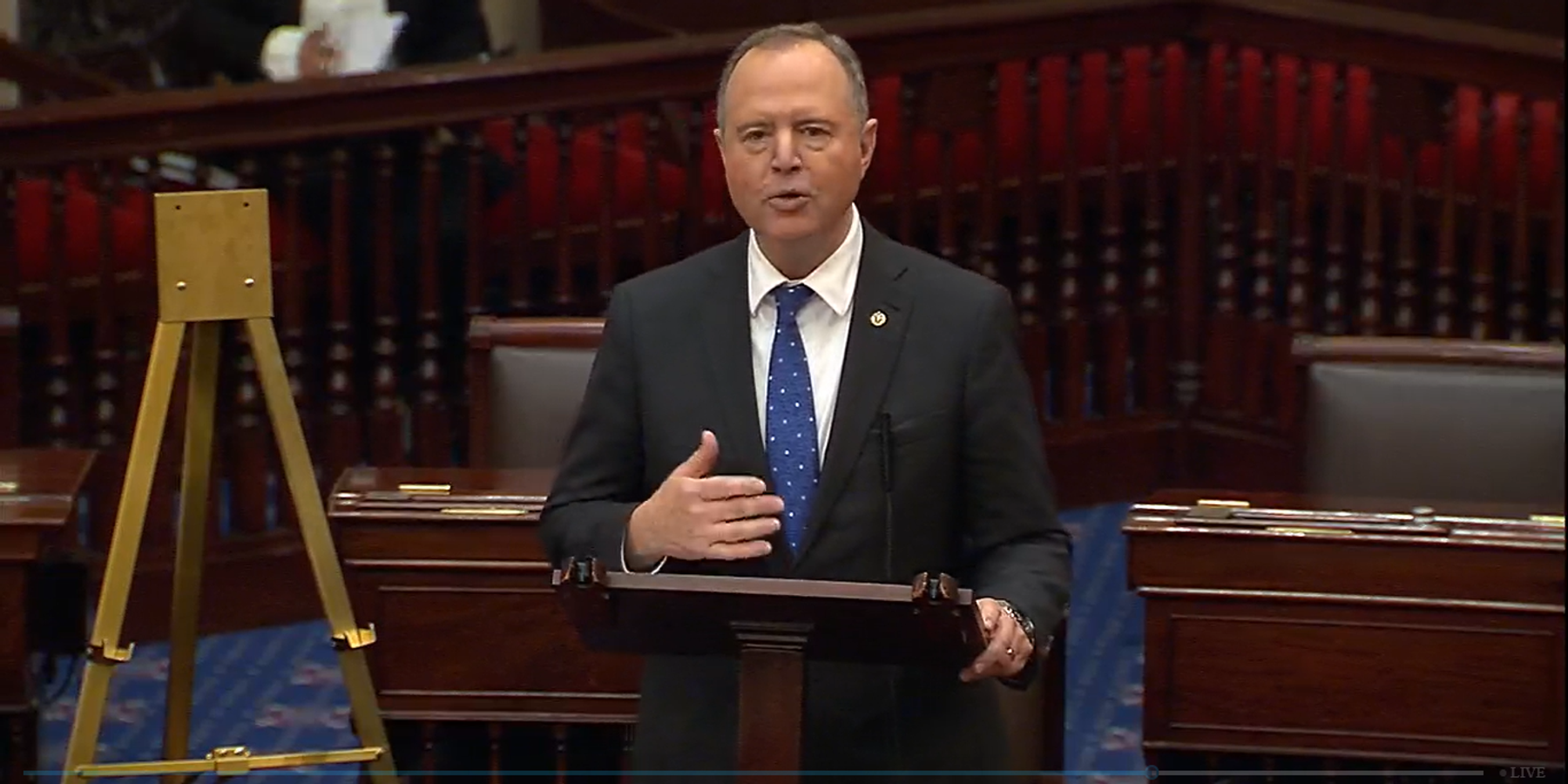
The War Powers Resolution, sponsored by Sens. Adam Schiff (D-Calif.) and Tim Kaine (D-Va.), failed to discharge from the Senate Foreign Relations Committee by a vote of 48-51.
Lawmakers voted largely along party lines to can the resolution: Democrats mostly supported it, and Republicans mostly voted against it. Sen. Rand Paul (R-Ky.), who cosponsored the resolution, and Sen. Lisa Murkowski (R-Alaska) were the lone Republicans to support the measure. Sen. John Fetterman (D-Pa.) voted against it.
The vote follows a spate of repeated U.S. military attacks on boats in waters near Venezuela suspected of carrying illegal drugs to the United States, as part of what the Trump administration calls a "non-international armed conflict" with drug cartels there.
But on the Senate floor, resolution supporters stressed Washington’s ongoing attacks are illegal without Congress’s explicit approval. They said the Trump administration had not provided enough evidence it is attacking terrorists — but, even if they are, authorization for attacks on suspected terrorists must go through Congress first.
“These strikes were not authorized by Congress. Congress has not been shown the evidence of who exactly was on board these ships, whether they were all headed to the United States or some other destination, or whether they posed an imminent danger of attack on the United States,” Schiff said on the Senate floor.
“Such strikes are not legal, and they are not made legal or constitutional by the claim… that some or all of the occupants [belong to terrorist groups. That] does not deprive Congress of its vital role in approving the use of force,” he added.
“This resolution would just say very simply, that if the Trump administration wants to be at war against a terrorist organization, they should come to Congress, notify us and seek our approval,” resolution supporter Sen. Elissa Slotkin (D-Mich.) said.
Legal experts likewise stressed that recent strikes are illegal.
“Everyone in Congress should be crystal-clear — these airstrikes are summary executions and extrajudicial killings," John Ramming Chappell, an Advocacy and Legal Fellow at the Center for Civilians in Conflict, told RS. "They are manifestly illegal under both U.S. and international law."
In the House, Reps. Jason Crow (D-Colo.) and Ilhan Omar (D-Minn.) introduced separate War Powers Resolutions to stop the unauthorized attacks targeting drug cartels in the region. Crow’s legislation is the House version of the Schiff and Kaine resolution, which halts the use of unauthorized force against “non-state organization[s] engaged in the promotion, trafficking, and distribution of illegal drugs and other related activities."
Omar’s resolution, introduced earlier, explicitly blocks the use of armed forces against the Venezuelan government, in addition to attacks on groups the Trump administration considers foreign terrorist organizations, without congressional approval.
“There will be more opportunities for Congress to rally against the president’s killings of civilians without due process. The War Powers Resolution of 1973 requires the President to stop these attacks 60 days after they began, unless Congress authorizes them to continue," Ramming Chappell said. "We will likely see more War Powers Resolutions introduced if the president moves to strike Venezuela or another country."
- House joins Senate in push against war with Iran ›
- Senator Kaine: US cannot go to war without a vote ›
- Senate vote to exert war powers over Trump fails ›
- Senate vote fails to block Trump attacks on Venezuela | Responsible Statecraft ›
- Congress needs a civics lesson on war powers ›