
Follow us on social

google cta
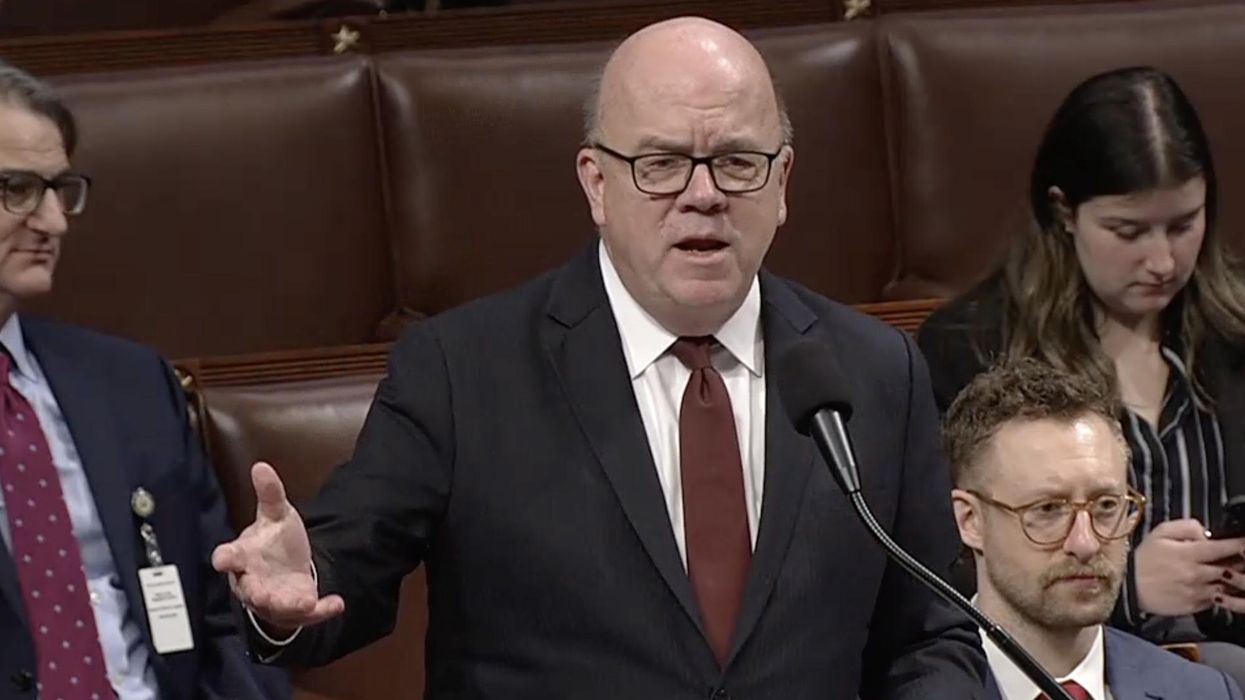
Rep. Jim McGovern (D.-Mass.)

House unable to halt Venezuela war march

Two votes narrowly failed along party lines

Reporting | QiOSK
google cta
google cta

Tonight the House of Representatives failed to pass a resolution to prevent the use of unauthorized military force against Venezuela, amid escalating hostilities against it.

Lawmakers narrowly voted to reject H. Con. Res. 64, sponsored by Rep. Jim McGovern (D.-Mass.) in a 211-213 vote. Republican representatives Thomas Massie (R.-Ky.), Marjorie Taylor Greene (Ga.) and Don Bacon (Ill.), and Democrats Joaquin Castro (Texas), Sarah Jacobs (Calif.), Ro Khanna (Calif.), and Sydney Kamlager-Dove (Ill.) co-sponsored that resolution.

Lawmakers also voted 216 to 210 to reject H. Con. Res. 61,introduced by Rep. Gregory Meeks (D-N.Y.), which would block U.S. military action against “any presidentially designated terrorist organization in the Western Hemisphere,” amid ongoing U.S. strikes against so-called “narco-terrorists” around the Caribbean. Meeks’ resolution was co-sponsored by 40 other legislators, all Democrats.

Lawmakers voted primarily along party lines for both resolutions, where Republicans largely voted against both resolutions, and Democrats largely voted for them. Exceptions on the Republican side included Reps. Massie and Bacon, who voted for Res. 61; they and Green voted for Res. 64. On the Democratic side, Rep. Henry Cuellar (Texas) voted no for both resolutions while Rep. Vincente Gonzalez (Texas) joined him to vote no on 61.

Since early September, the U.S. has repeatedly struck boats near Venezuela it alleges are bringing illegal drugs to the U.S., as part of what it calls a "non-international armed conflict" with drug cartels it has designated as foreign terrorists.

That campaign comes as the U.S. has pursued a major military build-up in the Caribbean off the coast of Venezuela in what President Trump has called a pressure campaign against Venezuelan leader Nicolas Maduro.Trump said early this month that land operations against Caracas were possible “soon.” Trump announced a blockade yesterday on sanctioned oil tankers leaving and entering Venezuela.

Lawmakers have grown increasingly weary about the boat strikes and their legality, with some wondering whether the operation’s end game is to oust Maduro.

Secretary of State Marco Rubio and Secretary of Defense Pete Hegseth gave a closed door briefing to House and Senate lawmakers on the strikes yesterday, to quell concerns about the legality of the strikes; many lawmakers left unconvinced.

On the floor before the votes, lawmakers said Congress must assert its authority to decide when to go to war.

“The constitution vests this body with authority over matters of war and peace. That power has too often been ceded to the executive branch,” Rep. Meeks said. “Congress must make clear to all of us that no president can unilaterally draw the United States into a conflict.”

Others warned against war with Venezuela altogether.

“It's easy to get into a war. It's hard as hell to get out of war,” Rep. McGovern said. “I've been around long enough to hear representatives of both parties talk about war as something simple, ‘You can get into it. We get out of it easy. No big deal.’ That's never happened!”

“Even the Pentagon says it will be very, very complicated to topple Maduro,” he said.

Previous votes in the Senate aimed at blocking possible U.S. military action against Venezuela, or the strikes against “narco-terrorists” near it, have also narrowly failed.

Reps. Ilhan Omar (D-Minn.) and Jason Crow (D-Colo.) both introduced War Powers Resolutions this fall; they were not brought to vote.


Top image credit: live.house.gov [screenshot]
google cta
Reporting | QiOSK
Trump $1.5 trillion
Top image credit: Richard Peterson via shutterstock.com

The reality of Trump’s cartoonish $1.5 trillion DOD budget proposal

Military Industrial Complex

After promising on the campaign trail that he would drive the war profiteers out of Washington, and appointing Elon Musk to trim the size of government across the board, some will be surprised at President Trump’s social media post on Wednesday that the U.S. should raise the Pentagon budget to $1.5 trillion. That would mean an unprecedented increase in military spending, aside from the buildup for World War II.

The proposal is absurd on the face of it, and it’s extremely unlikely that it is the product of a careful assessment of U.S. defense needs going forward. The plan would also add $5.8 trillion to the national debt over the next decade, according to the nonpartisan Committee for a Responsible Budget.

keep readingShow less
Trump Venezuela
Top image credit: President Donald Trump monitors U.S. military operations in Venezuela, from Mar-a-Lago Club in Palm Beach, Florida, on Saturday, January 3, 2026. (Official White House Photo by Molly Riley)

Trump's sphere of influence gambit is sloppy, self-sabotage

Latin America

Spheres of influence stem from the very nature of states and international relations. States will always seek to secure their interests by exerting influence over their neighbors, and the more powerful the state, the greater the influence that it will seek.

That said, sphere of influence strategies vary greatly, on spectrums between relative moderation and excess, humanity and cruelty, discreet pressure and open intimidation, and intelligence and stupidity; and the present policies of the Trump administration in the Western Hemisphere show disturbing signs of inclining towards the latter.

keep readingShow less
 Ngo Dinh Diem assassination
Top photo credit: Newspaper coverage of the coup and deaths, later ruled assassination of Vietnamese leader Ngo Dinh Diem and his brother Ngo Dinh Nhu. (Los Angeles Times)

JFK oversaw Vietnam decapitation. He didn't live to witness the rest.

Washington Politics

American presidents have never been shy about unseating foreign heads of state, by either overt or covert means. Since the late 19th century, our leaders have deposed, or tried to depose their counterparts in Iran, Cuba, Iraq, Afghanistan, the Philippines, Guatemala, Honduras, Panama, and elsewhere.

Our presidents indulge in regime change when they perceive foreign leaders as inimical to U.S. security or corporate interests. But such efforts can backfire. The 1961 attempt to topple Fidel Castro, organized under President Eisenhower and executed under President Kennedy, led to a slaughter of CIA-trained invasion forces at the Bay of Pigs and a triumph for Castro’s communist government. Despite being driven from power by President George W. Bush in retribution for the 9/11 attacks, the Taliban roared back in 2023, again making Afghanistan a haven for terrorist groups.

keep readingShow less
google cta
Want more of our stories on Google?
Click here to make us a Preferred Source.

LATEST

QIOSK

Newsletter

Subscribe now to our weekly round-up and don't miss a beat with your favorite RS contributors and reporters, as well as staff analysis, opinion, and news promoting a positive, non-partisan vision of U.S. foreign policy.