

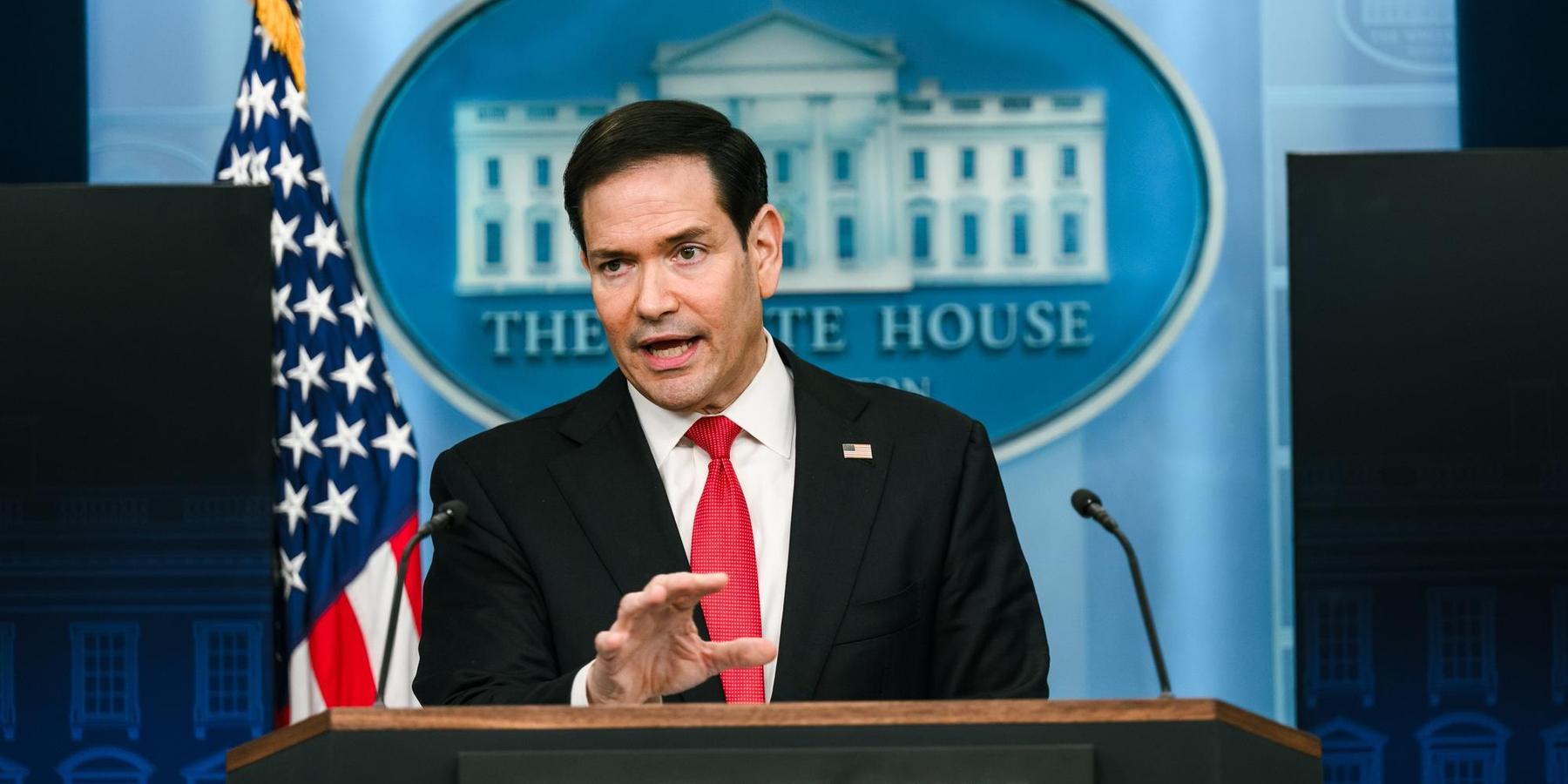
After Democrats dominated last week’s midterm elections, retaking control of the House and Senate, President Donald Trump has turned his attention southward.
“Cuba is falling. It’s a failing nation. It’s got an ideology very similar to what the Democrat ideology is,” he said Monday. “I would imagine it will fall fairly soon.”
The comments suggest that, despite facing a stunning rebuke of his foreign-policy adventurism in Iran, Trump is not quite ready to give up on his goal, reiterated as recently as last month, of overthrowing the Cuban government. So is Trump poised to go beyond economic pressure and saber rattling by launching a military campaign against Cuba?
The answer is “no” — or at least “not yet.”
Many analysts predict that a lame-duck president constrained by domestic setbacks could seek redemption through foreign-policy achievements, including by lashing out at seemingly easier targets like an impoverished Caribbean nation. But the reality is that the same reasons why Washington has not taken kinetic action against Havana thus far continue to hold after the midterms.
For one, the administration has not yet identified the Cuban equivalent of Venezuela’s Delcy Rodríguez who could be compelled to do Washington’s bidding in the aftermath of a potential armed or covert operation; Secretary of State Marco Rubio’s inconspicuous tweet last month urging Cubans to enter into a “discreet partnership” with the CIA made this abundantly clear.
Likewise, efforts to destabilize Cuba’s existing power structure through decapitations or targeted strikes on military objectives — as newly appointed White House Chief of Staff Stephen Miller might prefer — continue to present clear national security risks to the U.S., as they did before the midterms. These problems include potentially spurring a chaotic migration event just off U.S. shores, introducing levels of civil unrest unknown on the comparatively safe island, and inviting criminal outfits to gain a foothold in a country with no serious weapons, drug or organized crime problem.
But more importantly, ongoing hostilities in the Middle East make opening a completely new, unauthorized front in Cuba both operationally implausible and politically explosive with the American public and on Capitol Hill.
These factors are more likely to restrain Trump than Democrats’ expected attempts in the new Congress to revoke the national emergency underpinning the oil blockade, withhold funds for unauthorized military action against the island or even introduce fresh legislation to lift the embargo entirely. While all of these initiatives are important, the administration will ultimately find ways to squash or circumvent them.
Legislative efforts to rein in escalation toward Cuba face a similar uphill battle with Democratic leadership, not only from pro-embargo Florida Democrats like Reps. Debbie Wasserman-Schultz and Jared Moskowitz, but more importantly from senior Democrats like Reps. Hakeem Jeffries and Gregory Meeks, who despite occasional condemnations tend to see a reformed Cuba policy as a losing proposition in a Cuban-American-heavy Florida that’s now considered back in play.
Most consequentially, the administration’s Cuba plans depend largely on those of Rubio, who amid other foreign policy quagmires in Iran and Ukraine has taken the lead on the administration’s push to restore U.S. domination across Latin America, with a particular focus on Venezuela and Cuba.
For the past two years, Rubio has remained in Trump’s good graces, flying under the radar by keeping his distance from controversial policies and leaving major international challenges to a bevy of special envoys. Meanwhile, he has racked up “wins” in the Western Hemisphere, where numerous regional governments have shifted to the right and signed up for Washington’s escalating war on “narco-terror,” notwithstanding recent setbacks in Brazil and Paraguay.
Now, Rubio is insisting that he plans to stick it out for the remainder of Trump’s second term, even as Bloomberg and The Independent report that he is consulting outside strategists about leaving the administration for a presidential run. But whether Rubio stays in the administration will have little practical impact on the likelihood of a military operation.
If the secretary leaves office, Cuba would almost certainly fall on the list of administration priorities, opening the possibility of a broad economic deal directly with Trump that leaves the Cuban government in place without any meaningful political opening. And any near-term departure would make a dramatic — and decisive — escalation with Cuba unlikely, particularly as the war in Iran drags on and his attention is pulled toward making sure the three-phrase plan he’s devised for Venezuela remains on track.
If Rubio sticks around, Cuba will certainly be a major reason why. While Rubio is widely considered to be shape-shifting and ideologically flexible, regime change in Cuba has been a singular point of obsession for the Cuban-American politician over his 25-year political career. Keeping his “dream job” in an unpopular Trump administration may be worth the political risk if it means he can put the island of his parents’ birth onto an “irreversible glidepath toward a very different future.”
But that doesn’t mean the U.S. will reach for the military option. The most likely scenario for Cuba in the months ahead is that Rubio will accelerate attempts to weaken the communist regime by identifying new Cuban government entities to sanction and designing covert plans while simultaneously seeking to avoid outright collapse by allowing Florida-based companies to sell food, fuel, and vehicles to Cuba’s private sector and funnel humanitarian assistance through religious organizations.
With Rubio firmly in place, the prospect for a broader negotiated outcome that offers sanctions relief in exchange for the economic and political reforms Rubio expects — as many of us proposed earlier this year — remains dim. Militating against such a possibility are the Cuban government’s insistence that it will outlast Trump as well as widespread disapproval in South Florida of negotiating the island’s future with the Cuban government.
After all, Cuban-American voters are being heralded for helping keep Florida red amid a nationwide “blue tsunami.” While their support for Rubio’s top congressional allies, Cuban-American Reps. Maria Elvira Salazar and Mario Diaz-Balart, plummeted by double-digits in comparison to 2024, those results were shaped more by immigration and affordability than Trump’s Cuba policy, which remains popular in South Florida.
Ultimately, Rubio doesn’t need a military escalation to elicit the kind of change he’s seeking in Havana, as an escalating sanctions regime and a naval-enforced fuel blockade has convinced his department that his master plan is already paying off.
For the Cuban people, of course, this plan is contributing to their misery and desperation. But with Rubio’s stock somehow rising despite last Tuesday’s Democratic blowout, the last thing the future presidential hopeful needs is another war — this one on his watch — going sideways.
“One of the things we've lost in American foreign policy and geopolitics is the concept of patience and persistence," Rubio said in reference to Cuba before the midterms.
“You can’t have something in place for 70 years…and then think overnight you’re just going to rip out the whole thing and put something brand-new into the ground,” he added soon after.
- The real lesson of Cuba's alleged drone build-up against the US ›
- Despite intense US pressure, UN votes to condemn Cuba blockade ›