

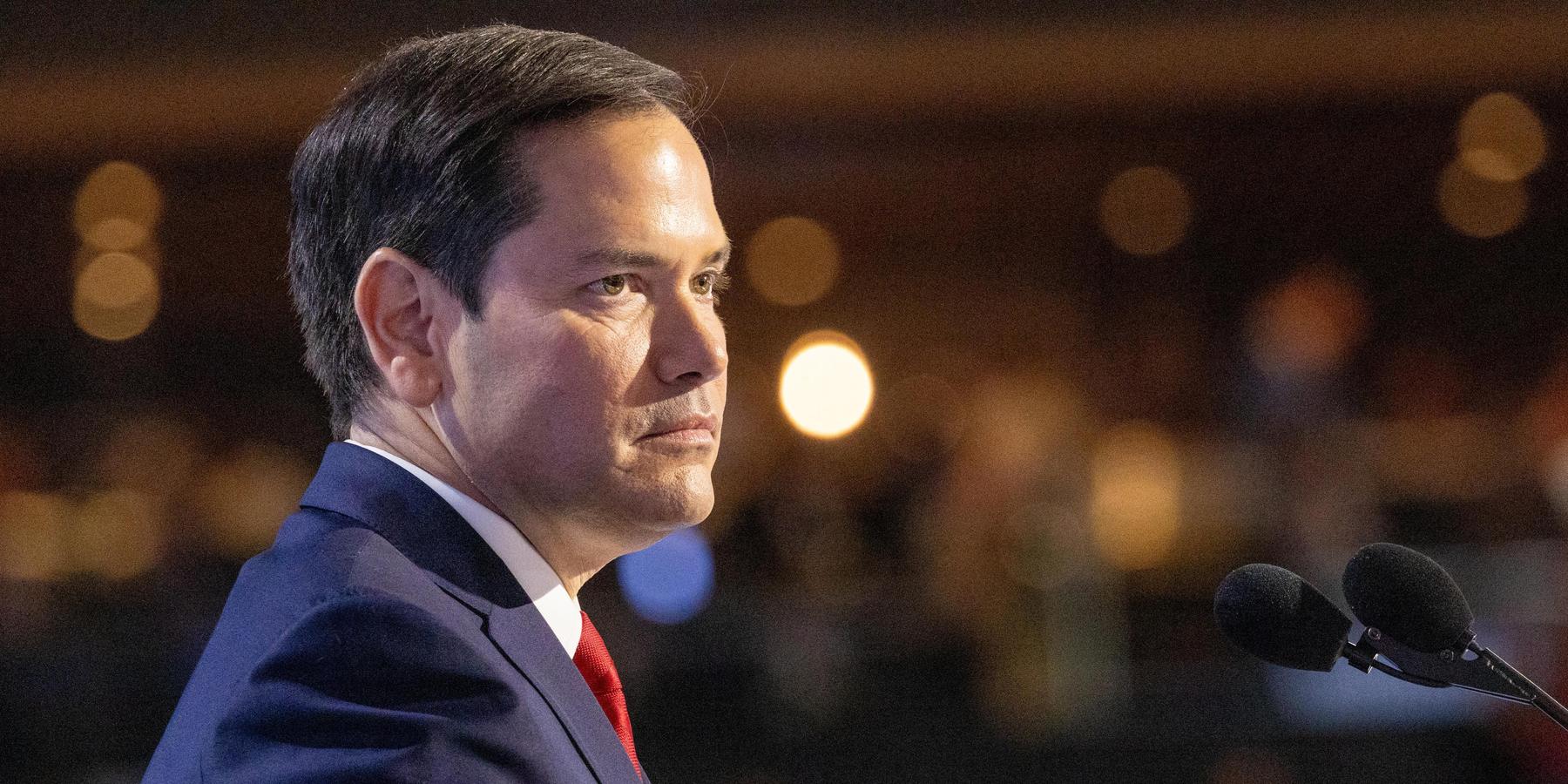
Shortly after four members of Congress returned from a fact-finding visit to Havana early last week, Secretary of State Marco Rubio announced a tranche of new sanctions against Cuba’s tourism, energy, trade and security sectors, the latest move in a months-long maximum pressure campaign intended to overthrow the island’s government by year’s end.
Reps. Mark Pocan (D-Wis.), Teresa Leger-Fernández (D-N.M.), Maxine Dexter (D-Ore.) and Delia Ramirez (D-Ill.) heard first-hand from a diverse range of Cubans that the de facto fuel embargo and escalating secondary sanctions against foreign firms in Cuba are strangling the very people the U.S. claims to support. The group referred to the conditions they saw in the Cuban capital as a “silent Gaza,” contradicting the Trump administration’s claims that its brazen regime change gambit has only targeted the Cuban government.
I accompanied the congressional delegation and have lived, worked and traveled to the island for over a decade. I can say confidently that, when the farmers, doctors, religious leaders, aid organizations, private entrepreneurs, and foreign diplomats with whom the members met say the crisis in Cuba is more dire than at any point in recent memory, they mean it.
Nationwide blackouts are now a near-weekly phenomenon. With no electricity, access to running water is increasingly scarce. Children are not attending school because teachers can’t get to work. Neither can most workers, so private businesses are shuttering. With scant fuel and few international flights, tourism and the income it generates for independent Cubans are plummeting. Hospitals and clinics are running on fumes, as trash piles up on street corners, fueling mosquito-borne and viral illnesses. Food is spoiling in ports, fields and refrigerators, as Cubans see their rapidly devaluating local currency waste away to nothing.
Add to that the near-constant threats of U.S. military action. Some are more overt, like increased U.S. surveillance flights off Cuban coasts and news reports of plans to send in the 101st Airborne Division; others are more implicit, like the recent indictment of Raúl Castro and the release of a State Department report referring to Cuba as a nearby terror hub plotting to conquer the U.S. Cubans are living on edge, fearing that things will get worse before they improve.
In this context, it’s hard to see how a diplomatic solution or a deal to resolve this slow-burning war of attrition — which Mexico, the Vatican, Panama, CARICOM, and the U.N. have all offered to mediate — could prevail.
Still, direct talks between U.S. and Cuban authorities have occurred. The State Department’s Michael Kozak and Jeremy Lewin met with their Cuban counterparts on April 10. CIA Director John Ratcliffe met with Cuban intelligence officials on May 14. U.S. SOUTHCOM Commander Francis Donovan held fenceline meetings with top Cuban generals at Guantanamo Bay on May 29.
Secretary Rubio himself has spoken and met with the grandson of former Cuban president Raúl Castro, Raul Guillermo Rodríguez Castro. Known as The Crab, Castro’s grandson has liaised with U.S. and foreign figures in Trump’s orbit, presented himself as a Cuban version of Venezuela’s Delcy Rodríguez, and even met recently with former Trump Organization executives in Havana, according to sources who have spoken with RS.
Nonetheless, all signs indicate that progress in bilateral talks made back in March — when the U.S. “allowed” a Russian fuel tanker to dock in Havana, providing momentary relief for Cuba’s economy — has largely stalled, and other unconventional backchannels have petered out. A carefully hatched plan to send regular tankers of U.S. fuel to Cuba’s private sector was thwarted by Rubio within a day of its announcement, while Spanish hotel chains Meliá and Iberostar; French and German shipping companies CMA CGM and Hapag Lloyd; and U.S. credit card giants Visa and Mastercard have all suspended business on the island.
It’s possible this could be all according to plan, and that a soft takeover of Cuba’s main industries by President Donald Trump and some of his friends and donors is in the works. After the largest foreign investor in Cuba, Canadian mining firm Sherritt International, announced its departure earlier this year, it said it would seek State Department approval to sell its stake in a nickel and cobalt joint venture to former Trump adviser Ray Washburne. An Australian gold mining firm recently followed a similar path, saying it’s also in talks with the State Department.
With hundreds of prime hotels sitting near-empty, it’s plausible that U.S. hotel chains, including Trump’s, could snatch them up at basement-bargain prices. Fresh sanctions against Cuba’s military and state-run tourism companies have forced authorities to initiate privatizations of key assets, according to sources familiar with the matter. Emirati and Egyptian investors with apparent Trump connections are reportedly advising Cuban trade officials as they seek approval for the development of “Trump Island” on a largely military-administered cay in the northern-central part of the archipelago. And the container terminal at Cuba’s main Mariel Port and the leading international business center in Havana were both recently stripped of any military affiliation.
Cuban, Cuban-American and foreign businesspeople are engaged in advanced talks to assume management or ownership of some of these properties, according to sources familiar with discussions. These transfers could provide an off-ramp that would effectively dismantle the Cuban military-led conglomerate GAESA and give private actors the upper hand in Cuba’s fuel markets. Yet Rubio, despite publicly seeking these objectives for years, is blocking even these workarounds.
In recent statements, Rubio has said he would be realistic by accepting gradual economic change on the island and directly engaging with select Cuban leaders. Yet his actions indicate that his maximalist stance toward the island — demanding nothing short of drastic political transformation and wholesale privatization of entire industries — remains, even as Trump demonstrates a willingness to strike immediate deals he considers favorable to him and his allies.
For now, Rubio seems intent on inducing economic dependence on the U.S. without precipitating outright collapse, cutting off every possible source of income to the Cuban economy while channeling the food, fuel, remittances and consumer goods that do enter the island through authorized Florida-based firms. The U.S. has also peppered in modest shipments of humanitarian assistance for thousands — not millions — of Cubans as part of a broader commitment to deliver $100m in aid through religious organizations over an unspecified period of time.
The U.N. and Cuba’s allies in Vietnam, China, Mexico and Brazil have provided modest amounts of food, medical supplies and solar panels, but this aid is no substitute for the billions of dollars in trade and investment needed to reverse the precipitous decline in Cubans’ standard of living. Cuban authorities have sought to court that foreign capital by announcing the country’s most sweeping economic reforms in six decades, but these will have little immediate impact if not accompanied by the lifting of U.S. restrictions and the rollout of clear regulations providing potential investors with legal certainty.
With Trump warning that “a lot of things are going to happen in Cuba in the next couple of months,” and with life in Cuba growing increasingly untenable, the Cuban people are running out of time. For now, their government is wagering that it can survive at least until next January, when Democrats will likely retake one or both chambers of Congress and seek to restrain further economic or military escalation against the island.
“I don’t feel like there are any serious negotiations going on,” Rep. Pocan told a group of reporters in Washington on Tuesday.
“We call on the Trump administration to… [engage] in serious and comprehensive negotiations with Cuban authorities that…provide a much-needed solution for a Cuban population that doesn’t have any more time to wait,” the four members jointly wrote.
- The real lesson of Cuba's alleged drone build-up against the US ›
- A deal that Cuba (and Trump) cannot refuse? ›
- As Rubio turns into punisher, Cubans wary of final blow ›