

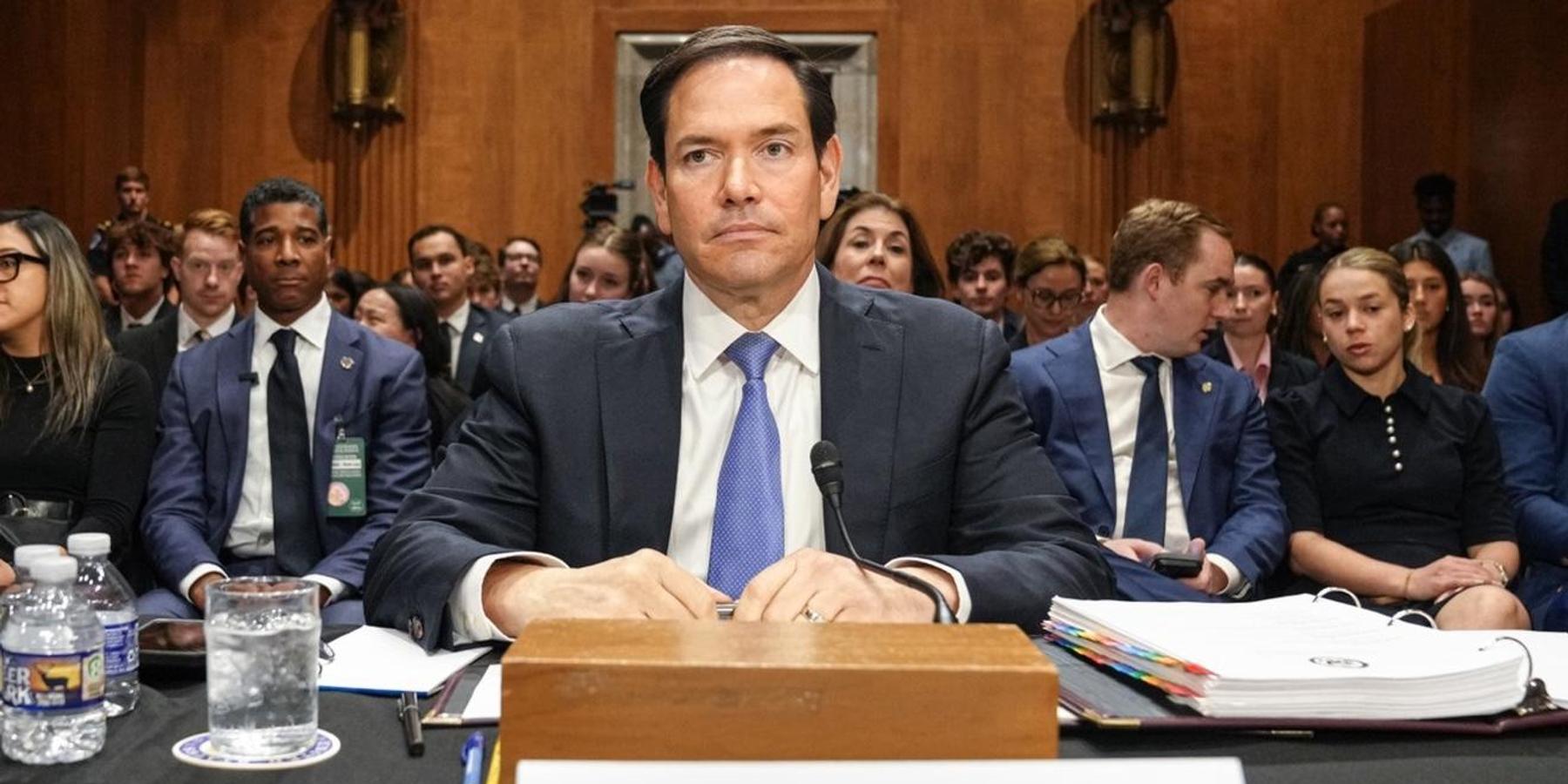
When Secretary of State Marco Rubio visited the Vatican last Thursday to smooth over the Trump administration’s shaky relationship with the Holy See, hopes were high that a breakthrough in tumultuous U.S.-Cuba talks — being overseen by Pope Leo XIV directly — was on the horizon.
Pre-trip reports and Rubio’s own comments indicated that Cuba would top the agenda, a fact seemingly borne out by the presence in the meeting of the State Department’s senior advisor for the Western Hemisphere. But in the end, none of this hype translated into a concrete announcement.
To the contrary, just hours after the exchange, Rubio issued harsh secondary sanctions against Cuba’s military-run business conglomerate GAESA, its director Ania Guilermina Lastres Morera, and a Canadian-Cuban joint mining venture, Moa Nickel SA, which is co-owned by one of Cuba’s largest foreign investors, Sherritt International.
The move marked the first designation pursuant to a May 1 executive order authorizing sweeping restrictions against any foreign individual or entity that the secretary deems to have operated in priority areas of the Cuban economy, including the energy, mining, finance, defense and security sectors.
The new Cuba sanctions authority is the latest escalation in the Trump’s administration’s “tough Cuba policy” aimed at achieving regime change in Havana by year’s end. The idea appears to have come from long-time Rubio ally and former State Department Special Envoy for Latin America Mauricio Claver-Carone, who pitched the sanctions last year as “creative measures” that would provoke “short-term pain” for Cuba’s sanctions-battered economy.
In anticipation of the Treasury Department designation, Sherritt, which also produces Cuban natural gas for electricity generation on the island, announced Thursday that its top leadership had resigned and the company and its employees would begin leaving Cuba after more than three decades.The company has long been the leading foreign investor in the island’s mining sector, which constitutes one-third of Cuba’s total exports, according to the U.S. Geological Survey.
Amid the Trump administration’s near-total oil blockade of Cuba, which has paralyzed vast segments of the Cuban economy, Sherritt had already paused its operations due to “fuel supply constraints.” Chinese state-owned firms have begun providing heavy machinery and boosting purchases of nickel and cobalt from the country’s largest mine, opening the possibility for China to establish a more durable foothold at a site that had been financed by the U.S. government and was expropriated from U.S. mining giant Freeport McMoRan in 1960.
The Treasury Department designation of Sherritt’s joint venture has put other foreign hotel operators, financial institutions, and energy companies operating in Cuba — particularly the Spanish hotel chains Meliá and Iberostar, both of which also manage U.S. properties — on high alert. The administration has only given foreign firms a tight four-week window to wind down transactions with any GAESA-owned entities before their U.S. assets are blocked.
A source with knowledge of companies’ operations tells RS that financial institutions, particularly across Canada, the European Union and Latin America, have initiated a de facto boycott of all transactions involving Cuba given their potential exposure to costly Treasury Department enforcement actions. “Additional designations can be expected in the following days and weeks,” Rubio said Thursday.
As the secretary was still in Italy, the Associated Press reported that U.S. officials presented a sweeping offer to Cuban authorities and Pope Leo XIV to provide Cuba with tens of millions of dollars in humanitarian aid — Rubio later said $100 million — along with “two years of free Starlink internet access for all Cubans, agricultural assistance and infrastructure support” in exchange for “the release of political prisoners, an end to political and religious repression, and an opening to American private sector investment.”
Cuba has firmly denied that any such offer was ever made, pointing to the fact that $3 million in U.S. assistance promised by the Trump administration in October 2025 still hasn’t fully arrived, and another $6 million announced in February is just beginning to arrive now. Experts say the Catholic Church doesn’t have sufficient infrastructure or capacity to distribute that quantity of aid on the island, particularly as fuel shortages hamper aid delivery, calling into question the validity of Rubio’s offer.
The standstill in bilateral talks comes as the administration has reportedly conducted 25 intelligence-gathering surveillance flights off Cuba since February, following a pattern similar to the leadup to military action in Venezuela and Iran earlier this year. Trump has also reportedly become frustrated that Cuba’s leadership has resisted his pressure campaign and that his advisers’ designs have yielded few results thus far, instructing them to turn up the pressure before the U.S. midterm elections, and certainly before the end of the year.
In an interview with ABC News from Havana, Cuban Foreign Minister Bruno Rodríguez Parrilla reasserted his country’s willingness to find a negotiated solution with Trump, but also warned that Washington is on a dangerous path that could lead to a “bloodbath” in Cuba.
Despite Trump’s threats to deploy the USS Abraham Lincoln off Cuba’s coasts and Rubio’s claims that Cuba has “rolled out the red carpet for [U.S.] adversaries,” U.S. officials and others familiar with Trump’s thinking say the administration is not planning imminent military action against Havana and that the president remains committed to a diplomatic solution, as Brazilian president Luis Inácio ‘Lula’ da Silva seemingly confirmed after meeting with Trump at the White House last Thursday.
Yet even absent military action akin to the operation that led to the capture of Venezuelan President Nicolás Maduro earlier this year — which Trump officials say is still on the table — the administration seemingly has no reservations about levying increasingly severe sanctions against Cuba’s foreign partners until Havana capitulates to its demands for sweeping political and economic liberalization.
The apparent stalemate since high-level talks in Havana early last month could explain why a U.S.-sanctioned Russian oil tanker, the Universal, carrying 270,000 barrels of diesel, which was scheduled to arrive in Cuba on April 29 — has been stalled in the middle of the Atlantic Ocean for weeks. The deadlock may also explain why Cuba has not announced any modest economic reforms or prisoner releases since unveiling a flurry of long-overdue measures in March, steps that indicated to most observers that a broader agreement was taking shape.
Those measures also coincided with U.S. and Cuban authorization for the sale of diesel and gasoline to Cuba’s private sector, which totaled $11.6 million in the first quarter of 2026. This is a drop in the bucket for Cuba’s total energy needs but a lifeline for Cuba’s fledgling entrepreneurial class and a rare bright spot amid a backdrop of hotels shuttering, tourism revenue plummeting, and the settlement of long-standing property claims by U.S. and foreign firms out of court to avoid further litigation.
For now, despite the private sector carveouts, it appears the Trump administration will continue efforts to bring the island’s economy to its knees through discretionary and broad secondary sanctions while simultaneously wielding vague offers of heavily conditioned humanitarian aid as a means to elicit the political and economic changes it is demanding from Havana.
But if history offers any indication, Cuba’s leaders are unlikely to give into U.S. political diktats, no matter how legitimate, in exchange for temporary aid, no matter how generous.
Only the possibility of permanent sanctions relief — for example, rescinding the executive orders authorizing the oil blockade and secondary sanctions — will revive the near-dormant talks, persuade the Cubans to entertain Rubio’s demands, and give Trump tangible results from his months-long pressure campaign.
- South Florida: When local politics become rogue US foreign policy ›
- In Cuba a deadlock is more likely than a deal ›
- The real lesson of Cuba's alleged drone build-up against the US | Responsible Statecraft ›
- Can Cuba outlast Marco Rubio? ›
- Rubio's LatAm pep rally shows the limits of the Donroe Doctrine | Responsible Statecraft ›