The relatively small Somali community in the U.S., estimated at 260,000, has lately been receiving national attention thanks to a massive fraud scandal in Minnesota and the resulting vitriol directed at them by President Trump.
Trump’s targeting of Somalis long preceded the current allegations of fraud, going back to his first presidential campaign in 2016. A central theme of Trump’s anti-Somali rancor is that they come from a war-torn country without an effective centralized state, which in Trump’s reasoning speaks to their quality as a people, and therefore, their ability to contribute to American society. It is worth reminding ourselves, however, that Somalia’s state collapse and political instability is as much a result of imperial interventions, including from the U.S., as anything else.
The Somali speaking peoples, whose traditional homeland is in the Horn of Africa, had their lands colonized and divided between competing colonial powers at the turn of the 20th century. Somali territories were carved up between British, Italian, French, and the expanding Ethiopian state. When independence came in 1960, two of these regions (British and Italian colonized regions) joined to form the postcolonial Somali state.
Thus, the initial formation of Somali communities outside of what became Somalia was a direct result of the colonial partition of the Somali people. Soon after independence, Somalia and the Horn of Africa region in general, became one of the central arenas in the geopolitical competition between the U.S. and the USSR during the Cold War. As a result, by the 1970s Somalia was a Soviet client state and one of the most militarized countries in sub-Saharan Africa, despite its meager economy.
Cold War geopolitical machinations partly created the contextual background to the 1977-78 Somalia-Ethiopia war. Somalia’s defeat in this war set the stage for the disintegration of the state in 1991. This threw the country into a prolonged state of conflict, resulting in mass displacement and migration out of Somalia, many of whom settled in the United States. The record indicates there were only about 2,000 people of Somali descent in the U.S. prior to 1990.
While some parts of Somalia established a modicum of stability, other areas of the country, including the capital city of Mogadishu, remained mired in endless cycles of violence. The militia leaders and warlords responsible for most of this violence and instability were of course motivated by personal ambitions, but they were often backed by external actors, including the U.S.
Starting in the early 2000s, following the 1998 U.S. embassy bombings in East Africa and the 9/11 attacks, the CIA began to directly funnel money to Mogadishu-based warlords to ostensibly capture suspected Islamist ideologues and militants, as part of the U.S. global renditions program. This policy backfired when the warlords were defeated and evicted from the city in a popular uprising in 2006. The uprising was led by a group of community-established and neighborhood-based adjudication centers that were known as Sharia courts, which later unified under the Union of Islamic Courts (UIC).
Many people in Mogadishu and knowledgeable commentators believed the UIC represented the best hope for security and stability in Mogadishu since the fall of the state in 1991, equating its rise with a miracle. The UIC experience, however, did not last long as it was disbanded in a U.S.-backed Ethiopian invasion of Mogadishu in 2007. The Ethiopian invasion and subsequent insurgency created the second largest displacement and migration of the population since 1991, as well as the emergence of al-Shabaab, a radical Islamist organization. This latest phase of U.S. intervention in Somalia continues to this day in the name of counterterrorism.
U.S. counterterrorism initiatives in Somalia are today presented by the U.S. government and in mainstream media as a selfless U.S. support to the fragile central government in Mogadishu, but these initiatives are part of a much longer history of U.S. interventions that have contributed to the emergency of the very conditions and problems it claims to be struggling against. For example, U.S. drone strikes in Somalia have continued over the past two decades with varying degrees of intensity at different times.
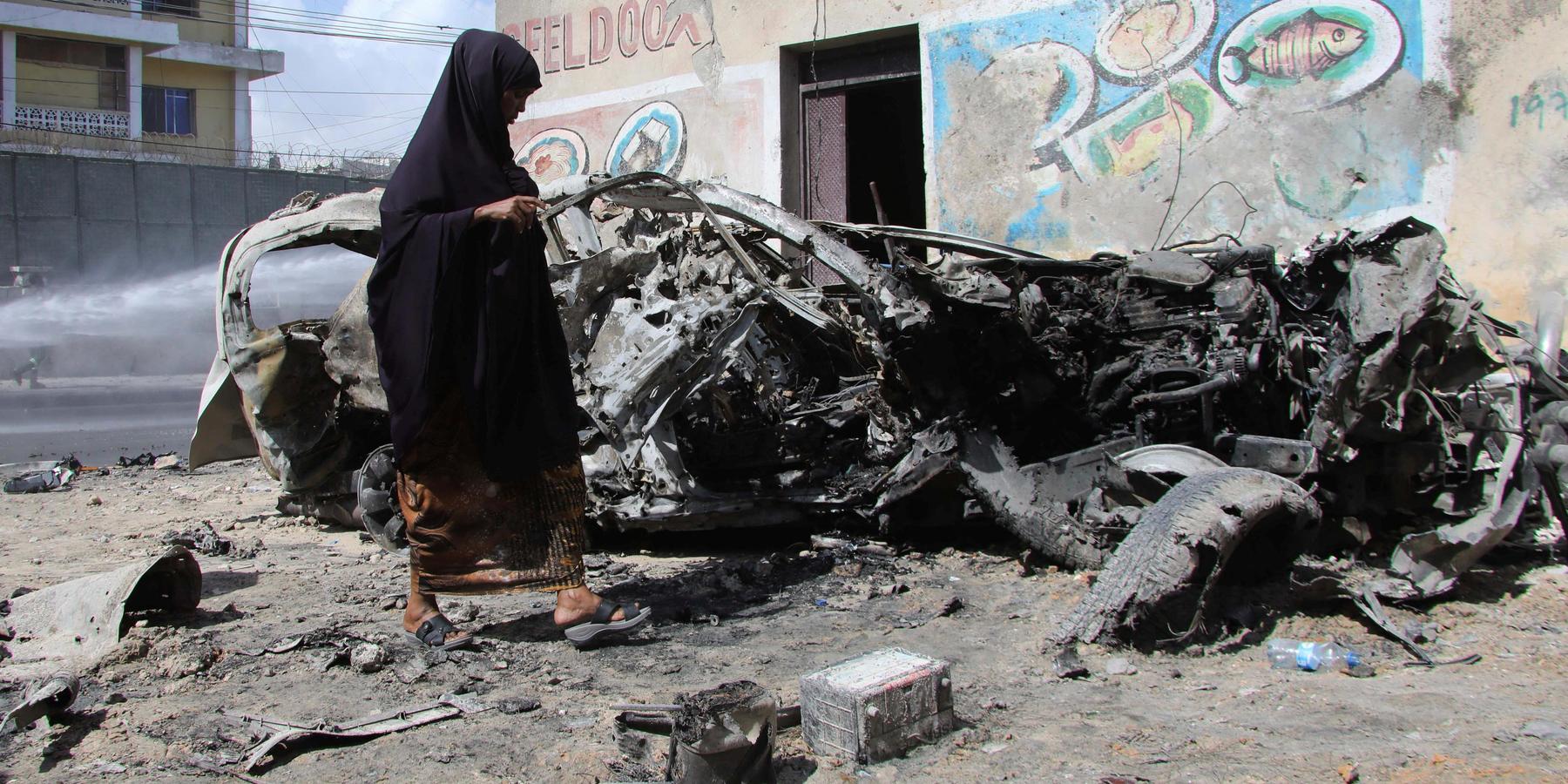
Since Trump returned to office, his administration has dramatically increased the drone campaign, while the transparency of the decision-making process and consequences of these strikes have become more opaque. Inevitably, as drone strikes have increased, so have civilian casualties, made more egregious by the absence of admission or explanation from the U.S., or any of the other parties that conduct drone strikes in the country.
For instance, in September 2025, a well-known and respected clan elder and conflict mediator from a remote part of northeastern Somalia was traveling in a vehicle when he was killed in a drone strike. Four days later, the U.S. military’s Africa Command (AFRICOM) claimed that it had killed an al-Shabaab operative in the area. Everyone who knew the elder was stunned by this claim. So were the regional authorities and the federal government, who contradicted the U.S. story.
Even if he was suspected of being an al-Shabaab member, he could have easily been apprehended. In fact, when he was killed, the elder was on his way back from a meeting with the regional president of Puntland.
To this day, AFRICOM has provided no further information on this killing. For the people of the region, they are left with fear, confusion, and anger, and deprived of a respected conflict mediator in a context where elders have become integral to maintaining stability.
Recent scholarship has noted the link between U.S. militarism in Somalia and the policing and surveillance of Somali immigrants in the U.S. Trump’s xenophobic rhetoric that maligns the Somali people because they come from a place where people are just “walking around killing each other” conveniently omits the U.S role in fomenting instability.
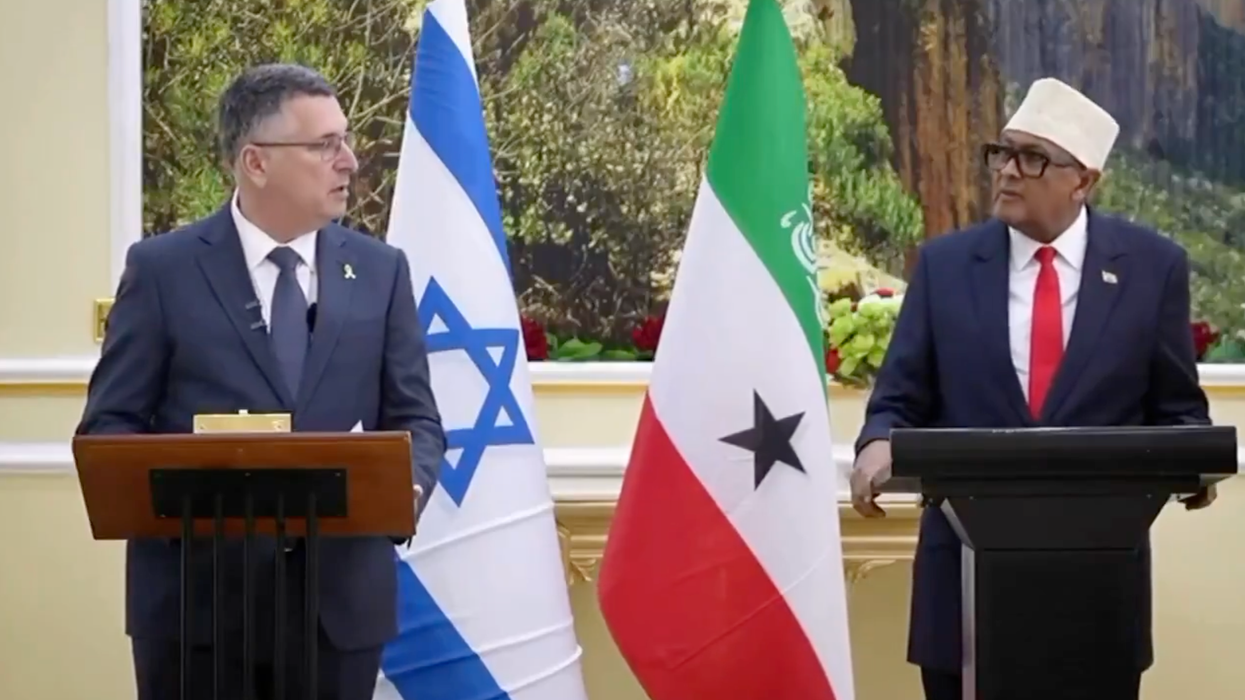
One also wonders if Trump’s anti-Somali rhetoric is setting the stage for yet another seismic intervention in Somalia. This could come with the recognition by the U.S. of Somaliland, as Israel has recently done. This of course is closely connected to Red Sea politics, and access to military facilities aimed at countering the Houthis in Yemen. The potential adverse consequences of this intervention for stability in Somalia/Somaliland and the subsequent displacement and migration, however, does not appear to be part of the calculations of Israel or the U.S.
- Is Somaliland recognition worth a new Israeli outpost on the Red Sea? ›
- How Somalia never got back up after Black Hawk Down ›
 Screengrab via niacouncil.org
 Screengrab via niacouncil.org