

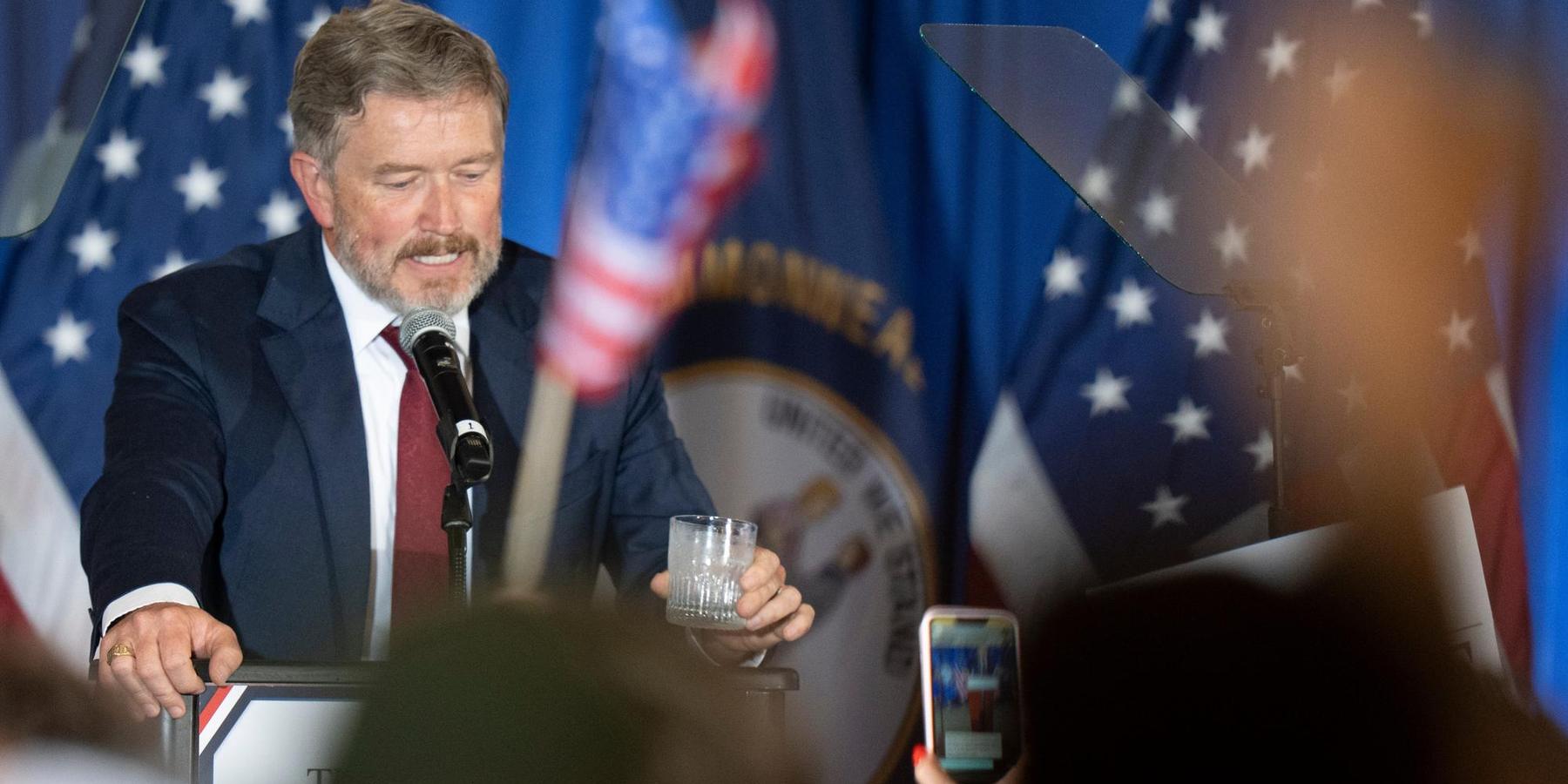
The House Rules Committee has advanced an amendment by Thomas Massie (R-Ky.) to strip $3.3 billion in funding for the Israel Defense Forces from the federal budget.
That means that as early as Thursday, every member of the House will have to vote on the proposal. Constituents will have the opportunity to see if their member will vote to end U.S. funding for Israel, or continue it.
The funds targeted would come out of the National Security, Department of State, and Related Programs Appropriations Act (NSRP), the bill that funds the State Department, international development assistance, and global organizations.
Although the amendment is unlikely to pass, it will require members of Congress to decide if they want to be seen as advocating for a continuation of the U.S.-Israel relationship, or a new approach. As Sen. Bernie Sanders (I-Vt.) tweeted, only 16% of Americans support unconditional aid to Israel.
For members on the right, they will have to explain to their constituents why they are voting to continue sending billions of taxpayer dollars to a foreign country that just dragged the U.S. into an unnecessary war with Iran, spiking gas prices for ordinary Americans before ending in military defeat. Even 51% of Republicans, in addition to three-quarters of Democrats, now say that Israel exerts too much sway over U.S. foreign policy. For Republicans who voted for an “America First” foreign policy, the blank check to Israel has become harder to defend.
For members on the left, they will have to justify why the U.S. continues to enable Israel’s horrifying violence against Palestinians in Gaza and the West Bank, its occupation of Lebanon and Syria, and its attacks on seven countries over the past year, including Qatar, a major non-NATO U.S. ally. By providing Israel with billions in aid no matter how destabilizing its behavior, no matter how many international bodies and organizations accuse it of genocide and atrocities, Washington encourages Israel to behave even more aggressively.
Whereas if a significant portion of members vote in favor of the Massie amendment, even if it does not pass, this could send an important signal to Israel that it might want to rethink its bellicosity towards the rest of the region. This could be especially useful in an election year, as Israelis head to the polls to select a new leader, likely not Benjamin Netanyahu. In the absence of any such messaging from Washington, Israelis will continue their current trajectory: futilely trying to create security through violence.
Yet instead of sending that signal to Israel, many in Congress will likely stick to their AIPAC provided talking points.
For example, AIPAC asserts that the U.S. and Israel share security interests in the Middle East. This point is harder to make in the midst of the Trump administration’s efforts to avoid a return to open conflict with Iran by implementing the MOU, while the Israeli Defense Minister stated that Israel will continue to occupy and attack Lebanon, a clear attempt to reignite the war.
Another talking point asserts that the U.S.-Israel relationship is good for American jobs. However even according to the American Jewish Committee, the relationship only directly enables 20,000 jobs, or .012% of the U.S. workforce.
Moreover, supporters like to argue that without $3.3 billion from Washington, Israel would be defenseless. Yet Israel recently overtook the U.K. to become the seventh biggest exporter of arms and weaponry. Israel has broken its own record for arms exports every year for the past five years, reaching $19.2 billion in sales in 2025. Clearly, Israel has more than enough spare defense capacity.
The perception that Israel needs U.S. support or it will face an existential threat is fading, replaced with concerns about what U.S. money has enabled Israel to do and whether that reflects U.S. interests. Poll after poll has demonstrated a fundamental shift in American opinions. A Sienna/New York Times poll in May showed that almost three-quarters of Democratic voters oppose U.S. military aid to Israel. While a majority of Republicans continue to support the aid, younger Republicans increasingly question the scale.
In terms of the U.S.-Israel relationship more broadly, in April, the Pew Research Center found that a record 60% of American adults now have an unfavorable view of Israel, up from 53% just last year. Massie’s amendment reflects this shift.
And yet this may be the last time such a vote is possible. Proponents of Israel aid are pushing to remove it from the category of direct military assistance, which is appropriated through the NSRP, to the category of defense contracts, which Congress does not vote on. Massie, along with Rep. Ro Khanna (D-Calif.) and co-sponsors Jim McGovern, Chuy Garcia, Rashida Tlaib, and Don Beyer, are trying to strip that amendment, section 219 of the National Defense Authorization Act (NDAA), in order to prevent the integration of the U.S. and Israel defense industrial sectors.
It is precisely the shift in public opinion, and the desire to reduce aid to Israel, that is driving the effort by Israel to shield funding for Israel’s military from public opposition. The vote on Massie’s amendment, to be taken up as early as Thursday, even if it doesn’t pass, will be revealing — for who does and who doesn’t vote for it.
- The US wants to end aid to Israel but replace it with something worse ›
- Pro-Israel candidates lose big in NYC House primaries ›
- AIPAC takes out Israel lobby critic Thomas Massie in grueling primary ›
- Washington is subsidizing Israel's booming global arms trade | Responsible Statecraft ›
- Half of House Dems vote to end US aid to Israel ›
- Massie, Kent join ex-officials lighting up Ron Paul ‘revolution’ | Responsible Statecraft ›