

For decades, aid to Israel was treated as one of the most durable pillars of American foreign policy. Israel has gotten more U.S. foreign assistance than any other country since its founding, receiving more than $300 billion in inflation-adjusted economic and military aid, according to the Council on Foreign Relations.
Now, some of Israel's strongest supporters are arguing that the relationship may be stronger without the money.
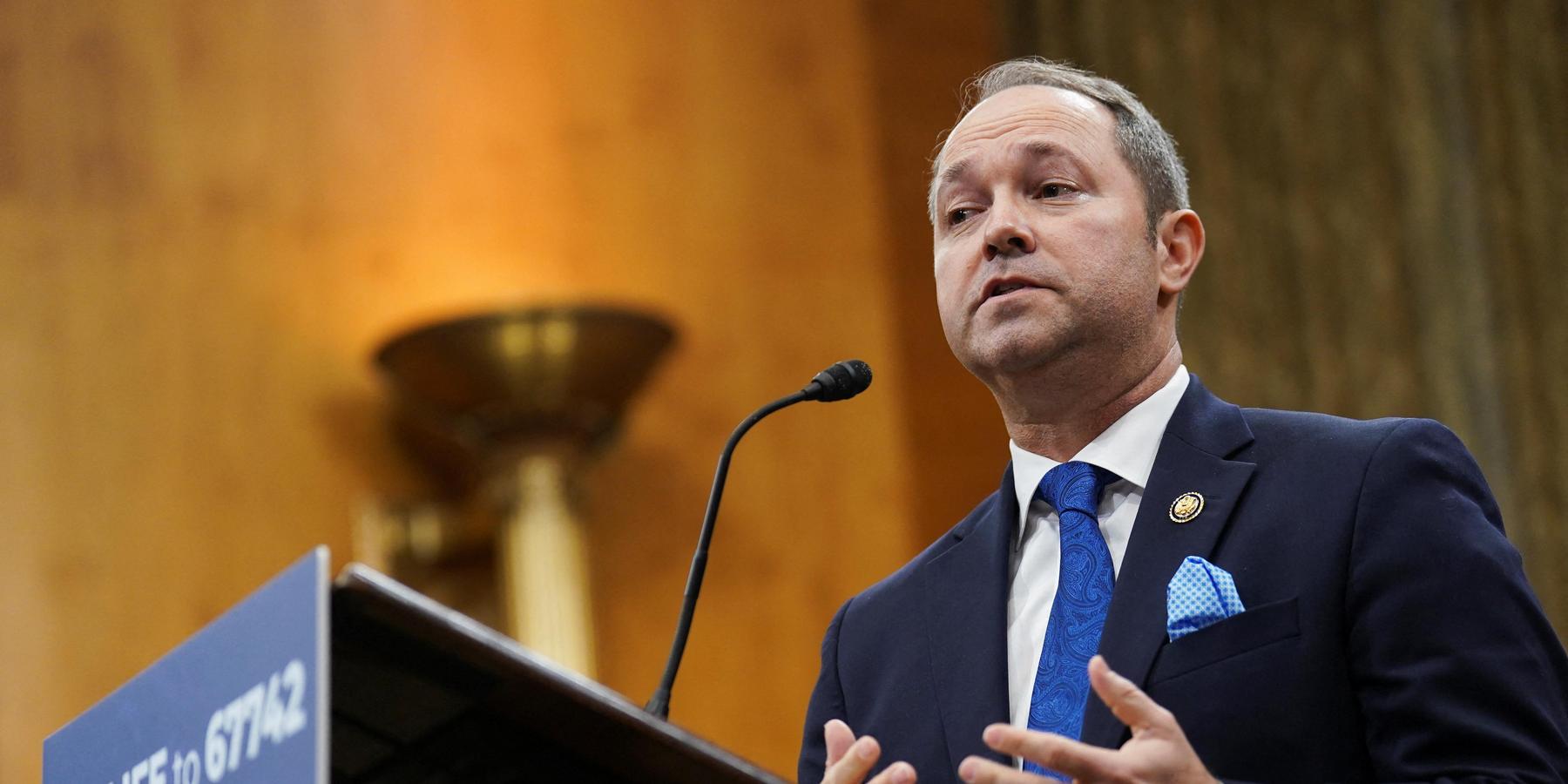
Rep. Marlin Stutzman (R-Ind.) recently introduced a resolution calling for the United States and Israel to move away from the current model of direct financial assistance and toward a relationship centered on trade, defense cooperation and partnership after the current U.S.-Israel memorandum of understanding expires in 2028.
According to Stutzman, the proposal did not originate in Congress but rather from conversations with Israeli contacts who suggested moving away from the current aid framework and toward what he described as a trade agreement and defense partnership.
"When a couple of folks from Israel floated the idea of going from the supplemental of $38 billion over 10 years to a trade agreement and defense agreement, we just continued to have those conversations," Stutzman said in an exclusive interview.
The proposal comes after Israeli Prime Minister Benjamin Netanyahu publicly said in January that Israel should reduce its dependence on American military aid and transition toward a partnership model.
The nonbinding resolution expresses support for Netanyahu's proposal to transition the U.S.-Israel relationship toward what it describes as a framework of "mutual defense cooperation and joint economic investment." Beyond aid, the measure also praises Netanyahu and Israel for their role in recent military operations against Iran and condemns antisemitism, including physical attacks on Jewish people and institutions, harassment of Jewish Americans, antisemitic propaganda and what it describes as "the delegitimization of Israel's right to exist."
The resolution does not define what would constitute delegitimization or who would make that determination, a notable omission amid broader disputes over efforts to classify criticism of Israel or anti-Zionist speech as antisemitic.
Stutzman emphasized a growing concern among some of Israel's strongest supporters that public opposition to foreign aid could erode support for the broader U.S.-Israel relationship. Rather than defending military aid as politically untouchable, they are increasingly arguing that the U.S.-Israel relationship should be restructured in a way that preserves strategic cooperation while addressing growing public skepticism toward foreign aid. "Young people are questioning, why are we spending all this foreign aid?" Stutzman said. "Israel gets wrapped up in that."
The congressman repeatedly returned to that theme throughout the interview. While he described himself as a budget hawk focused on reducing federal spending, he also expressed concern that frustration with foreign aid is increasingly shaping how younger conservatives view Israel.
"That's a fair question," Stutzman said. "I don't want that to be the reason that they become anti-Israel. I want them to be pro-America, pro-Israel, pro-freedom, pro-democracy."
The current Memorandum of Understanding, which came into effect in FY2019, provides approximately $3.8 billion annually in military assistance and is scheduled to expire in 2028. That equates to roughly $10.4 million per day from U.S. taxpayers.
Stutzman said his proposal was intended to demonstrate that Israel can stand independently while maintaining a close alliance with the United States.
"It's to show the world that we're both independent nations, and we're both strong nations," Stutzman said.
Before traveling to Israel, Stutzman said he contacted Israeli Ambassador Yechiel Leiter to ask whether such a proposal was "a direction that you guys would be comfortable with us going."
During a May trip to Israel, Stutzman met with Netanyahu, Druze spiritual leader Sheikh Mowafaq Tarif and Lt. Col. Ella Waweya, an Israeli military spokesperson who serves as a liaison to Arab media. Publicly available photographs and statements released by Israeli and congressional officials also show Stutzman meeting with U.S. Ambassador to Israel Mike Huckabee and participating in discussions on regional security issues, including Syria.
Stutzman's trip also included a meeting with Foreign Minister Gideon Sa'ar. Shortly before taking office, Sa'ar announced a $146 million initiative aimed at improving Israel's image abroad through foreign media, social media platforms and American university campuses.
Netanyahu endorsed the cooperation proposal in a June 1 letter that was displayed prominently near the entrance of Stutzman's congressional office during the interview. In the letter, Netanyahu wrote that "the time has now arrived for us to move from aid recipient to partner.”
The congressman rejected claims that his resolution was intended to merge American and Israeli military structures, repeatedly distinguishing it from separate legislative efforts such as the FUTURES Act and Section 224 of the fiscal year 2027 National Defense Authorization Act, which would establish a formal framework for U.S.-Israel defense technology cooperation. His office said the controversial Section 224 came from the office of Rep. Ronny Jackson (R-Texas).
Still, Stutzman lauded the other defense cooperation proposals and framed them as a recognition that Israel has matured economically and strategically and no longer requires direct financial assistance from the United States. "There are people out there that are trying to say that we're somehow trying to merge our militaries together," Stutzman said. "That's just BS."
The interview revealed how Stutzman views America's alliance structure more broadly. He repeatedly described Israel as America's strongest ally in the Middle East and argued that the country has developed into a regional “superpower” capable of standing on its own. Stutzman also suggested that changing geopolitical realities have altered traditional assumptions about America's closest partners. At one point, Stutzman contrasted Israel with traditional allies such as Great Britain, arguing that Israel had become America's closest strategic partner because of its willingness to cooperate on regional security issues and confront common adversaries such as Iran.
The conversation also turned to Gaza. When asked about civilian casualties, insurgency and the long-term future of the territory, Stutzman defended Israel's military campaign against Hamas while acknowledging that innocent people may have been harmed during the conflict.
"Have Israelis killed innocent people? The possibility is obviously there because it's a war zone," Stutzman said.
However, he argued that Hamas could not remain in power and described Gaza's future as dependent on redevelopment and outside investment. "Gaza has to be turned back into Trump land," Stutzman said. “It needs to be a place that there's international investment."
Asked what should happen to any savings generated by ending direct aid, Stutzman argued the money should not be redirected to domestic programs such as universal healthcare nor public education. Instead, he argued it should go toward reducing the deficit.
For Stutzman, his defense cooperation proposal is ultimately less about reducing support for Israel and more about redefining how that support is structured in an era when foreign aid faces increasing political scrutiny.
"Israel gets wrapped up in" broader opposition to foreign aid, he said. The goal, he argued, is to preserve support for the relationship while transitioning it away from a model that has become increasingly controversial among younger voters.