

Even if war ended tomorrow, Europe could be on the hook for 135 billion euros (nearly $160 billion) over the next two years to keep Ukraine afloat. Brussels does not appear to have a plan B up its sleeve.
I first warned in September 2024 that using immobilized Russian assets to fund war fighting in Ukraine would disincentivize Russia from suing for peace. Nothing has changed since then. Russia maintains the battlefield advantage, has the financial reserves, extremely low levels of debt by Western standards, and can afford to keep fighting, despite the human cost. Putin is self-evidently waiting the Europeans out, knowing they will run out of money before he does.
For now, his strategy appears to be working, because Ukraine has no money and Europe — unwilling to see Ukraine pushed into an unfavorable peace — is groaning under the obligation to find an answer. In May I also reported that “Ukraine is already asking for more money to continue fighting into 2026, a sure sign that President Volodmyr Zelensky has no plans to end the war.”
At that time, the likely cost of war fighting for another year was estimated at around $43.3 billion. The bill has since gone up to $63 billion in 2026 and, according to the IMF, $136.6 billion over the next four years.
Europe simply does not have this level of funding freely available. As a result, European political leaders are descending into panic mode as the chicken of Ukraine’s enormous budget shortfall comes home to roost.
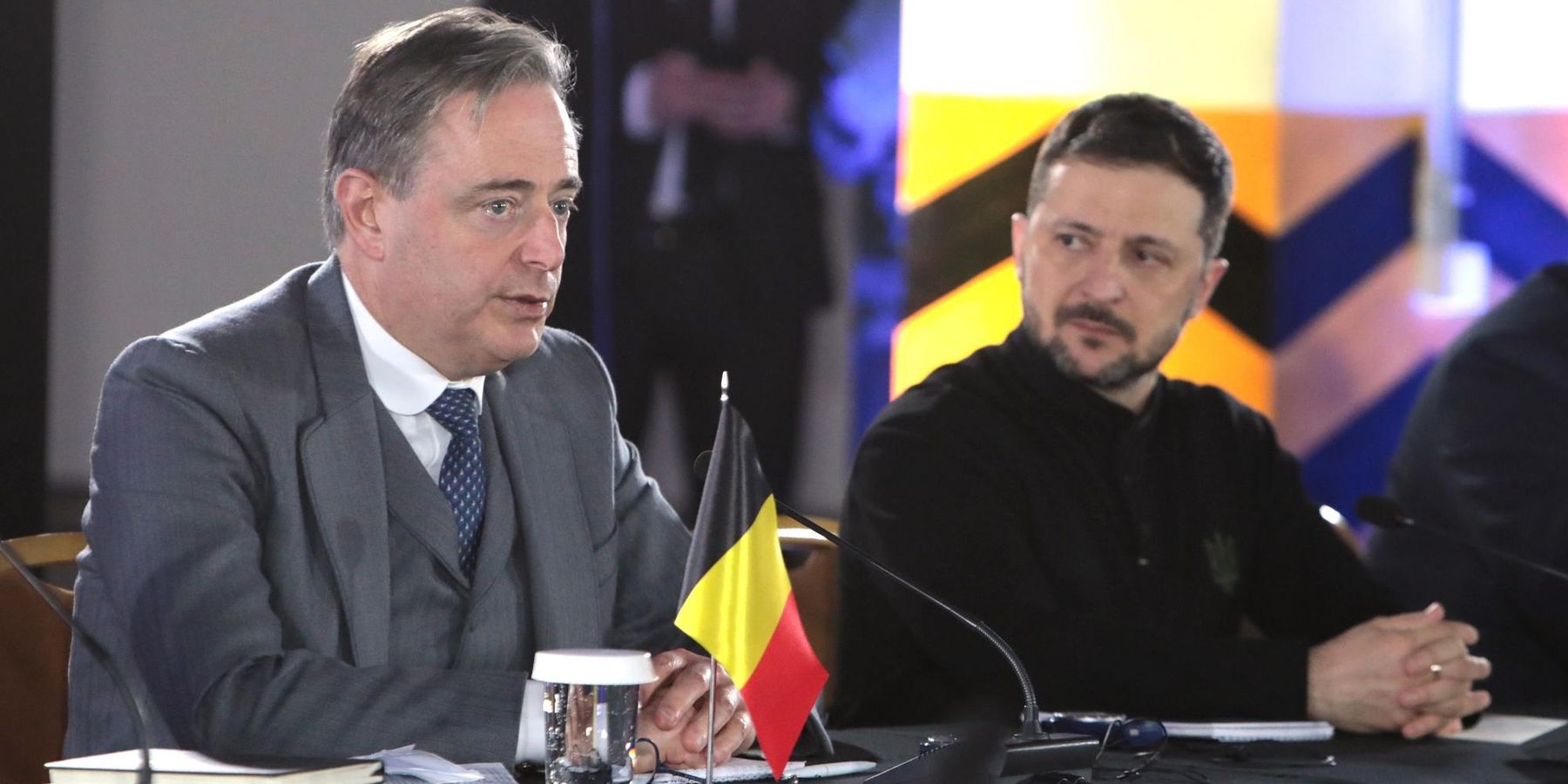
That chicken, to quote the prime minister of Belgium, Bart de Wever, in remarks after the October European council meeting, is the $140 billion in immobilized Russian assets that the European Commission would like to use to back a “reparations loan” to Ukraine. Self-evidently, this money isn’t intended for reparations, but rather to soak up Ukraine’s expected deficits going forward.
All of the money would be pumped into Ukraine’s treasury to meet day to day expenses, with the defense bill alone costing $172 million every day right now, compared to $140 million per day one year ago. And on the basis that Ukraine’s budget estimates only ever go up and not down, that money won’t last forever.
At this point, one might be tempted to think that Ukraine’s vast defense spending, which accounts for around 63% of the Ukrainian government’s budget, will fall away if the war ends this year, in response to President Trump’s peace initiative. But such an assumption is, I fear, misplaced. Europe has been pressuring the U.S. not to cap the size of Ukraine’s near one million strong army in any peace deal. In a best-case scenario, Ukraine might decide in a graduated way to reduce the size of its army over time. But that would still leave a large budget black hole for some years to come. Yet a large army won’t pay for itself and the Europeans will be left to pay the bill.
Perhaps not surprisingly, the Belgians are saying “non” to the use of immobilized assets in its country to fund Ukraine’s fiscal deficit. Prime Minister de Wever claims that doing so will derail U.S.-led efforts to bring the near four-year long war to a close, by disincentivizing Russia from settling, which takes us back to the point I made 15 months ago.
However, the deeper issue for Belgium is a fear that sanctioning the expropriation of Russian sovereign assets on shaky legal ground would shred its financial reputation and scare off investors from the developing world. Belgium-based Euroclear, where the immobilized Russian assets are held, has a stock of $4 trillion in sovereign assets from around the globe. Starting to eat the chicken of these assets, as Belgium’s prime minister puts it, by essentially lending those assets to Ukraine, could "damage Belgium's reputation as a reliable financial hub and erode trust in the euro and the EU financial system."
Predictably, that has led to a storm of protest from other European states that are piling increasing pressure on Belgium to relent and so free up the monies for Ukraine’s cause. But as de Wever has pointed out on numerous occasions, those European states, for example, Germany, France, the Netherlands and Luxembourg, are not offering to unleash immobilized Russian assets in their jurisdictions and so share the financial risk. Nor are they willing to back the loan of assets held in Belgium with guarantees to repay a proportion of the cost, should Russia mount a successful legal challenge after the war ends. So, for now, Belgium is holding out and blocking the loan, with few signs that it will back down.
As a result, the matter has been kicked back to December for a final decision buying time for the Eurocrats in Brussels to sway their recalcitrant Belgian hosts. If agreement cannot be reached, Ukraine faces the prospect of running out of money to fight, on the basis that it is locked out of access to Western capital markets, given its moratorium on the repayment of debt.
That leaves the European Commission in the position of possibly having to raise capital on the markets to make a non-repayable grant to Ukraine to cover its financing needs in 2026.
How did we end up here? Since 2024, Western sponsors of the war in Ukraine have progressively shifted from offering free cash to loans, most notably the last big G7 loan of $50 billion that was agreed in June of 2024. But with Ukraine’s national debt to GDP having risen from 49% in 2021 to 109% now, piling more debt on the war-ravaged country may literally equate to killing Ukraine with kindness.
The reparations loan was clearly intended as a means to make Russia pay so that neither Ukraine, nor Europe, had to. Efforts to find off-budget means to pay for the war in Ukraine have always been “an unseemly quest for alternatives to western taxpayers funding.” Put simply, cash-strapped European governments can’t easily afford to give Ukraine their own money at a time when their governments face rising political headwinds at home from nationalist parties.
Mainstream European political leaders have remained implacably set against the idea of bringing the senseless war in Ukraine to a much-needed close. They will pay the price for this at the polls in the coming years, as the big fiscal chicken of war spending pecks away at their legitimacy at home. This is all the more depressing for having been so utterly predictable.
- Russian asset seizure scheme will prolong war ›
- Seizing Russian assets: A feel good bill that will absolutely boomerang ›
- Europe's latest seized Russian asset scheme is as dumb as ever ›