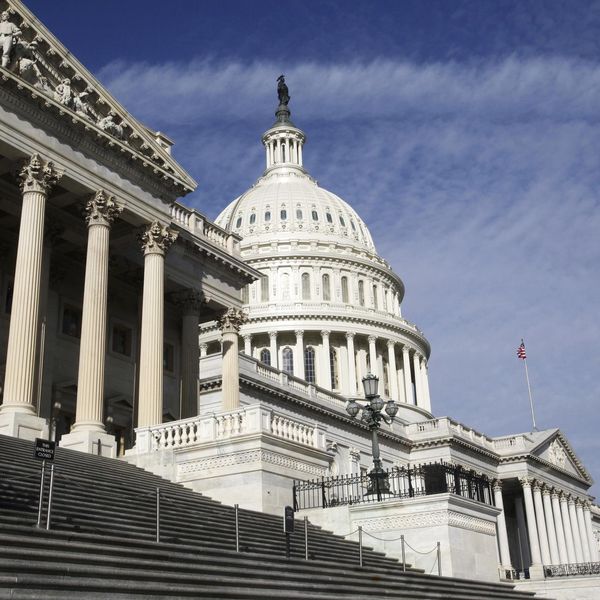
President Joe Biden’s looming decision to include cluster munitions in the next weapons package to Ukraine could prove to be a political challenge. Democratic Reps. Sara Jacobs (Calif.) and Ilhan Omar (Minn.) have introduced an amendment to the 2023 NDAA that would effectively block the transfer of these munitions.
“Notwithstanding any other provision of law, no military assistance shall be furnished for cluster munitions, no defense export license for cluster munitions may be issued, and no cluster munitions or cluster munitions technology shall be sold or transferred,” reads the amendment.
“Cluster munitions keep killing long after their initial use with the potential to injure and kill civilians for generations, something we have seen in many other post-war contexts like Cambodia and Vietnam,” wrote Rep. Jacobs in a Twitter thread explaining her opposition. “Cluster munitions also prevent successful rebuilding and economic recovery in the countries where they’re used.”
"If the U.S. is going to be a leader on international human rights, we must not participate in human rights abuses. We can support the people of Ukraine in their freedom struggle, while also opposing violations of international law," Rep. Omar added in a comment to Politico’s NatSec Daily.
“I applaud the NDAA amendment proposed by Reps. Jacobs and Rep. Omar,” Sera Koulabdara, CEO of the advocacy group Legacies of War, told RS. “I urge them and other leaders to continue to stand on the side of the basic human rights to live free from the fear of cluster munitions and speak out publicly to their colleagues and the American people.”
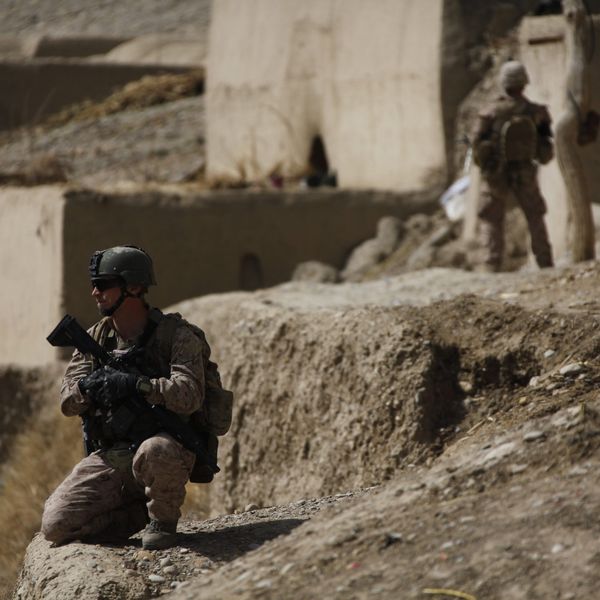
Other lawmakers, including Reps. Jason Crow (D-Colo.), a veteran of the war in Afghanistan, and Barbara Lee (D-Calif.), have also voiced their opposition to the transfer of these bombs.
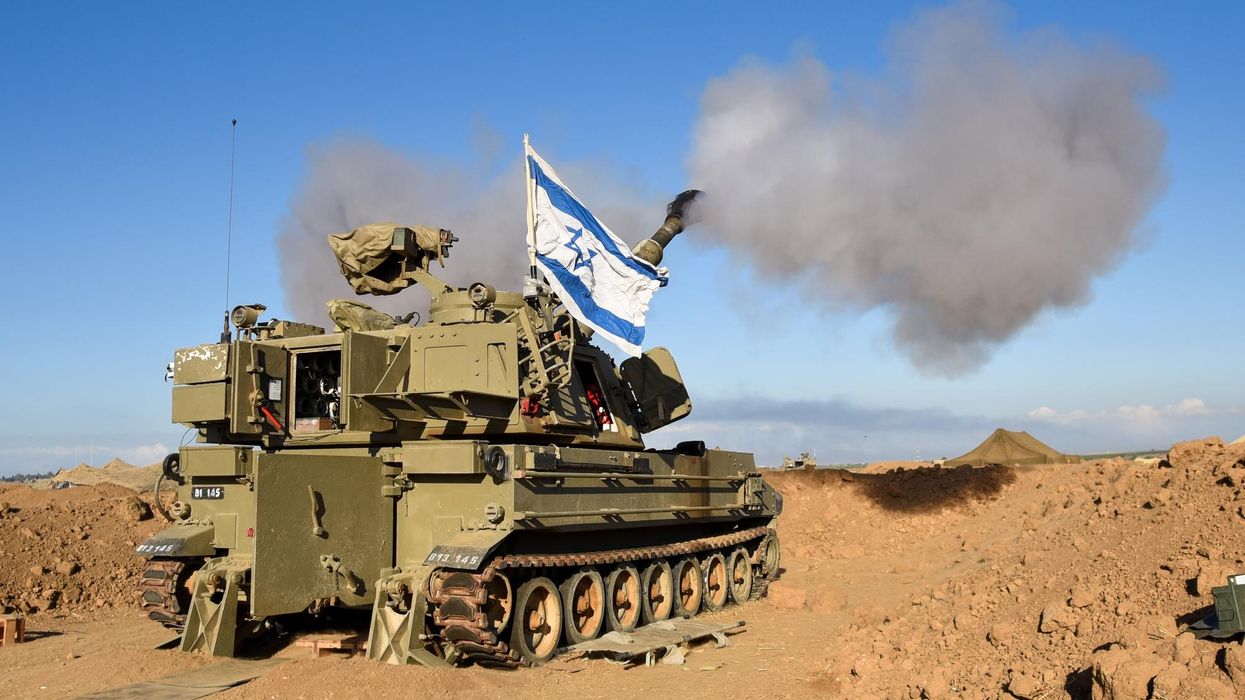
Kyiv has been pushing for its Western supporters to provide them with what it views as weapons to help Ukraine in its ongoing counteroffensive. Russia has already been using them extensively in Ukraine, and Ukraine has also reportedly used cluster bombs, most recently using Turkish-provided munitions.
Washington has so far held off on providing Kyiv with these highly controversial weapons. But in June, Laura Cooper, a Pentagon official responsible for Russian, Ukrainian, and Eurasian affairs, told the House Foreign Affairs Committee that the munitions “would be useful, especially against dug-in Russian positions on the battlefield.”
Cluster munitions inflict long-lasting and devastating consequences on civilian populations. Since World War II, cluster munitions have killed an estimated 56,500 to 86,500 civilians. In 2008, more than 100 countries signed a treaty pledging not to make, use, or transfer cluster bombs, though neither the U.S. nor Ukraine are signatories.
“Cluster munitions, launched from air or ground, break apart in mid-air to scatter a large number of explosive submunitions known as ‘bomblets,’” explained Alyssa Blakemore recently in Responsible Statecraft.
“Independent estimates put the failure rate of cluster bombs as high as 10 to 40 percent, leaving unexploded remnants to kill and maim unsuspecting civilians long after a conflict’s end,” Blakemore added. “Children especially make up a large number of victims as they are drawn to the shape, size, and color of cluster submunitions often found embedded in the ground.”
Human rights groups raised serious concerns about the consequences of introducing more cluster bombs to the battlefield.
“Both countries should stop using these inherently indiscriminate weapons, and no country should supply cluster munitions because of their foreseeable danger to civilians,” according to a recent report from Human Rights Watch. “Transferring these weapons would inevitably cause long-term suffering for civilians and undermine the international opprobrium of their use.”
The decision to transfer these weapons “is not only wrong and short-sighted but it shows a complete disregard to international consensus by over 100 countries, including 18 of our NATO allies,” said Koulabdara. “The government officials who made this shameful decision clearly did not learn from America's own mistakes in using cluster munitions in the American wars in Laos, Cambodia, Vietnam, Iraq, and Afghanistan to name just a few.”