
Follow us on social

google cta
US Army in Europe

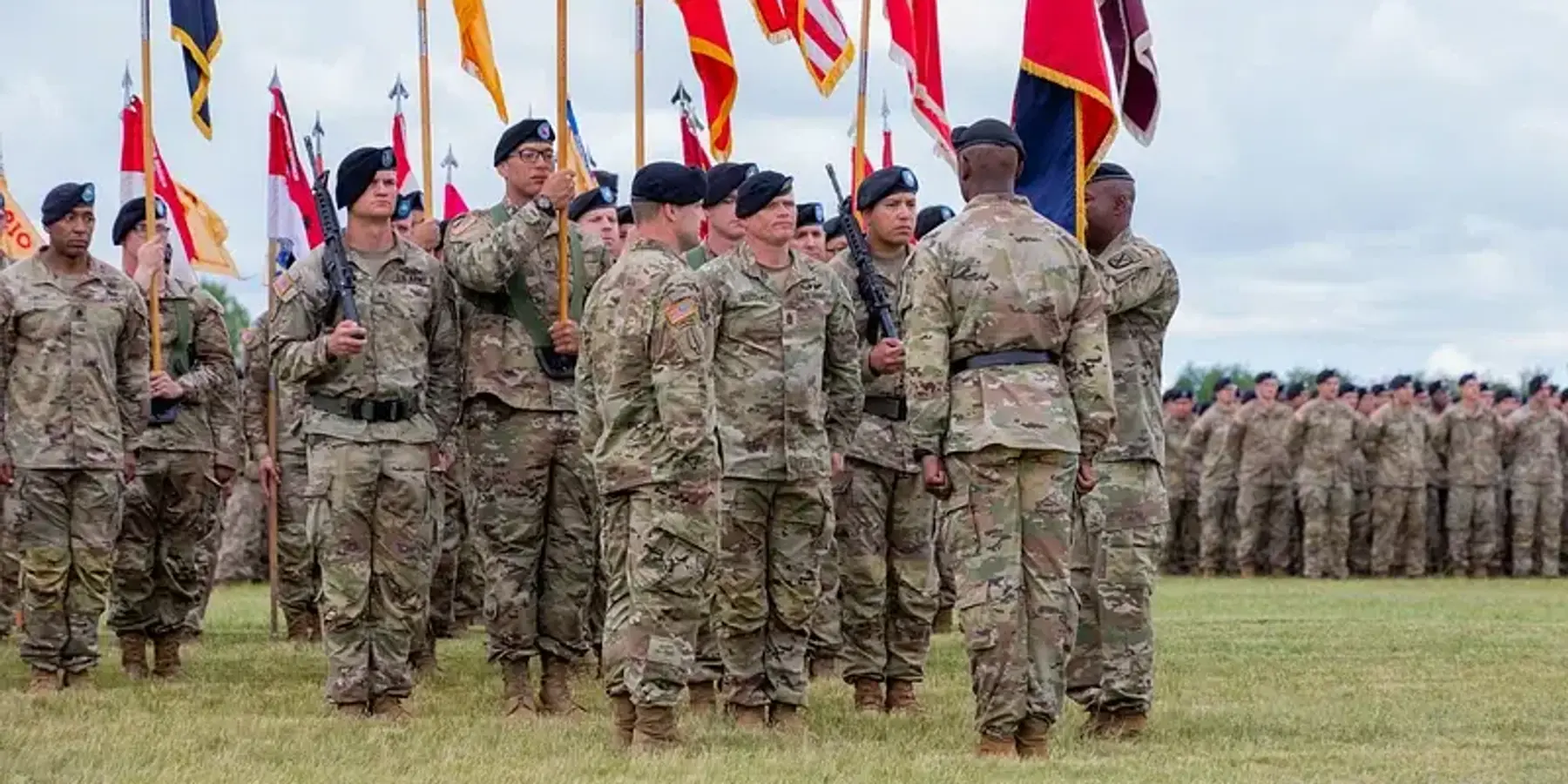
Congress wants to stop Trump troop withdrawal from Europe

This year’s NDAA would place restrictions on the number of soldiers the Pentagon can bring home

Reporting | QiOSK
google cta
google cta

The final version of this year’s National Defense Authorization Act (NDAA), which sets Defense Department policy priorities for the next year, would place obstacles to any effort to reduce the U.S. troop presence in Europe.

Released Sunday, the package, a compromise between the previous House and Senate NDAA versions, would prevent the Pentagon from having fewer than 76,000 troops in Europe for longer than 45 days. After that period of time the secretary of defense and U.S. European Command leadership would have to show Congress that they have consulted NATO allies and their decision aligns with U.S. national security interests.

The measure stands in contrast with the Trump administration’s recently released National Security Strategy, which instead encourages Europeans to take responsibility for their defense needs, and follows lawmaker concerns that the Trump administration’s push to remove U.S. troops from Romania, could invite attack from Russia.

Mark Episkopos, research fellow in the Quincy Institute's Eurasia Program, told RS the measure obstructs ongoing U.S. efforts to change its relationship with Europe.

“The very appearance of a lack of disunity in Washington over the necessity of Europe taking charge of its own defense is a moral hazard insofar as it incentivizes Europe to play for time rather than working with the administration to come up with a strategy for real burden sharing,” he said. “The White House should make clear to Europe that retrenchment is a fixed strategic direction that will be reflected on all levels of U.S. policy going forward."

The NDAA also authorizes $8 billion more in defense spending than what the Pentagon requested for FY 2026. That boosted topline number is a compromise between the House and Senate versions of the NDAA, where the House version kept to the Pentagon’s budget request, and the Senate version requested $32 billion more.

The NDAA also would repeal the 2002 and 1991 Authorizations for Use of Military Force (AUMFs) in Iraq, moves that those pushing for greater congressional control of U.S. foreign policy decisions have long-advocated for. President Trump cited the 2002 AUMF as the legal basis for the strike that killed Iranian General Qassem Soleimani in 2020.

But the 2001 AUMF, most frequently cited as the legal basis for U.S. counterterrorism operations abroad over the previous two decades, is not on the chopping block.

The NDAA also extends the Ukraine Security Assistance Initiative, which provides military assistance to Ukraine, with $400 million for both FY26 and FY27.

The final NDAA vote could take place as soon as this week. The House Rules Committee is slated to discuss the legislation Tuesday afternoon.


Top photo credit: US Army in Europe (US Army/Rawpixel)
google cta
Reporting | QiOSK
US trashed Somalia, can we really scold its people for coming here?
Top image credit: A woman walks past the wreckage of a car at the scene of an explosion on a bomb-rigged car that was parked on a road near the National Theatre in Hamarweyne district of Mogadishu, Somalia September 28, 2024. REUTERS/Feisal Omar

US trashed Somalia, can we really scold its people for coming here?

Africa

The relatively small Somali community in the U.S., estimated at 260,000, has lately been receiving national attention thanks to a massive fraud scandal in Minnesota and the resulting vitriol directed at them by President Trump.

Trump’s targeting of Somalis long preceded the current allegations of fraud, going back to his first presidential campaign in 2016. A central theme of Trump’s anti-Somali rancor is that they come from a war-torn country without an effective centralized state, which in Trump’s reasoning speaks to their quality as a people, and therefore, their ability to contribute to American society. It is worth reminding ourselves, however, that Somalia’s state collapse and political instability is as much a result of imperial interventions, including from the U.S., as anything else.

keep readingShow less
DC Metro ads
Top image credit: prochasson frederic via shutterstock.com

War porn beats out Venezuela peace messages in DC Metro

Military Industrial Complex

Washington DC’s public transit system, the Washington Metropolitan Area Transit Authority (WMATA), is flooded with advertisements about war. Metro Center station, one of the city’s busiest stops, currently features ads from military contractor Applied Intuition bragging about its software’s ability to execute a “simulated air-to-air combat kill.”

But when an anti-war group sought to place an ad advocating peace, its proposal was denied. Understanding why requires a dive into the ongoing battle over corruption, free speech, and militarism on the buses and trains of our nation’s capital.

keep readingShow less
Putin Trump
Top photo credit: U.S. President Donald Trump and Russian President Vladimir Putin hold a bilateral meeting at the G20 leaders summit in Osaka, Japan June 28, 2019. REUTERS/Kevin Lamarque
What can we expect from a Trump-Putin meeting

Trump on New Start nuke treaty with Russia: if 'it expires it expires'

Global Crises

As the February 5 expiration date for New START — the last nuclear arms control treaty remaining between the U.S. and Russia — looms, the Trump administration appears ready to let it die without an immediate replacement.

"If it expires, it expires," President Trump said about the treaty during a New York Times interview given Wednesday. "We'll just do a better agreement."

keep readingShow less
google cta
Want more of our stories on Google?
Click here to make us a Preferred Source.

LATEST

QIOSK

Newsletter

Subscribe now to our weekly round-up and don't miss a beat with your favorite RS contributors and reporters, as well as staff analysis, opinion, and news promoting a positive, non-partisan vision of U.S. foreign policy.