

Last week, the war in Ukraine reached deep inside the Russian Arctic.
On September 9, Ukrainian drones struck two gas processing plants in the Yamalo-Nenets region, located about 1,900 miles from the Ukrainian border. This is Ukraine’s deepest strike on Russia since the war began. Arctic energy infrastructure in the Yamal region produces around 80% of Russia's natural gas.
Russian military analysts believe the Ukrainian drones were launched from Sumy, northern Ukraine, and reached all the way into Yamal with the help of Starlink. Ukraine’s Special Operations Forces announced, “Until today, this was considered an absolutely safe rear.”
The attack also shook European energy markets, as Europe buys large volumes of gas from the Yamal region. President Donald Trump later told Ukraine to stop attacking Russia’s diesel infrastructure, saying fuel shortages due to the strikes were “hurting the world,” without explicitly acknowledging the fact that the spike in global energy prices is largely driven by the Iran war.
This is the second time the Arctic has been drawn into the Ukraine war. Back in June 2025, Ukrainian drones, smuggled into Russia by truck, hit the Olenya air base on the Kola Peninsula, targeting Russia’s long-range strategic bombers that Moscow had considered safe because of their remote Arctic location.
No guardrails for deescalation
What makes these strikes especially dangerous is the lack of mechanisms to manage the next incident. Tensions between nuclear powers are already escalating in the Arctic. A confrontation in this region could quickly escalate into something much bigger.
Both the U.S. and Russia deploy strategic bombers and submarines north of the Arctic Circle. Russia uses the Arctic as a testing site for nuclear-powered cruise missiles and underwater drones.
Last week, anonymous Western officials told Reuters that, in April 2026, U.S., British, and Norwegian forces confronted Russian submersible vehicles that seemed to be practicing how to sabotage critical cables near Svalbard. The Russian Embassy in Oslo has dismissed the report as information warfare meant to justify NATO’s militarization of the Arctic.
Previously, the Arctic was the setting for confidence-building measures, force-posture information sharing, multilateral scientific cooperation, and programs that reduced the risks of miscalculation. Today, we are at dangerously low levels of trust, preventing such cooperative efforts. The region faces growing military activity and almost no mechanism to stop a stray drone or submarine maneuver from spiraling into an escalation neither side intends.
After the 2025 strike on Russia’s strategic bombers, George Beebe of the Quincy Institute noted with alarm that Western commentators celebrated the attack, largely ignoring the risks it posed to nuclear stability. An attack on the aviation leg of Russia's nuclear triad deserves far more sober reflection than the applause it received.
Arctic security dilemma
Against the background of the worsening conflict in Ukraine is a spiraling West-Russia confrontation. The current trajectory is a classic security dilemma: NATO builds up in the Arctic because of a perceived Russian threat, Russia builds up because of a perceived NATO threat, and round and round it goes. With every move, each side sees proof of the other’s hostility.
Following the accession of Finland and Sweden into NATO in 2023 and 2024, seven of the eight Arctic states (all but Russia) are members of the alliance. In February 2026, NATO launched Arctic Sentry, conjoining the alliance’s activities — including Denmark's Arctic Endurance and Norway's Cold Response — under a coherent operational framework coordinated through Joint Force Command in Norfolk, Virginia.
Arctic Sentry was announced a month after Trump raised tensions in the alliance with his threats to annex Greenland. NATO Secretary General Mark Rutte announced the mission as he lobbied Trump to drop the push to acquire the island.
European allies hoped that Arctic Sentry and talks with Washington would let NATO move on from the Greenland dispute and refocus on what they call Europe’s security priority: Russia and the war in Ukraine. Trump, meanwhile, continues to seek the acquisition of the Arctic island even as Europe invests $232 million to support Greenland.
Finland convened European leaders in Helsinki this week to discuss the “race with Russians and the Chinese for use and control of the Arctic.” The Finnish prime minister said “Europe has to be so strong that it won’t cross Russia’s mind to challenge us here in the north.”
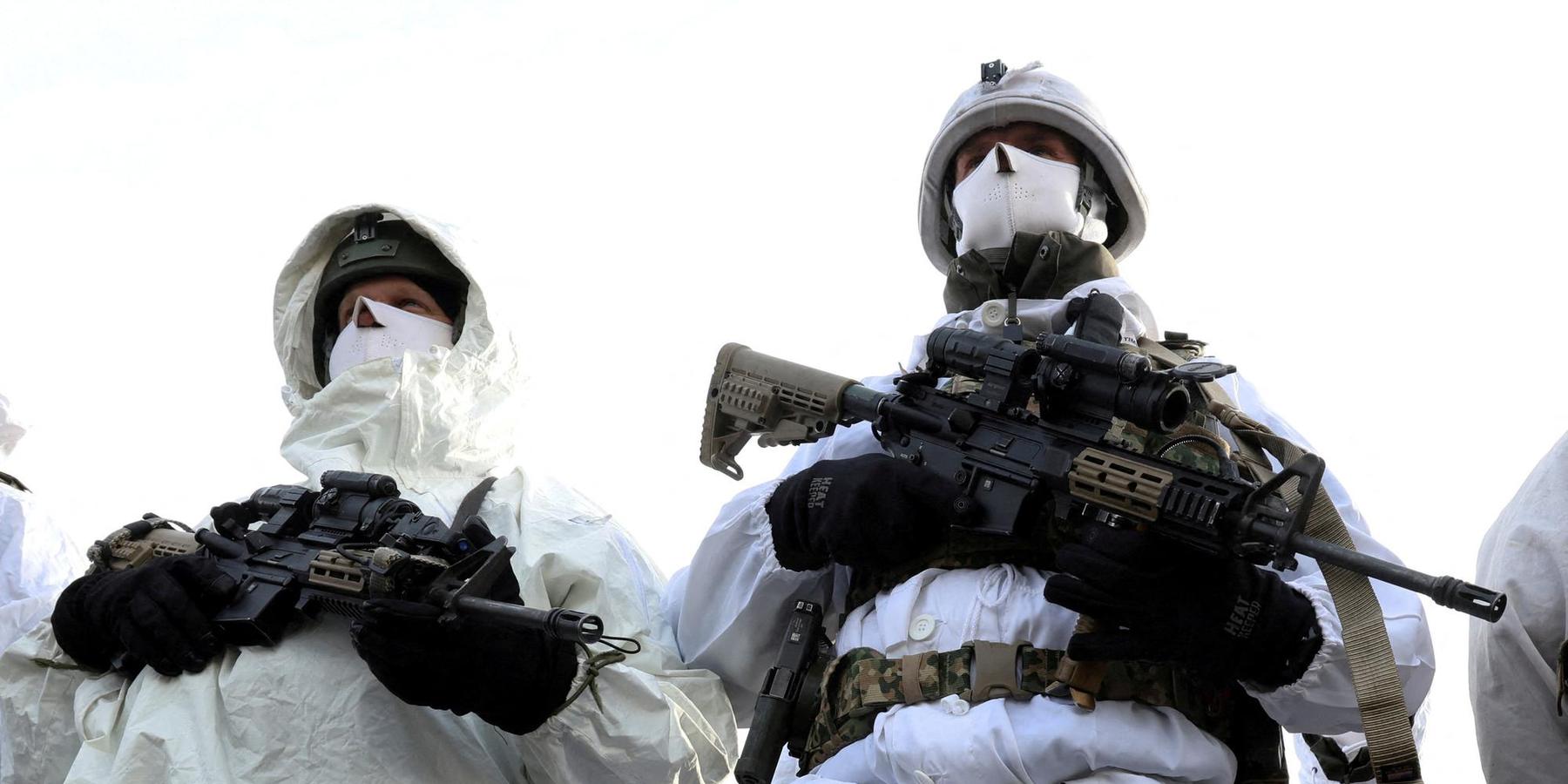
Now, NATO exercises, such as Cold Response 26, are folded into the Arctic Sentry framework. This year’s exercise in Norway involved 30,000 troops from fourteen nations rehearsing a counterattack against an “enemy to the east.”
Russian officials have announced that Moscow will take measures to counter NATO in the Arctic. In parallel, Russia and China are increasing their Arctic security cooperation. In 2024, Russian and Chinese bombers conducted joint drills for the first time within Alaska's Air Defense Identification Zone, in international airspace. The U.S. responded by sending more troops and artillery to Alaska’s remote corners.
That same year, the Chinese Coast Guard conducted its first-ever Arctic Ocean patrol alongside Russia’s Border Service.
Restarting dialogue
To its credit, U.S. European Command (EUCOM) announced the restoration of military-to-military dialogue with Russia earlier this year. Norway also plans to discuss maritime security issues with Russia under the framework of the Agreement on the Prevention of Incidents at Sea (INCSEA).
With so much activity up north, it is reassuring to see some Arctic states gradually resume dialogue with Russia. Going forward, a circumpolar dialogue and channels for the other NATO member states that operate in the Arctic will be necessary.
The Ukraine war has impacted Russian-Chinese relations in the Arctic. From Russia’s point of view, turning to China has been a practical step in the face of diplomatic isolation, but it’s not necessarily Moscow’s first choice. Before 2022, Russia actively participated alongside its Western counterparts in maritime safety institutions like the Arctic Coast Guard Forum.
After the war started, the Western Arctic states condemned Russia’s military actions and suspended cooperation. Vladimir Kulishov, head of Russia's Border Service, explained that Moscow felt compelled to find new partners as a result. Russia invited China’s Coast Guard first as an observer to a Russian-led exercise, and later as a signatory to an official memorandum on maritime security cooperation.
The Western policy of isolating Russia has essentially left Moscow with little alternative but to pursue coordination with China. This has granted Beijing a strategic foothold in the Arctic — something the Pentagon regards as a top security threat. Previously, China had access to the Arctic mostly through Russia’s tolerance rather than its partnership.
The recent escalations are a warning that the guardrails and old rules are gone. If we want to prevent the region from turning into a permanent battlefield, all Arctic states need to get serious about risk reduction.
The Ukraine war severed decades of productive Arctic cooperation. As the search for peace in Ukraine now resumes, all Arctic states should enhance diplomatic channels, especially military-to-military dialogue like the channels that EUCOM and the Norwegian armed forces are pursuing with Russia. Multilateral cooperation between Arctic states’ coast guards is also crucial.
The new status quo — a state of ever-increasing tensions between nuclear-armed powers — is simply too risky to bear.
- Trump's Greenland, Canada threats reflect angst over Russia shipping ›
- Norway's seizure of a Russian vessel is a dangerous escalation ›