

Jun 17, 2025
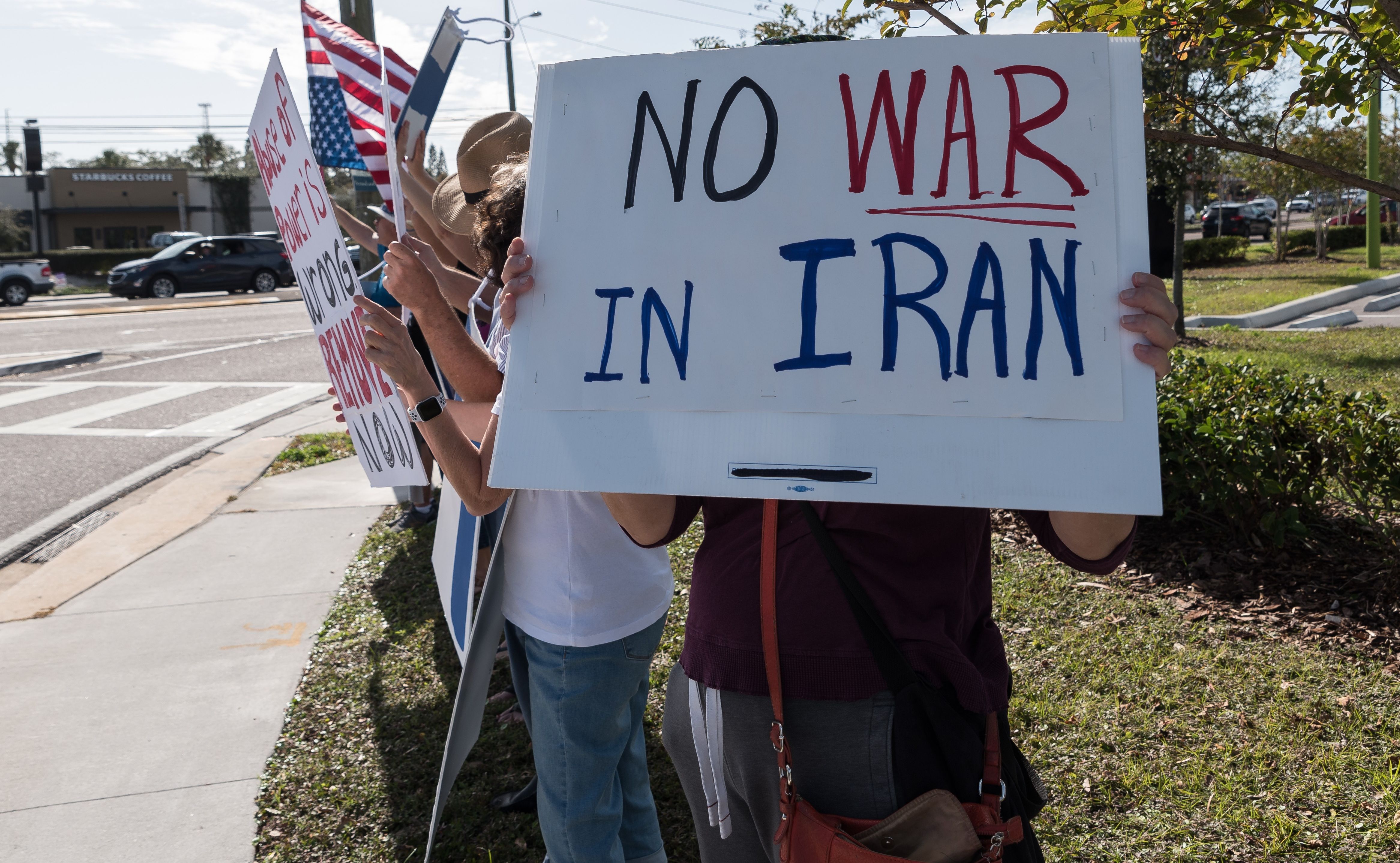
More than half of those Americans who supported Donald Trump for president in 2024 don’t think the U.S. military should get involved in the conflict between Iran and Israel.
A new The Economist/YouGov poll conducted on June 13-16 found that 53% of Trump voters said the U.S. should not join the war, versus just 19% who said the U.S. military should. Sixty percent of all Americans surveyed agreed that the U.S. should not get involved.
The poll also found that 63 percent of Trump voters said the U.S. should “engage in negotiations with Iran over its nuclear program” while just 18% said the U.S. should not (in total, 56% said the U.S. should talk to Iran).
That result mirrors other recent polling on negotiations with Iran which found that Republicans support talks and comes amid an increasingly bitter battle between those pushing for war with Iran and Trump’s most loyal supporters — including MAGA stars like Steve Bannon and Tucker Carlson — who are furious that the president didn’t stop Israel from launching its attack on Iran last week and is apparently considering U.S. military involvement.From Your Site Articles
- Pure Orwell: Europe condemns Iran for attacks on its own territory ›
- US lawmakers blast Israel, urge against war with Iran ›
- Israel is not winning. Trump must not cave to new demands for help. ›
- Despite setbacks, trends still point to US foreign policy restraint | Responsible Statecraft ›
- If Israel goes it alone is it risking another 'Suez'? | Responsible Statecraft ›
- Israel is luring the US into a trap | Responsible Statecraft ›
- Trump: We bombed Iran, and now we have 'peace' | Responsible Statecraft ›
- The EU's pathetic response to Trump's Iran attack | Responsible Statecraft ›
- Senate vote to exert war powers over Trump fails | Responsible Statecraft ›
- Polls: Americans don't support Trump's war on Iran | Responsible Statecraft ›
- What the West misunderstands about Iran | Responsible Statecraft ›
- Another poll shows Americans’ declining support for Israel | Responsible Statecraft ›
- Are MAGA restrainers pulling their punches this time on Iran? | Responsible Statecraft ›
- Trump's war on Iran is already losing the home front ›