

Israel’s war of choice with Iran is proving far less decisive than President Donald Trump initially believed when he praised Israel’s performance as “excellent.” What now appears to be an escalating, inconclusive conflict with no clear end in sight will soon force Trump into a challenging decision: end the war — or enter it.
Israel’s opening strike was undoubtedly a tactical success. Caught off guard by the assumption that Israel wouldn’t act before the sixth round of nuclear talks, Iranian leaders had taken no precautions. Many were asleep in their homes in northern Tehran, alongside their families, when Israeli strikes killed them in their beds. Iran’s air defenses were also unprepared and inactive.
Israel aimed to eliminate as many Iranian commanders as possible to disrupt Iran’s command and control structure and effectively paralyze its military response. Initially, the strikes were so successful — and Iran so subdued — that it was unclear whether Tehran retained any meaningful capacity to retaliate.
Impressed by Israel’s early success, Trump moved quickly to claim credit for the operation, despite Secretary of State Marco Rubio having declared just hours earlier that the strikes were a "unilateral action" by Israel and that the U.S. was not involved. As the saying goes: success has many fathers, but failure is an orphan.
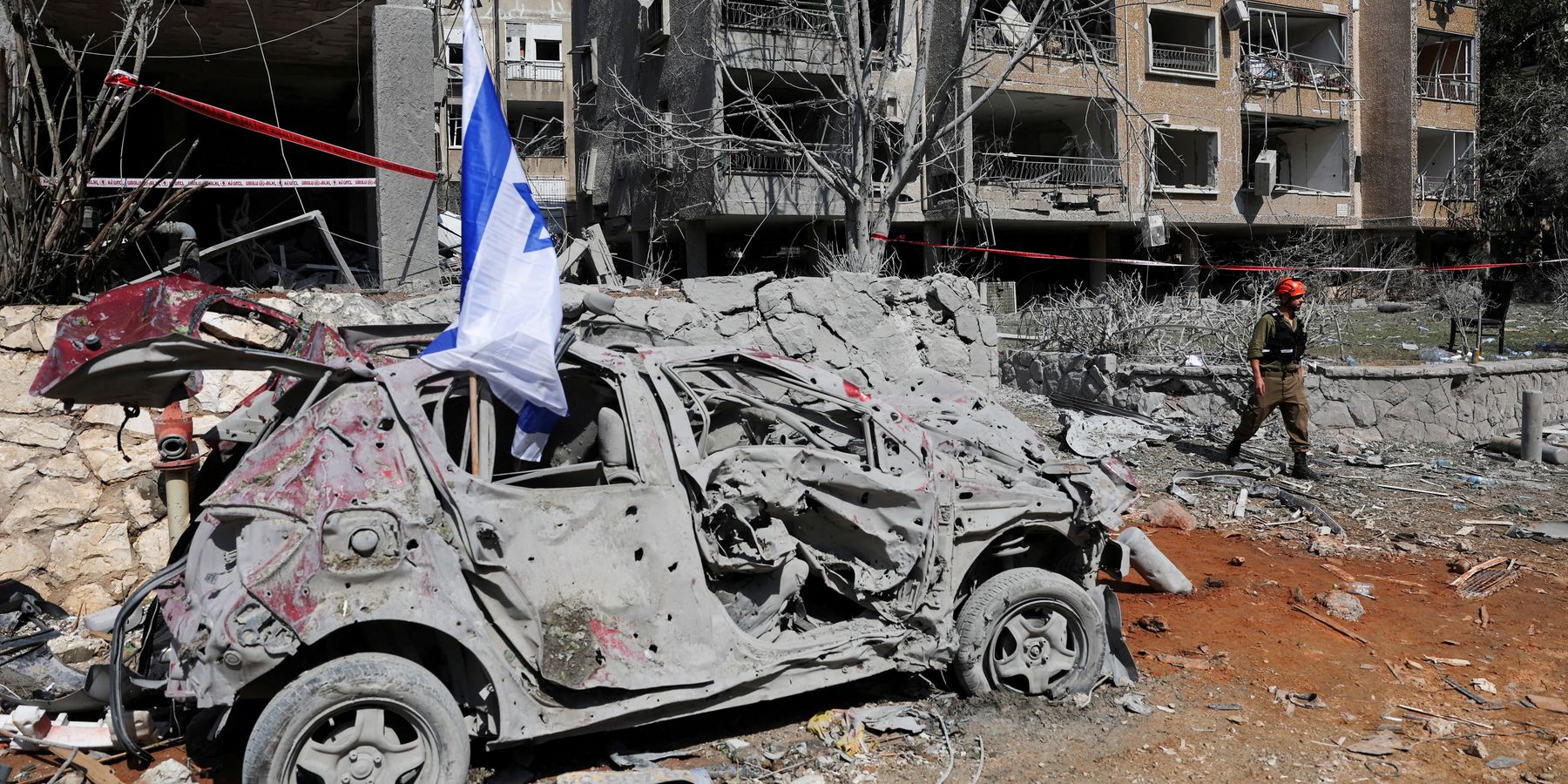
But within 18 hours, Iran had restructured its chain of command, activated its air defenses, and, most critically, launched four missile barrages aimed primarily at Israeli air defense systems. Many of the missiles penetrated Israel’s multilayered defenses, lighting up the Tel Aviv skyline as they struck their targets — including a direct hit on Israel’s Ministry of Defense.
That Tehran could mount such a response just hours after losing several top military commanders was the first clear sign that Israel’s initial success would be short-lived.
Although Iran continued to absorb heavy blows on Saturday — including Israeli strikes on oil refineries, Mehrabad Airport in Tehran, and other civilian and economic infrastructure — it responded with additional missile barrages. These were fewer in number but notably more effective. As Israel’s air defenses degrade, Tehran is likely to shift to missiles with larger warheads, increasing the scale of destruction.
Meanwhile, despite inflicting significant damage on the Natanz nuclear site, Israel has failed to penetrate the far more critical and heavily fortified Fordow facility. As a result, the actual impact on Iran’s nuclear program appears limited. Reports indicate that the U.S. military has provided its missile defense capabilities to shoot down Iranian drones and missiles but it has so far not joined Israel in offensive strikes.
It is becoming increasingly clear to Washington that Israel’s war of choice is far from a success, and a decisive outcome may not materialize at all. While Israel likely holds escalation dominance, it faces a critical disadvantage: it has fewer air defense interceptors than Iran has long-range missiles. Israel needs a swift and decisive victory — but a prolonged war of attrition may ultimately favor Iran. And such a victory now seems out of reach.
Unsurprisingly, Israeli officials and their allies in Washington — including groups like the Foundation for Defense of Democracies — have begun lobbying President Trump to bring the U.S. into the war and to join them in offensive strikes. For Trump, this must be a serious letdown. Aware of his reluctance to launch another Middle East war, the Netanyahu government had recalibrated its approach when it pressed Trump earlier in January: rather than urging the U.S. to strike Iran directly, it sought a green light for Israel to act. Through an intense lobbying campaign, Israel appears to have secured at least tacit approval from Trump for this campaign.
Just 24 hours into its war of choice with Iran, Israel was already back in Washington, knocking on Trump’s door with new demands. What began as “Give us the green light and Israel will bomb Iran for America” quickly shifted to “Hurry up, America, and bomb Iran for Israel!”
Israel faces two key challenges with this request. First, seeking America’s blessing to go to war is a far lighter ask than requesting America’s direct military involvement. Trump, unexpectedly, agreed to the former — but it would be exceptionally unwise for him to agree to the latter.
Secondly, as noted earlier, Trump likes winners — and by asking him to intervene, Israel is signaling that it’s losing. It has failed to eliminate Iran’s regime or cripple its nuclear program, and is now absorbing unexpected blows in return (today Iran sent a barrage of missiles during daytime rather than night to throw the Israelis off). Why would Trump risk American lives, endanger his presidency, and join a war he didn’t start — just to rescue Israel from a failed and unprovoked conflict? Trump prefers to take credit for victories, not inherit blame for someone else’s potential fiasco.
After all, it was Israel that persuaded Trump to adopt the zero-enrichment negotiating stance — the very position that led to the diplomatic deadlock Israel later exploited to secure a green light for its faltering military campaign. Had Trump stuck to his original red line — no weaponization — he might now be on the verge of a historic nuclear agreement with Iran.
Trump listened to Netanyahu—just as he did to John Bolton and Mike Pompeo in 2018—and once again, his path to an America First deal with Iran was derailed. This is precisely the outcome Netanyahu sought. If it’s not what Trump wants, he should change course immediately—just as he did in Yemen. Rather than joining Israel’s war, he should compel Israel to end it.
With its unprovoked war, Israel has undermined Trump’s negotiating position in two key ways. First, support for acquiring a nuclear weapon has surged among Iran’s elite and broader society in response to the Israeli bombings. This has raised the political cost for Tehran to agree to limit enrichment to civilian levels, making a deal more difficult.
Second, America’s backing of Israel’s attack — coupled with Trump’s self-congratulatory rhetoric — has led Tehran to believe he deliberately lulled Iran into a false sense of security to boost Israel’s chances. As a result, what little trust remained in Trump as a negotiating partner has further eroded. And the less trust there is, the narrower the path to a deal.
Still, a deal remains possible. But the sooner Trump halts Israel’s war, the better his chances. One thing is certain: if Trump and Iran return to the negotiating table, he must quickly abandon the self-defeating zero-enrichment demand championed by Israel and Bolton — the very stance that gave birth to this needless and messy war.
- Pure Orwell: Europe condemns Iran for attacks on its own territory ›
- US lawmakers blast Israel, urge against war with Iran ›
- Is Israel's favorite US general helping to push us into war? | Responsible Statecraft ›
- Poll: Trump voters don't want US involved in Israel’s war on Iran | Responsible Statecraft ›
- Trump’s demand for Iran's surrender will only guarantee war | Responsible Statecraft ›
- Iraq on razor's edge between Iran and US interests in new war | Responsible Statecraft ›
- Tulsi said Iran not building nukes. One Senator after another ignored her. | Responsible Statecraft ›
- Israel is luring the US into a trap | Responsible Statecraft ›
- Accusations already test Trump brokered Iran-Israel ceasefire | Responsible Statecraft ›