

Israeli Prime Minister Benjamin Netanyahu wants to accelerate his war against Iran with direct, offensive assistance from Washington — at a moment when there is less support for it than ever among the American people.
Netanyahu must expect that Washington will be compelled to accommodate and, if necessary, implement Israel’s expansive war aims – notably the complete destruction of Iran’s nuclear program, its ballistic missile capabilities, and even regime change itself. U.S. assistance is widely considered to be critical to Israel’s success in this regard.
It might well be the case that Israel’s decision to go to war on Friday June 13 was contingent on an American-Israeli understanding that each side is, for the time being at least, reticent to acknowledge publicly. Indeed, since June 1967 and including the current campaign in Gaza, Israel has never gone to war without assuring itself of American support. And in this current conflict, Washington has already acknowledged downing Iranian missiles headed for Israel.
Yet Israelis would be right to be concerned about the limits of Trump’s commitment to their war aims.
Amos Gilad, a key architect of the bilateral relationship and a central figure in Israel’s security-obsessed deep state, is publicly expressing his concern that Trump was indeed telling the truth when he announced early on that, "The U.S. had nothing to do with the attack on Iran.”
“If we're alone,” Gilad noted in an interview with Israel Channel 12, “the Iranians will continue the confrontation, and Khamenei may decide to accelerate toward nuclear [capabilities]. There is the Fordow site, which is deeply buried underground and requires American assistance,” he explained.
Gilad voiced concern over Iran's capacity to retaliate, stating, “We may reach a situation where they continue to attack us. They understand, based on what our ambassador in New York, who is supposed to represent Israel, is saying, that the United States is not with us.”
Gilad warned that Iran may indeed accelerate its nuclear program. “Eventually, Iran will say, Israel attacked us, so we have no choice but to develop nuclear weapons. Our reward will be our defeat.
“The Iranians will fight, and it may take a long time. From their perspective, we have harmed their national honor,” he said.
Gilad also dismissed characterizations of Trump as unpredictable. “That’s not true — he has a method. He’s very happy for others to do the work. He will fight until the last Israeli,” he warned. “He might join, but he said it himself: only if American soldiers are attacked. And they haven’t been.”
Gilad noted concerns that Netanyahu has miscalculated his ability to steer American policy according to his intentions.
“What is the political leadership doing? We started the war, and now we’re asking Trump to intervene? Why would he? Is Trump obligated to us?”
Gilad concluded that Israel may indeed win the battle but lose the war. “The Iranians intend to continue launching rockets, and they may retain this ability. Countries like China and Russia might also stand by their side,” he said.
A quick stroll down memory lane highlights the unanticipated consequences of an Israeli decision to roll the dice in the expectation that Washington can be compelled, against its considered interest, to come to Israel’s aid in its campaign against Tehran, and indeed to become a party to Israel’s determination to destroy by force of arms Iran’s nuclear infrastructure and conventional missile capabilities.
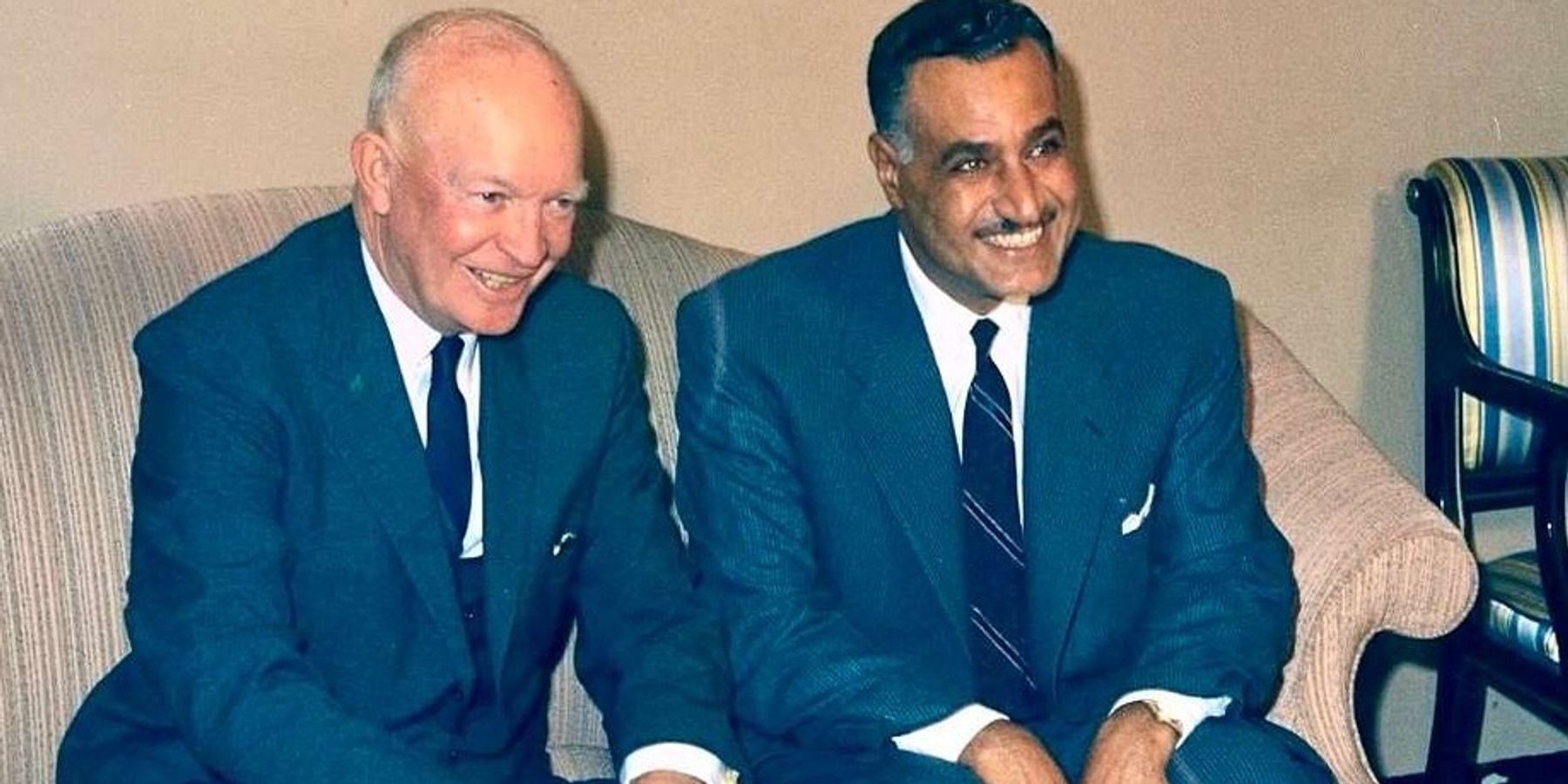
The potential costs of Israel’s strategic isolation during wartime bring to mind Israel’s disastrous decision to join France and Britain in the “Tripartite Agression” against Egypt under President Gamal Abdel Nasser in October 1956.
To compel Israel’s withdrawal from Gaza and the Sinai Peninsula, President Dwight D. Eisenhower employed a brutally effective mix of diplomatic pressure, threats of economic sanctions, and international political maneuvering to force an Israel’s retreat from Sinai and the Gaza Strip.
When Britain and France vetoed a UN Security Council resolution calling for a ceasefire, Eisenhower took the issue to the UN General Assembly, where a resolution demanding withdrawal passed overwhelmingly.
Eisenhower threatened to cut off U.S. financial aid to Israel and suggested the possibility of suspending tax-deductible donations to Israel from American citizens.
He emphasized the importance of international law and non-aggression principles, framing his pressure on the three co-conspirators as a defense of the UN Charter.
In a candid Oval Office address in early 1957 Eisenhower declared:
“If the United Nations once admits that international disputes can be settled by using force, then we will have destroyed the very foundation of the [UN] Organization … I would, I feel, be untrue to the standards of the high office … if I lent the influence of the United States to the proposition that a nation which invades another should be permitted to exact conditions for withdrawal.”
Bowing to U.S. pressure, Israel withdrew from Gaza and Egyptian Sinai in March 1957.
In exchange, Israel received U.S. assurances of freedom of navigation in the Straits of Tiran and won the deployment of a United Nations Emergency Force (UNEF) in Sinai as a tripwire to conflict.
After Suez, policies adopted by Washington – foremost among them the forced Israeli retreat from Egypt — established the foundation for the U.S. to consolidate its role as successor to the legacy of French and British imperialism in the region. This was a foundation which, up until Trump, every administration has reaffirmed.
If Eisenhower’s diktat to Israel was the springboard for an era of U.S. ascendency in the region, Netanyahu’s decision to initiate a war without Washington’s collaboration may well signal another historic Israeli failure to correctly gauge Washington’s interests on the threshold of a new era.
However, chances are not inconsiderable that the Trump administration will decide to collaborate in an expanding Israeli military campaign to consolidate its strategic superiority throughout the region.
But at Suez, Israel paid the price for obstructing expansion of American power in the region. Today almost a century later, it may suffer the consequences of obstructing an American desire to retreat.
- Trump’s demand for Iran's surrender will only guarantee war ›
- Poll: Trump voters don't want US involved in Israel’s war on Iran ›