

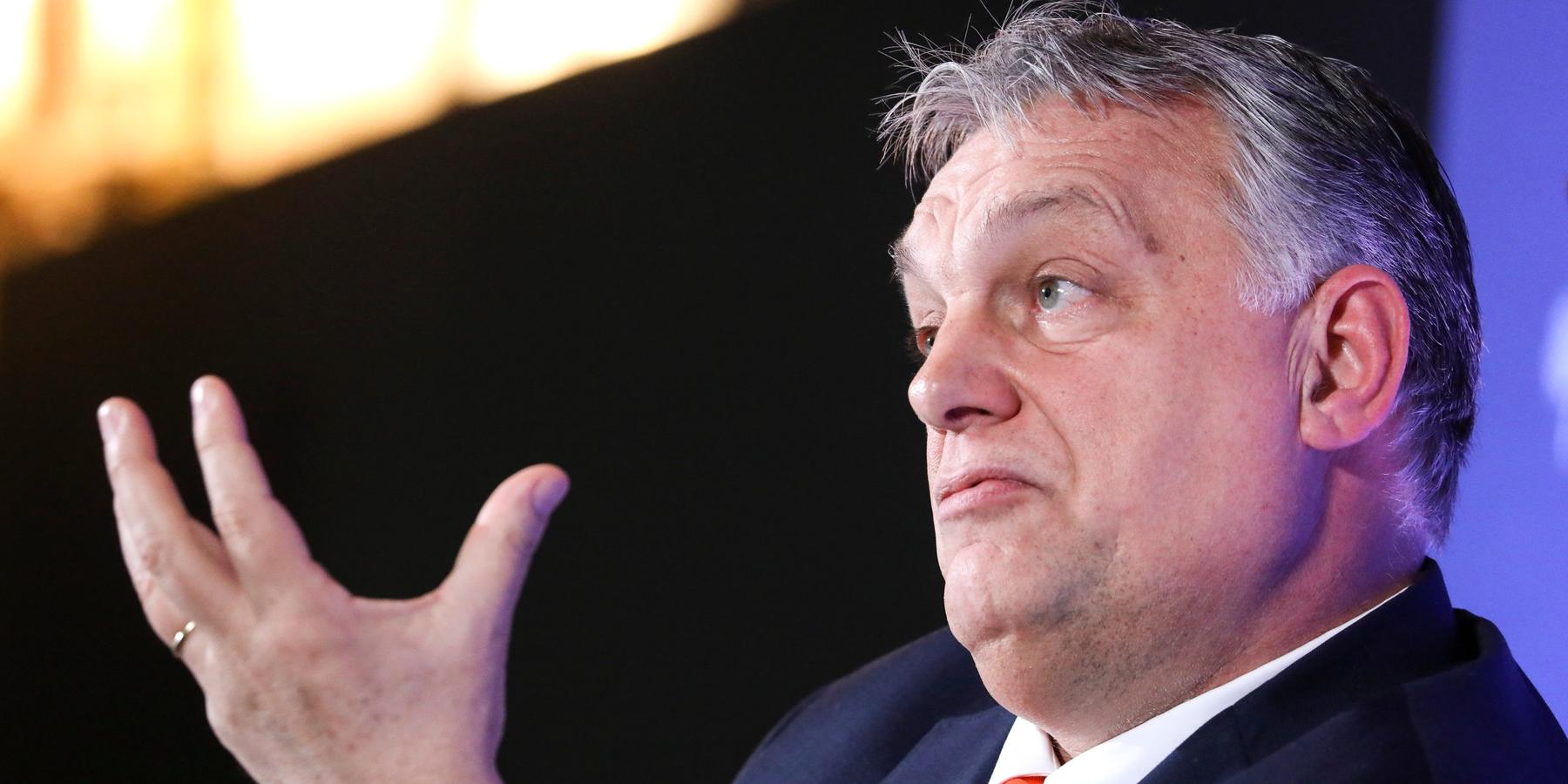
The EU's plan to impose its 20th package of sanctions against Russia crashed against a seemingly immovable wall of Hungarian resistance this week, when the Central Europe country used its veto to block it.
That is not necessarily the end of the matter, yet I hope it is the beginning of the end, with Europe finally choosing peace over war.
At a fraught EU Council meeting on February 23, agreement could not be reached on a new round of EU sanctions, leading the EU High Representative for Foreign Policy and Security, Kaja Kallas, to announce, “I deeply regret that we did not reach an agreement today, given that tomorrow [February 24] is the solemn anniversary of the start of this war.”
Hungarian resistance to collective decisions on Ukraine policy has been overcome before. In June 2025, Prime Minister Viktor Orban stepped out of the European Council meeting to allow a unanimous vote of those present to extend existing EU sanctions against Russia. Yet, this latest blockage is fueled by growing bad blood between Hungary and its eastern neighbour Ukraine, over the issue of oil.
It is an uncomfortable reality that Europe has continued to purchase Russian oil and gas throughout the war, in the face of President Trump’s exhortations to stop purchases. Gas imports still accounted for 12% of Europe’s total as of October 2025. And while Hungary and Slovakia are the largest importers, other western European powers such as France, the Netherlands, and Belgium, have also continued purchases. The addiction is a hard habit to break, and for largely domestic reasons.
As Gladden Pappin, the American President of the Hungarian Institute for International Affairs, has pointed out, if Hungary agreed to sanction Russian oil and gas, “Hungarian gas at the pump doubles overnight. Household energy prices triple or quadruple, and the German industry moving to Hungary immediately halts. Whatever government imposes that policy will collapse within weeks.”
While sanctioning Russia is a geopolitical tool, it has real world consequences for regular citizens across Europe. Germany has seen its economy tip into deindustrialization since the start of the war in Ukraine and the progressive cutting off of access to Russian, shedding over 250,000 industrial jobs, a contraction of 4.3%, amid widespread factory closures.
Sanctions require European states voluntarily to choose economic self-harm ahead of an end to the war in Ukraine. And in Hungary and Slovakia, that is not a palatable choice, not least ahead of a hotly contested election in Hungary on April 12. Prime Minister Viktor Orban has framed the election as a choice between “war or peace."
Four years after the war in Ukraine started, increasing numbers of Europeans are desperate for peace and not war, not just for their long-term personal security, but for the benefits to their check books.
Yet that runs counter to Ukraine, which frames the war as existential to them. So, they have pushed Europe to go tougher and faster against Russia’s economy and are doing everything they can to add further pressure. Ukraine launched drone attacks against the Druzhba pipeline network which supplies oil to Hungary and Slovakia, cutting this supply route on January 27.
It is a statement of the crazy world in which we live, that Ukraine can attack facilities that supply EU and NATO countries without opprobrium in the west. Unfortunately, out of sympathy for Ukraine’s war plight, EU member states are quick then to criticize Hungary and Slovakia for taking retaliatory action. Poland’s Foreign Minister, Radek Sikorski, labeled the Hungarian veto as “an escalation.” And yet he doesn’t have to answer to Hungarian voters.
Blocking the EU’s 20th sanctions package is one measure. Hungary and Slovakia have also blocked the promised 90 bln euro loan package for Kviv to keep the war effort going. They have also threatened to cut off supplies of gas, electricity, and diesel to Ukraine (as it no longer imports gas from Russia, Ukraine relies of supplies piped in from proximate EU countries). Ukrainian media has predictably labeled this energy blackmail. Not least given the enormous electricity and heating shortages Ukraine faces in light Russia’s campaign of strategic bombing against their energy infrastructure.
At a TV interview that I attended recently, a Ukrainian MP pointed out that she uses a local app that tells her how many hours of electricity her building will receive each day. Who in Europe would want to live in such conditions, not the least during a bitterly cold winter?
Of course, the stark brutality of the air attacks and Ukraine’s energy crisis drives Europe’s mainstream politicians to pursue more punitive actions against Russia, including economic sanctions. Yet the inescapable reality is that the EU’s 20th sanctions package amounts to more of the same — tactical scrapes at the bottom of the barrel — to bear down on Russia’s energy exports and financial services sector, together with small beer restrictions on some other goods’ exports.
The President of the European Commission, Ursula von der Leyen, claims that Russia’s energy exports were cut by 24% in 2025. And yet, look at the real data, and you’ll see that Russia’s exports in 2025, at $419.4 billion, were down just 3.3% on 2025, with an overall current account surplus of $41.4 billion. That surplus will go into purchases of gold, which now accounts for almost one half of Russia’s soaring international reserves, which stand at $833 billion.
Meanwhile, Ukraine’s current account deficit more than doubled to $31.9 billion in 2025, or 14.9% of GDP, liquidity that will need to be met by printing money or donations from Europe.
At some point, European leaders need to ask themselves, after 19 rounds of sanctions already, “is this really working?”
It’s not only that economic sanctions against Russia hit diminishing marginal returns soon after the war in Ukraine started four years ago. But that the addition of new sanctions, self-evidently, disincentivizes Putin from settling for peace. Yes, Russia’s economy is undoubtedly feeling the pain, through high inflation and interest rates, plus slowing growth. But there has never been a time when it appeared that, for economic reasons, Russia was under greater pressure to end the war than Ukraine and its European sponsors.
So, and as I have said before, sanctions, and their phased removal, could play a positive role in leveraging an end to the war. Continuing to blame Hungary and Slovakia for the continued intransigence in blocking yet another round of EU sanctions misses this point.- Could this be the election that brings Hungary's Orban down? ›
- They are calling fast-track Ukraine EU bid 'nonsense.' So why dangle it? ›