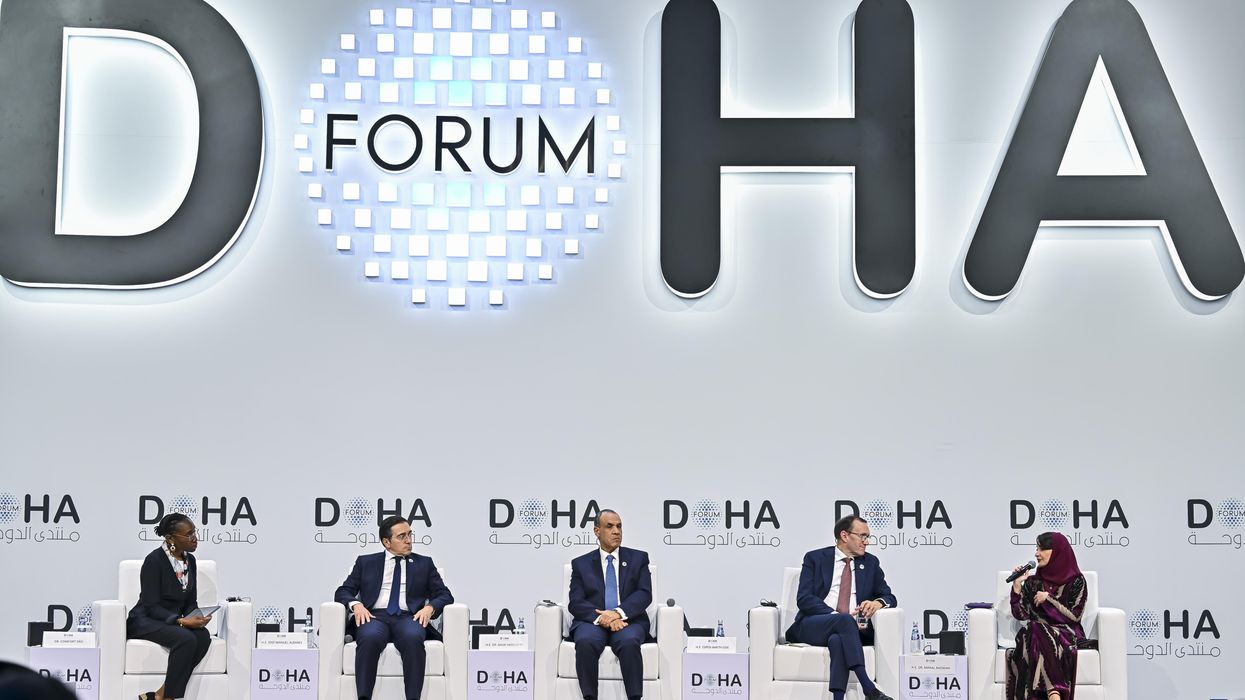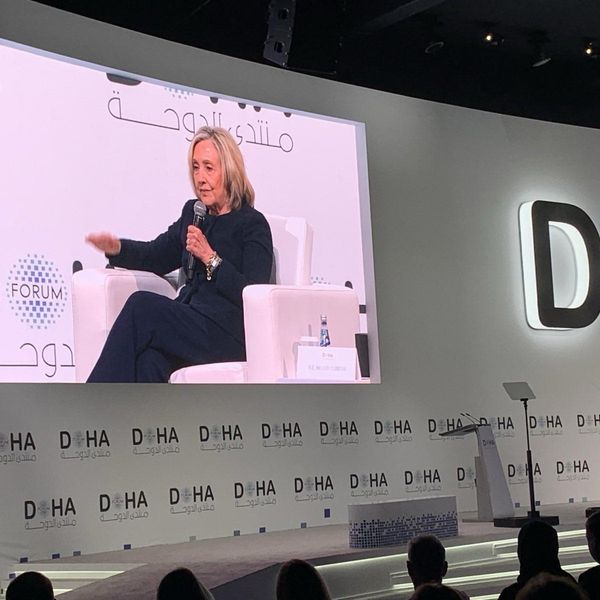
At the recent annual gathering of global elites in Davos, Saudi Foreign Minister Mohammad Al-Jaddan suggested that the kingdom was open to selling its energy exports to China in Renminbi.
This got the attention of petroleum economists and central bankers alike as both know that, for the last 48 years, Saudi Arabia and the other Persian Gulf Arab states have been pricing and selling their crude exports exclusively in U.S. dollars.
Indeed, it was Richard Nixon’s Treasury Secretary William Simon who struck what was then a secret plan with the Saudis to essentially bankroll America’s widening trade deficits by pricing their oil sales in greenbacks and thereby increasing the amount of dollars in circulation and enhancing the dollar’s position as the global reserve currency. In return, Saudi Arabia would have unique access to U.S. military assistance and equipment.
This bargain made a lot of sense when the United States was the world’s largest importer of Saudi crude. This is no longer the case today, however, as it has been supplanted by China. In fact, China is not only the largest importer of crude and petrochemicals from the kingdom, it is also the largest purchaser of crude and petroleum products from all the Persian Gulf countries.
So, it shouldn’t be a surprise if at some point in the future, Saudi Arabia and China move away from the dollar and trade in a currency that is more in line with their national interests.
China and Saudi Arabia, as is the case with many oil-exporting countries, share similarities in how they govern. They have been watching for years as the United States has been weaponizing the dollar and wielding it as a blunt instrument of international statecraft. Russia’s invasion of Ukraine and the ability of the Western alliance to freeze virtually overnight Russia’s foreign currency reserves, estimated at $300 billion, would make any government whose policies don’t always align with that of the United States take note.
Over the last year, Russia started pricing its crude exports in rubles to countries it deems as “unfriendly” (meaning Europe) and renminbi for Chinese customers. It is also trying to persuade the other members of BRICS (Brazil, India, China and South Africa) to develop and trade with each other using a common currency. Just this past week Russia and Iran expanded their banking relationship as they continue to work around Western led sanctions on both countries
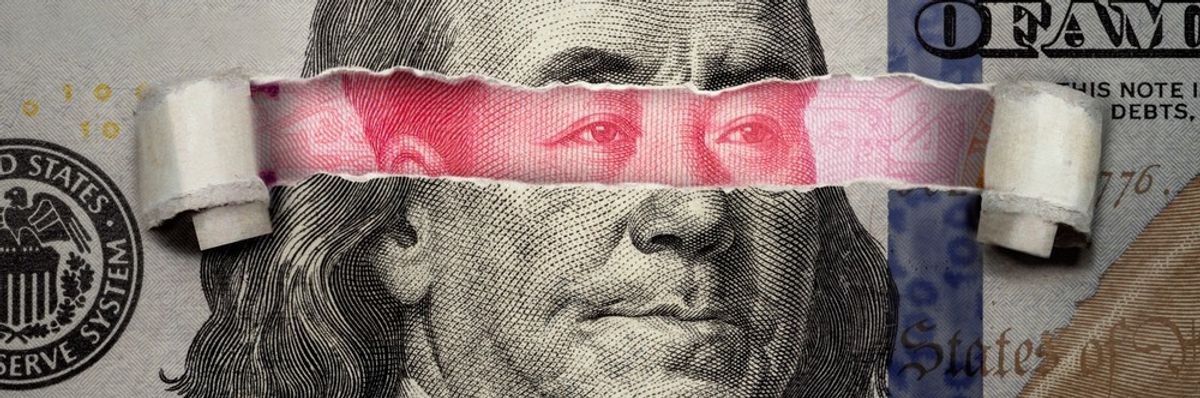
China has the most to gain from dethroning the dollar. So long as the dollar reigns supreme, unilateral U.S. sanctions on Chinese companies and banks will inhibit Beijing’s rise. China has been at work for years trying to develop its own version of SWIFT, the Belgian based messaging service that lets banks around the world talk to each other and confirm cross-border transactions. SWIFT has long deferred to the United States and generally complies with secondary U.S. sanctions against foreign commercial entities and countries. China calls its new system CIPS, which stands for Cross-Border Interbank Payment System.
If China wants to make the Yuan a reserve currency it could insist on countries and banks with which it conducts large volumes of trade to settle those transactions through CIPS. China is currently the largest trading partner of most of the world’s nations.
The dollar’s demise has been predicted often in the past, and yet the currency has almost always proved naysayers wrong. It has several structural advantages that currently other currencies don’t enjoy.
First of all, according to the International Monetary Fund, the greenback still accounts for 60 percent of global reserve currency (although that is down from 70 percent in 2000). Second, China tightly controls the yuan and doesn’t allow it to be fully convertible to all currencies. Third, U.S. credit markets and government-backed bonds (or treasuries) are deeper and more liquid than any other government-backed bond in the world.
Finally, it has the full faith and credit of the U.S. government behind it, a status which gives it credibility and reliability that other central banks and asset managers around the world count on.
But that credibility is now under threat due to a confluence of forces. First, U.S. debt is now $31 trillion and rising. After averting a disastrous default in 2011, Republicans in Congress are flirting with the idea of not raising the debt ceiling. This would risk defaulting on the government’s financial obligations and thereby invalidating Washington’s “full faith and credit.”
This could have a ripple effect whose ultimate consequences are unknowable but very likely disastrous for the future of the dollar as the world’s reserve currency as it would shake investor and central bankers’ confidence in the U.S. economy to an unprecedented extent.
Continued polarization in the U.S. body politic and political instability in Washington will also make central banks around the world question the long-term viability of the dollar as a reserve currency for the simple reason that Democrats and Republicans will not be viewed as capable of putting aside their political differences in the best interests of the country.
The continued weaponization of the dollar as a blunt instrument of statecraft is giving U.S. adversaries an opening to look for alternative payment and settlement mechanisms. This will only accelerate a bipolar or multipolar world whereby reserve currencies such as the dollar are only used by allies of Washington and middle powers such as Turkey, Saudi Arabia, and South Africa will have more choices in what reserve currencies to hold. This will only diminish a huge source of U.S. economic and soft power and make the world more unstable.