Follow us on social

google cta
8464895585_4558fa26b7_o-scaled

Why is the US removing its Patriot missile systems from Saudi Arabia?

While the military characterized the move as part of a planned withdrawal that reflects the view that Iran now poses less of a threat, the news has prompted debate over the timing of the decision.

Analysis | Middle East
google cta
google cta

The U.S. is removing Patriot anti-missile systems from Saudi Arabia as part of a broader drawdown of its military capacity placed there to counter Iran. While the military characterized the move as part of a planned withdrawal that reflects the view that Iran now poses less of a threat, the news has prompted debate over the timing of the decision.

In general, the Trump administration and especially Secretary of State Mike Pompeo have repeatedly emphasized the danger to regional security posed by Iran. To suddenly acknowledge that the Islamic Republic is less of a threat than it was previously portrayed to be appears to undermine the case that hawks like Pompeo and Special Representative for Iran Brian Hook have made, that the U.S. needs to maintain a posture of heightened vigilance and even pre-emptive aggression in order to deter military actions by Iran. Tensions between Iran and the U.S. remain high, which was why the reduction of U.S. military presence in Saudi Arabia prompted speculation among observers. Given Trump’s transactional approach to policymaking and his tendency for showmanship, the assertion that the decision merely reflects the need for maintenance of the Patriot system seems incomplete.

One interpretation reads that the Trump administration feels that Saudi Arabia needs to be reminded that its enjoyment of U.S.-guaranteed security is predicated on its adherence to America's oil price preferences. Reuters revealed that Saudi Crown Prince Mohammed bin Salman agreed to cut Saudi oil production after Trump called to say that he would otherwise be unable to prevent a bill sanctioning Saudi Arabia from being introduced by representatives of oil producing states, most of whom are Republicans. Although MBS did agree to cut production, Trump may have felt that the Crown Prince would benefit from a reminder of his kingdom’s dependence on the U.S. military umbrella.

Alternatively, Trump just issued the seventh veto of his presidency in order to defeat a bi-partisan bill that would have required him to gain Congressional approval before launching military action against Iran. Although Trump was unwilling to acknowledge any limit to his executive authority, the drawdown of the U.S. military presence in Saudi Arabia may serve to reassure members of Congress, especially Trump’s GOP allies, that they need not fear his belligerence against Iran.

One final interpretation of the decision to reduce U.S. military capacity in Saudi Arabia takes the opposite view: that it could be intended to tempt the Iranians into a military action that would justify a more robust response from the United States. As explained by officials quoted in the Wall Street Journal article, the build-up of U.S. forces in Saudi Arabia was undertaken in response to attacks on Saudi oil facilities in September 2019 that Riyadh and Washington blamed on Iran. However, Iran has generally avoided escalation, even following the killing of Qassem Soleimani in early January, the “unprofessionalism” of Iranian boat captains notwithstanding. Hawks within the Trump White House have maintained that they view the Iranian regime as weak and near collapse and may hope that reducing U.S. forces could tempt Tehran into more aggressive moves that would justify an intimidating U.S. military response.

The drawdown of U.S. military presence in the Middle East, and especially from Saudi Arabia, is a welcome development. However, given this administration’s track record of belligerence towards Iran and its transaction approach towards even its closest security partners, it is hardly surprising that the timing of the move is provoking considerable speculation.

Dear RS readers: It has been an extraordinary year and our editing team has been working overtime to make sure that we are covering the current conflicts with quality, fresh analysis that doesn’t cleave to the mainstream orthodoxy or take official Washington and the commentariat at face value. Our staff reporters, experts, and outside writers offer top-notch, independent work, daily. Please consider making a tax-exempt, year-end contribution to Responsible Statecraftso that we can continue this quality coverage — which you will find nowhere else — into 2026. Happy Holidays!

A Patriot missile battery sits on an overlook at a Turkish army base in Gaziantep, Turkey, Feb. 4, 2013. (DoD photo by Glenn Fawcett/Released)
google cta
Analysis | Middle East
Amanda Sloat
Top photo credit: Amanda Sloat, with Department of State, in 2015. (VOA photo/Wikimedia Commons)

Pranked Biden official exposes lie that Ukraine war was inevitable

Europe

When it comes to the Ukraine war, there have long been two realities. One is propagated by former Biden administration officials in speeches and media interviews, in which Russian President Vladimir Putin’s illegal invasion had nothing to do with NATO’s U.S.-led expansion into the now shattered country, there was nothing that could have been done to prevent what was an inevitable imperialist land-grab, and that negotiations once the war started to try to end the killing were not only impossible, but morally wrong.

Then there is the other, polar opposite reality that occasionally slips through when officials think few people are listening, and which was recently summed up by former Special Assistant to the President and Senior Director for Europe at the National Security Council Amanda Sloat, in an interview with Russian pranksters whom she believed were aides to Ukrainian President Volodymyr Zelensky.

keep readingShow less
US military generals admirals
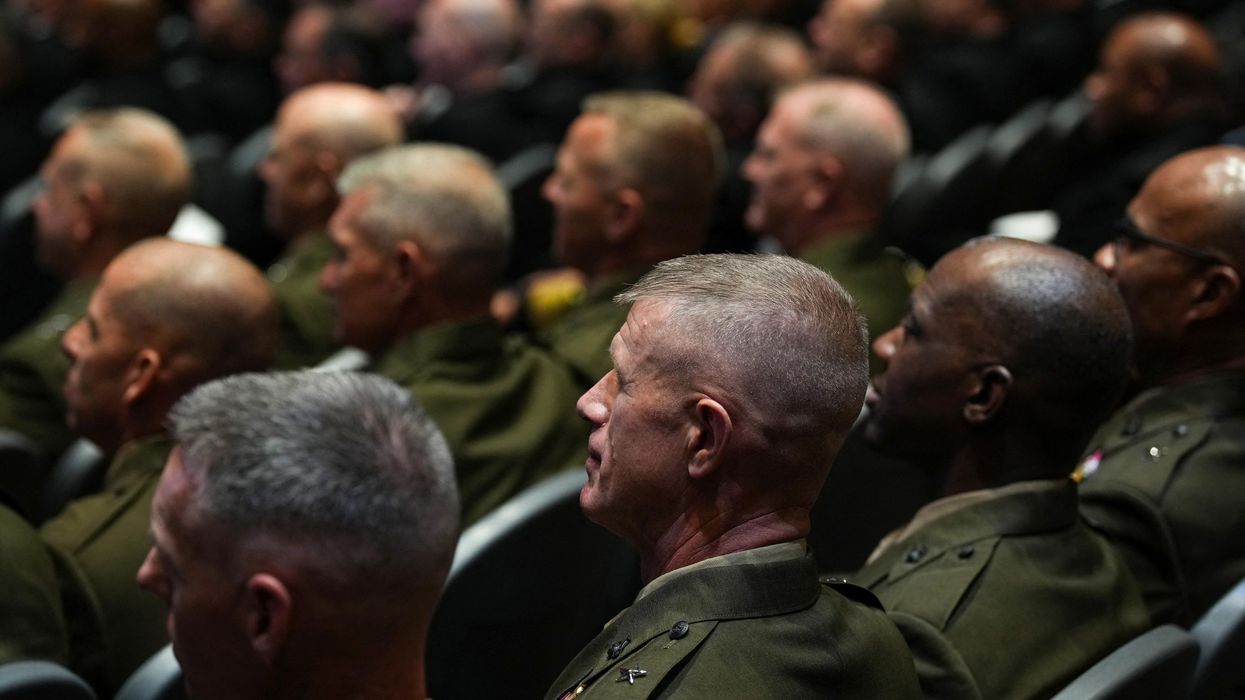
Top photo credit: Senior military leaders look on as U.S. President Donald Trump (not pictured) speaks at Marine Corps Base Quantico, in Quantico, Virginia September 30, 2025. Andrew Harnik/Pool via REUTERS

Slash military commands & four-stars, but don't do it halfway

Military Industrial Complex

The White House published its 2025 National Security Strategy on December 4. Today there are reports that the Pentagon is determined to develop new combatant commands to replace the bloated unified command plan outlined in current law.

The plan hasn't been made public yet, but according to the Washington Post:

keep readingShow less
The military's dependence on our citizen soldiers is killing them
Top image credit: U.S. Soldiers assigned to Delta Company, 1st Battalion, 133rd Infantry Regiment, 2nd Brigade Combat Team, 34th Infantry Division, Iowa National Guard and Alpha Company, 96th Civil Affairs Battalion, conduct a civil engagement within the U.S. Central Command area of responsibility Oct. 12, 2025 (U.S. Army photo by Sgt. Zachary Ta)

The military's dependence on our citizen soldiers is killing them

Middle East

Two U.S. National Guard soldiers died in an ambush in Syria this past weekend.

Combined with overuse of our military for non-essential missions, ones unnecessary to our core interests, the overreliance of part-time servicemembers continues to have disastrous effects. President Trump, Secretary Hegseth, and Congress have an opportunity to put a stop to the preventable deaths of our citizen soldiers.

In 2004, in Iraq, in a matter of weeks, I lost three close comrades I served with back in the New York National Guard. In the following months more New York soldiers, men I served with, would die.

keep readingShow less
google cta
Want more of our stories on Google?
Click here to make us a Preferred Source.

LATEST

QIOSK

Newsletter

Subscribe now to our weekly round-up and don't miss a beat with your favorite RS contributors and reporters, as well as staff analysis, opinion, and news promoting a positive, non-partisan vision of U.S. foreign policy.