

When it comes to the Ukraine war, there have long been two realities. One is propagated by former Biden administration officials in speeches and media interviews, in which Russian President Vladimir Putin’s illegal invasion had nothing to do with NATO’s U.S.-led expansion into the now shattered country, there was nothing that could have been done to prevent what was an inevitable imperialist land-grab, and that negotiations once the war started to try to end the killing were not only impossible, but morally wrong.
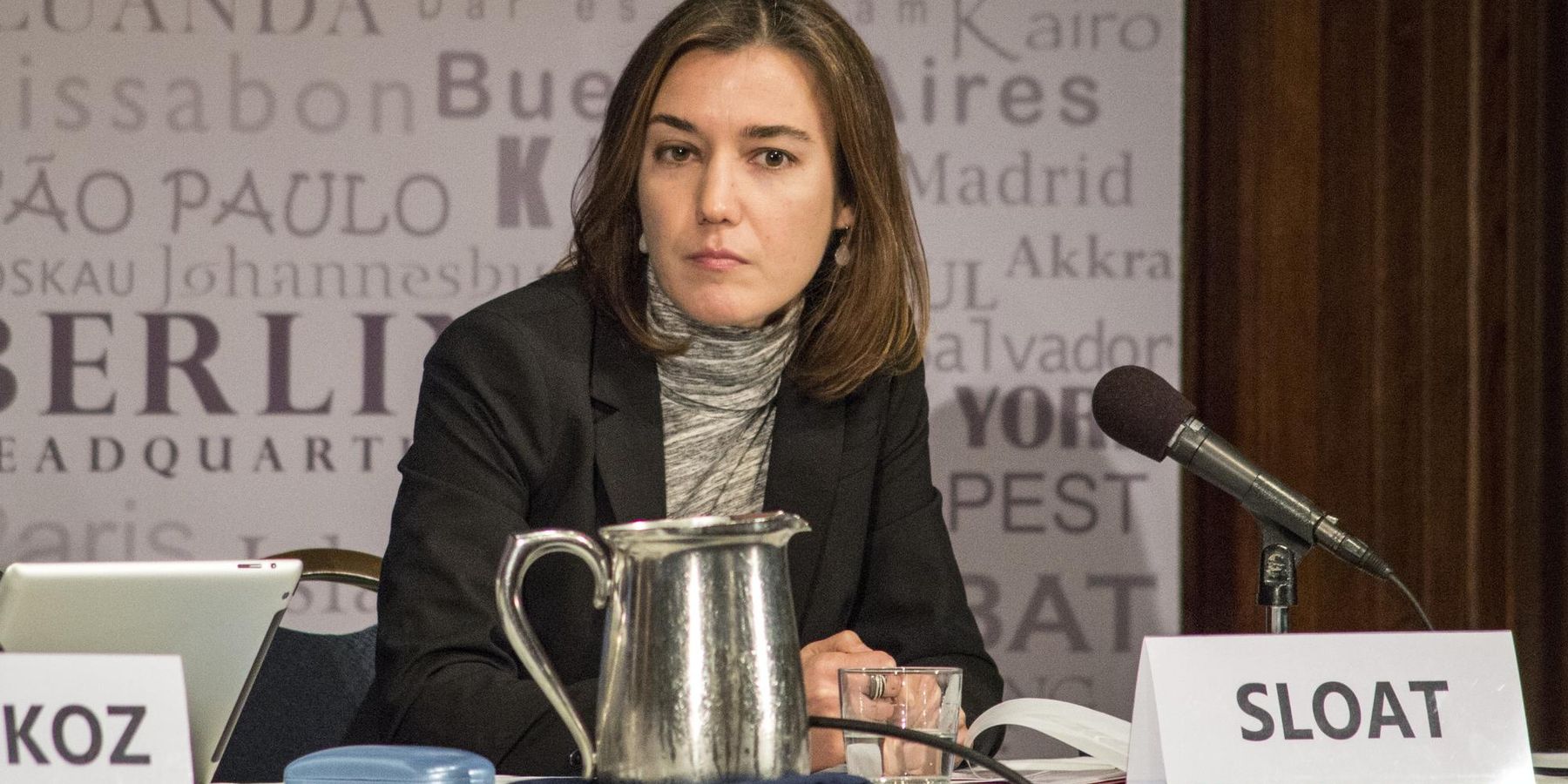
Then there is the other, polar opposite reality that occasionally slips through when officials think few people are listening, and which was recently summed up by former Special Assistant to the President and Senior Director for Europe at the National Security Council Amanda Sloat, in an interview with Russian pranksters whom she believed were aides to Ukrainian President Volodymyr Zelensky.
“We had some conversations even before the war started about, what if Ukraine comes out and just says to Russia, ‘Fine, you know, we won’t go into NATO, you know, if that stops the war, if that stops the invasion’ — which at that point it may well have done,” Sloat told the pranksters. “There is certainly a question, three years on now, you know, would that have been better to do before the war started, would that have been better to do in Istanbul talks? It certainly would have prevented the destruction and loss of life.”
When asked moments later if Ukraine and its Western partners could have avoided the whole war and if they had “made a mistake somewhere,” Sloat again suggested, unprompted, that addressing Russian concerns around NATO’s expansion into Ukraine may have been the way to prevent the war.
“If you wanna do an alternative version of history, you know, one option would have just been for Ukraine to say in January 2022, ‘Fine, we won’t go into NATO, we’ll stay neutral,’” Sloat said. “Ukraine could’ve made a deal in March, April 2022 around the Istanbul talks.”
It’s worth breaking down these few sentences to understand their full significance. Sloat, a high-ranking former Biden official closely involved in Ukraine policy, is saying that:
1. Ukraine explicitly affirming its neutrality would have likely stopped the invasion from happening.
2. This would have prevented the enormous death and destruction experienced by Ukraine at Russia’s hands the last three years.
3. Ukraine could have made this deal at least as late as the Istanbul talks shortly after Russia’s invasion.
4. The Biden administration explored doing this to prevent the war, but ultimately rejected the idea.
But why did the Biden team reject it, if it would have meant preventing a war that by any estimation has been enormously bloody and costly for millions of Ukrainians?
“I was uncomfortable with the idea of the U.S. pushing Ukraine not to do that, and sort of implicitly giving Russia some sort of sphere of influence or veto power over that,” Sloat said about her own position. When asked about Biden’s thinking, she offered: “I don’t think Biden felt like it was his place to tell Ukraine what to do then. To tell Ukraine not to pursue NATO.”
Sloat, in other words, quietly admitted that she at least preferred letting the war happen if the alternative was giving Russia a de facto veto over NATO membership. Her claim, however, that she and Biden were squeamish about pressuring Ukraine is harder to take seriously.
U.S. policy toward Ukraine has often involved pressuring both its officials and its population to reluctantly accept measures they were against, particularly when it came to NATO. George W. Bush pushed Ukraine’s entry into NATO despite overwhelming, vehement public opposition among Ukrainians in the early 2000s, and leaked diplomatic cables I reported on two years ago show U.S. officials at the time discussing with their Ukrainian counterparts how to make the Ukrainian public “more favorable” to the idea. In fact, this was often Biden’s personal role during the Obama years, pressing Ukrainian officials to pass unpopular domestic reforms imposed by the IMF.
Sloat also makes another potential admission, when mentioning that Ukraine could have made a deal over its NATO status in the Istanbul talks in early 2022. “I know then there were differing views between our countries’ militaries around the counter-offensive,” she said. “I think during the Biden administration that had been the big hope of Ukraine getting back territory and being able to negotiate a better deal. That didn’t go as anybody wanted it to.”
This hews awfully close to what has long been both alleged by a variety of officials and other sources about the talks: that, as Ukraine’s Pravda newspaper first reported, Zelensky had been pressured to reject a deal to instead seek victory on the battlefield, with the governments of the U.K., U.S. and a variety of Eastern European NATO states reportedly being especially favorable to this ultimately disastrous idea.
Sloat is not the first to have made this admission. As I documented two years ago, former NATO Secretary General Jens Stoltenberg and former Biden Director of National Intelligence Avril Haines both likewise explicitly said that NATO’s potential expansion into Ukraine was the core grievance that motivated Putin’s decision to invade, and that, at least according to Stoltenberg, NATO rejected compromising on it. Zelensky has now publicly agreed to this concession to advance peace talks — only three years later, with Ukraine now in physical ruins, its economy destroyed, hundreds of thousands of casualties, and survivors traumatized and disabled on a mass scale.
All of this will surely go down as one of the great missed opportunities of history. Critics of the war and NATO policy have long said the war and its devastating impact could have been avoided by explicitly ruling out Ukrainian entry into NATO, only to be told they were spreading Kremlin propaganda. It turns out they were simply spreading Biden officials' own private thoughts.