

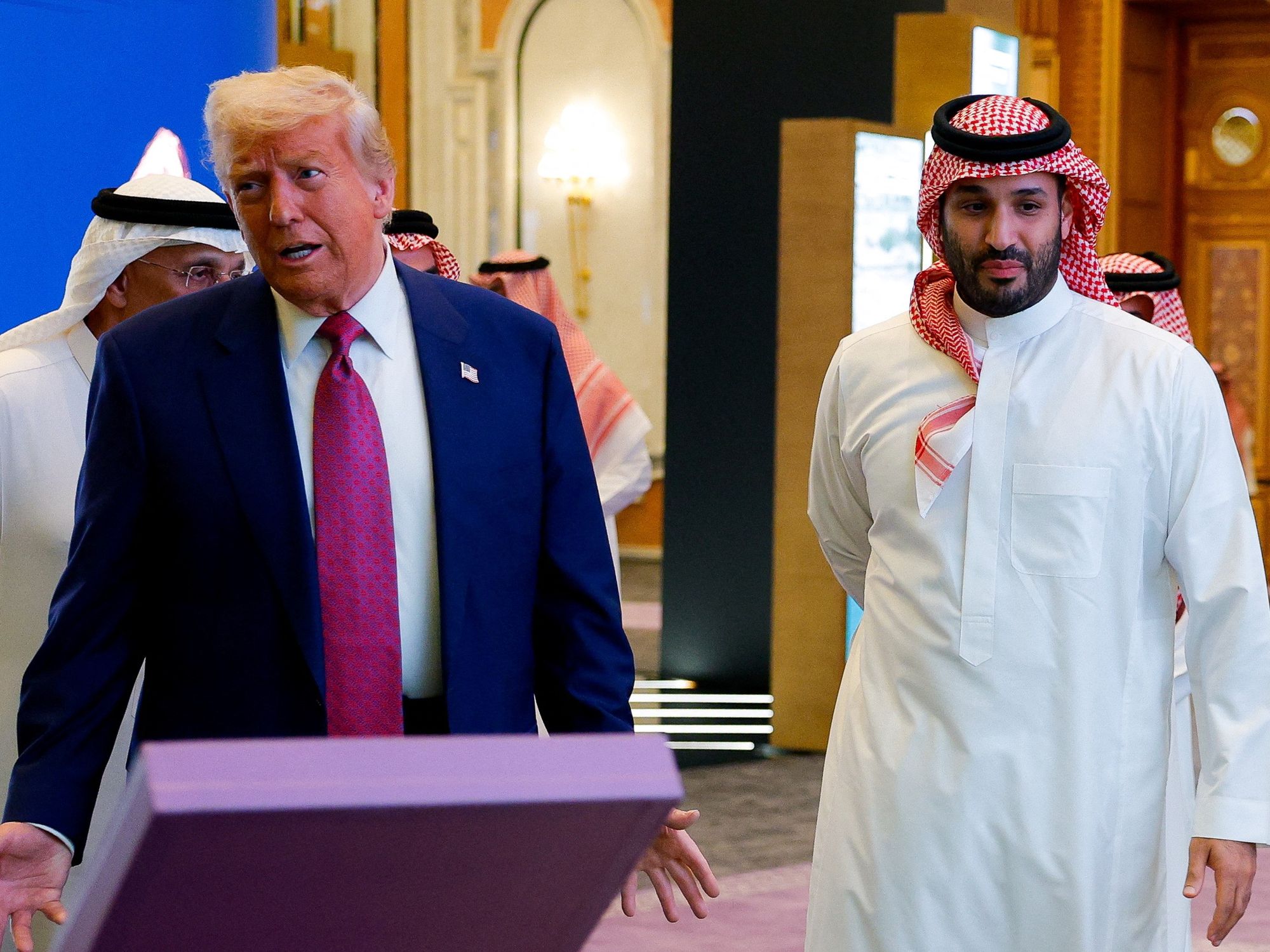
Trump has signed a record breaking foreign arms sale to Saudi Arabia — a package worth nearly $142 billion, which the Trump administration describes as "the largest defense sales agreement in history.”
The White House fact sheet on the deal states the deal will provide Saudi Arabia “with state-of-the-art warfighting equipment and services from over a dozen U.S. defense firms.” Relevant sales from the private sector will occur in the realms of air force and space advancements, air and missile defense, border and coastal security, and communications upgrades.
Signed during his trip to the Kingdom today, the deal is part of a $600 billion Saudi commercial investment package previously floated in January and is directed especially toward American infrastructure, energy, and AI.
“The United States and Saudi Arabia celebrate these and many other deals today as a result of the growing momentum of the last four months. The total package has quickly built to more than $600 billion —the largest set of commercial agreements on record between the two countries,” today’s fact sheet proclaimed.
"The U.S.-Saudi relationship has been a bedrock of security and prosperity," Mr. Trump affirmed today in Riyadh. "Today, we reaffirmed this important bond, and we take the next steps to make our relationship closer, stronger and more powerful than ever before."
But experts wonder how the agreements will shake out. “Although the Saudis allegedly agreed to the largest defense sales agreement in history, similar to the massive amounts of weapons that MBS [Mohammed bin Salman Al Saud] agreed to purchase during Trump's first term, many of these initial commitments may not actually translate into weapons purchases,” Annelle Sheline, Research Fellow in the Middle East program at the Quincy Institute, told Responsible Statecraft.
Indeed, Trump made an arms deal to Saudi Arabia worth $110 billion in 2017 during his previous presidency; in 2018, CNN reported Saudi Arabia had only followed through with about $14.5 billion worth of arms purchases.
Sources told Reuters that the U.S. and Riyadh also discussed Saudi Arabia potentially purchasing advanced F-35 jets from Lockheed Martin. Yet it wasn’t clear whether Washington would permit the purchase, as it would give Riyadh a weapon also used by Israel, which the U.S. has guaranteed more advanced American weapons over its Arab counterparts (otherwise known as the Qualitative Military Edge).
Trump’s arms sale deal was proclaimed in tandem with other major U.S. announcements, including the decision to lift sanctions on the new Syrian government. Trump also expressed hope Saudi Arabia would join the Abraham accords at Riyadh today.
The Trump administration, meanwhile, has publicly floated renaming the Persian Gulf the “Arabian Gulf,” a move likely to please the Saudis he’s making deals with — but likely to upset Iran during tense negotiations regarding its nuclear program.- How Saudi Arabia went from pariah to patron ›
- Lobby Horse: Trump’s ‘trillion dollar' visit to Saudi Arabia ›
- Bipartisan bill seeks to put arms sales lobbyists on ice for 3-years | Responsible Statecraft ›
- Trump courts Saudi at the risk of US, Middle East security | Responsible Statecraft ›