

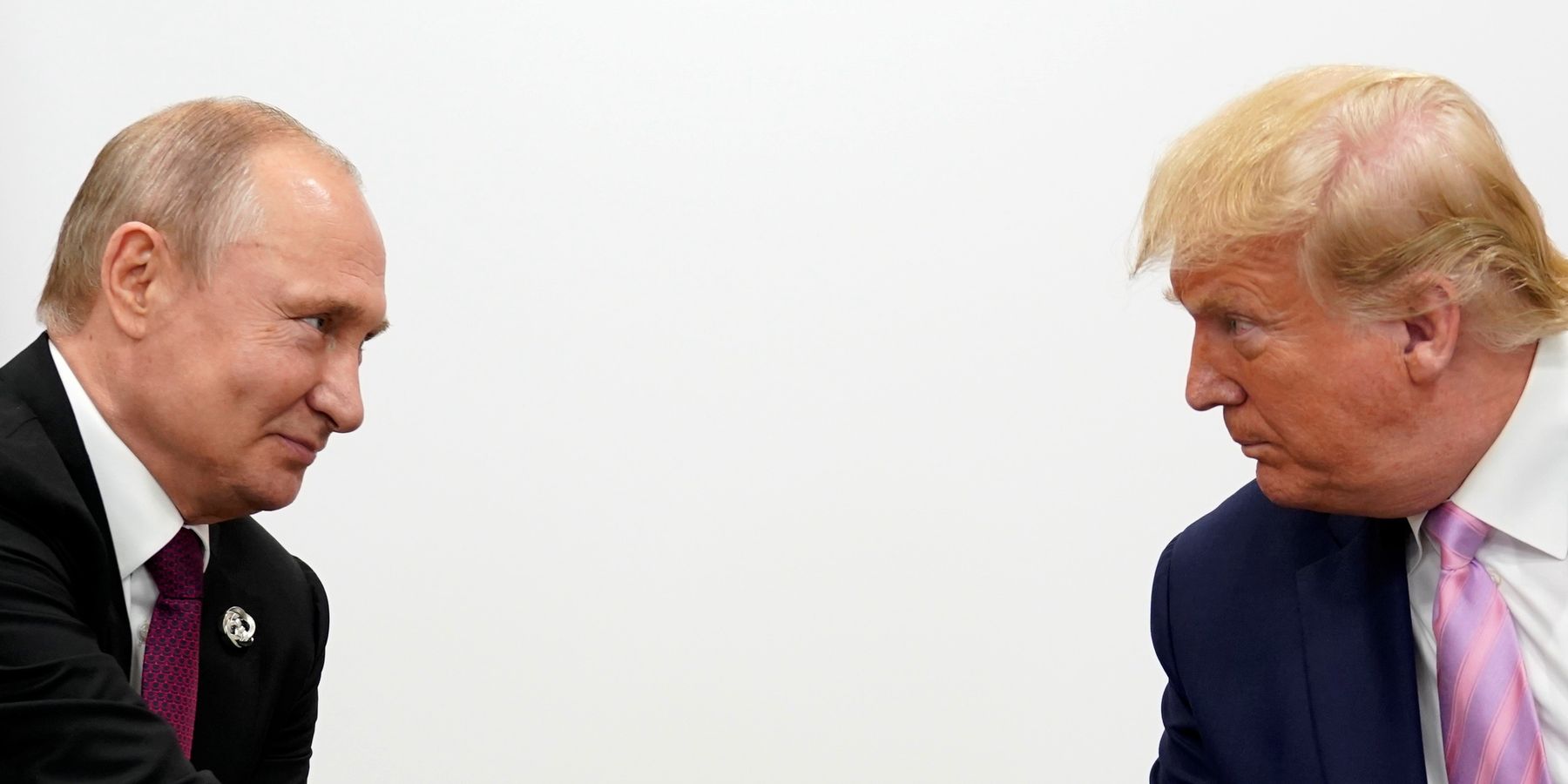
Next week will likely see the first meeting between the U.S. and Russian presidents, Donald Trump and Vladimir Putin, since the former’s election to a second term — an encounter the Kremlin has already confirmed.
Details are scarce, including on the summit’s date and place -- Putin hinted that it could be in the United Arab Emirates when he was hosting the UAE President Mohammed Bin Zayed in Moscow.
The Trump-Putin agenda centers on ending the war in Ukraine, although broader issues — global stability, nuclear arms control, the situation in the Middle East, Iran, trade, and sanctions — will likely also be discussed.
The agreement on the meeting came about after the U.S. Special Envoy Steve Witkoff’s talks with Putin in Moscow which Trump hailed as “a great progress.”
This tone marks a noticeable shift from the more hawkish language Trump had adopted toward Putin in recent weeks, suggesting Witkoff’s diplomacy may have stalled what many feared would be a rapid escalation of U.S.– Russia tensions after Trump set August 8 as the deadline for Moscow to agree to a ceasefire in Ukraine passed.
Why the sudden shift? One possible explanation could be that Putin, facing the threat of devastating secondary sanctions on buyers of Russian oil (including China, India, and Brazil), blinked under pressure. But his behavior since Trump’s ultimatum suggests otherwise — these days Putin seems less invested in courting U.S. presidents by making far-reaching concessions, knowing policy can shift dramatically with each administration.
Moreover, after enduring three years of punishing sanctions, Moscow likely calculates that the West has few remaining tools to meaningfully change Russia's strategic calculus in what it views as an existential conflict.
Alternatively, it may be Trump who’s preparing to make concessions, perhaps more substantial than previously considered. This would explain why Moscow deemed the “new U.S. proposals” acceptable following Witkoff's visit.
Trump's apparent reversal likely stems from the failure of his tariff threats against India and China. Both nations rejected the proposed 100% tariffs on Russian oil purchases as infringements on their sovereign trade rights. While the sanctions would cause short-term economic pain, neither country is willing to compromise on this fundamental principle.
Moreover, China retains powerful leverage — it could retaliate, as it did earlier this year, by restricting exports of rare earth metals that are vital to U.S. industry and defense sectors.
Geopolitically, Trump's simultaneous pressure on both China and India risks driving them closer together. After several decades of carefully courting India — especially under Prime Minister Modi most recently — as a counterbalance to China, Washington risks a major strategic setback if the two Asian giants find common cause in resisting the U.S. The consequences are already visible: Modi plans his first visit to China in seven years amid growing U.S. tensions.
Even more significantly, both Beijing and Delhi now appear to be moving toward Moscow — witness Putin's high-level reception of Modi's national security adviser the day after the U.S. tariff announcement. Completing this geopolitical realignment, Brazil's President Lula has proposed that BRICS nations discuss a common position against the U.S. tariff measures.
Faced with this dilemma, engaging Moscow may offer Trump an escape from his self-inflicted predicament: enforcing his tariff threats would trigger damaging economic consequences and geopolitical realignments, including India's drift from Washington and BRICS consolidation, while backing down on either tariffs or the Ukraine ultimatum to Putin would severely undermine his credibility.
To secure Putin's genuine cooperation — rather than mere stalling tactics —Trump would need to address Russia's key war demands: formal recognition of its territorial gains, guarantees of Ukrainian neutrality (excluding NATO membership), and the reduction of Ukraine's military to levels Moscow considers non-threatening.
Secretary of State Marco Rubio's recent statement highlighting “territorial issues” as central to peace talks suggests Washington may be willing to negotiate this point with Moscow. Russia insists on maintaining control over four Donbas oblasts plus Crimea, with formal recognition of their annexation. While the U.S. has previously only conceded on Crimea, leaving Donbas's status unresolved, Rubio notably avoided specifying what territorial compromises might now be considered.
Naturally, Ukraine — with European support — continues to reject these demands. However, Washington may seek to pressure Kyiv by capitalizing on its deteriorating battlefield position and Zelensky's political vulnerabilities, particularly his mishandling of the anti-corruption agency's abolition and subsequent reinstatement under Western pressure.
One potential compromise could involve a land swap: Russia withdrawing from currently occupied territories in exchange for formal control over the remaining unoccupied portions of the four Donbas oblasts. In return, Moscow would need to abandon its selective approach and implement a comprehensive, immediate ceasefire.
Should such an arrangement prove feasible, it could pave the way for broader peace talks. A more modest summit outcome might be a basic, straightforward ceasefire — already accepted by Ukraine but thus far rejected by Russia. While this would halt active fighting and save lives, it would likely result in an unstable frozen conflict along existing front lines, with all the volatility such situations typically entail.
The summit could alternatively produce no Ukraine agreement, forcing both sides to focus on other sources of their strained bilateral ties — arms control renewals, Middle East tensions, or Iran's nuclear program. Yet, without progress on ending the war, such outcomes would fall far short of success.
The meeting itself remains fragile. A high-casualty attack in Ukraine or disputes over format -— like Trump's reported, but then withdrawn, demand for Zelensky's participation, which Putin conditionally opposes — could scuttle talks before they begin.
Failure would carry grave consequences: renewed battlefield escalation, heightened Russia-West tensions, and shattered hopes for millions of Ukrainians. After three brutal years of war, with 70% of Ukrainians now favoring immediate negotiations (per recent Gallup data), a collapsed summit would compound the tragedy.
- Trump is squeezing himself with his own Russia deadline ›
- How Trump's 50-day deadline threat against Putin will backfire ›
- Trump's terms for Russia-Ukraine on the right course for peace | Responsible Statecraft ›