

U.S. President Donald Trump’s rhetorical shift on Ukraine isn’t a call to arms. But it’s a dangerous attempt to outsource escalation to Europe. And it’s a strategy that could easily reverse again.
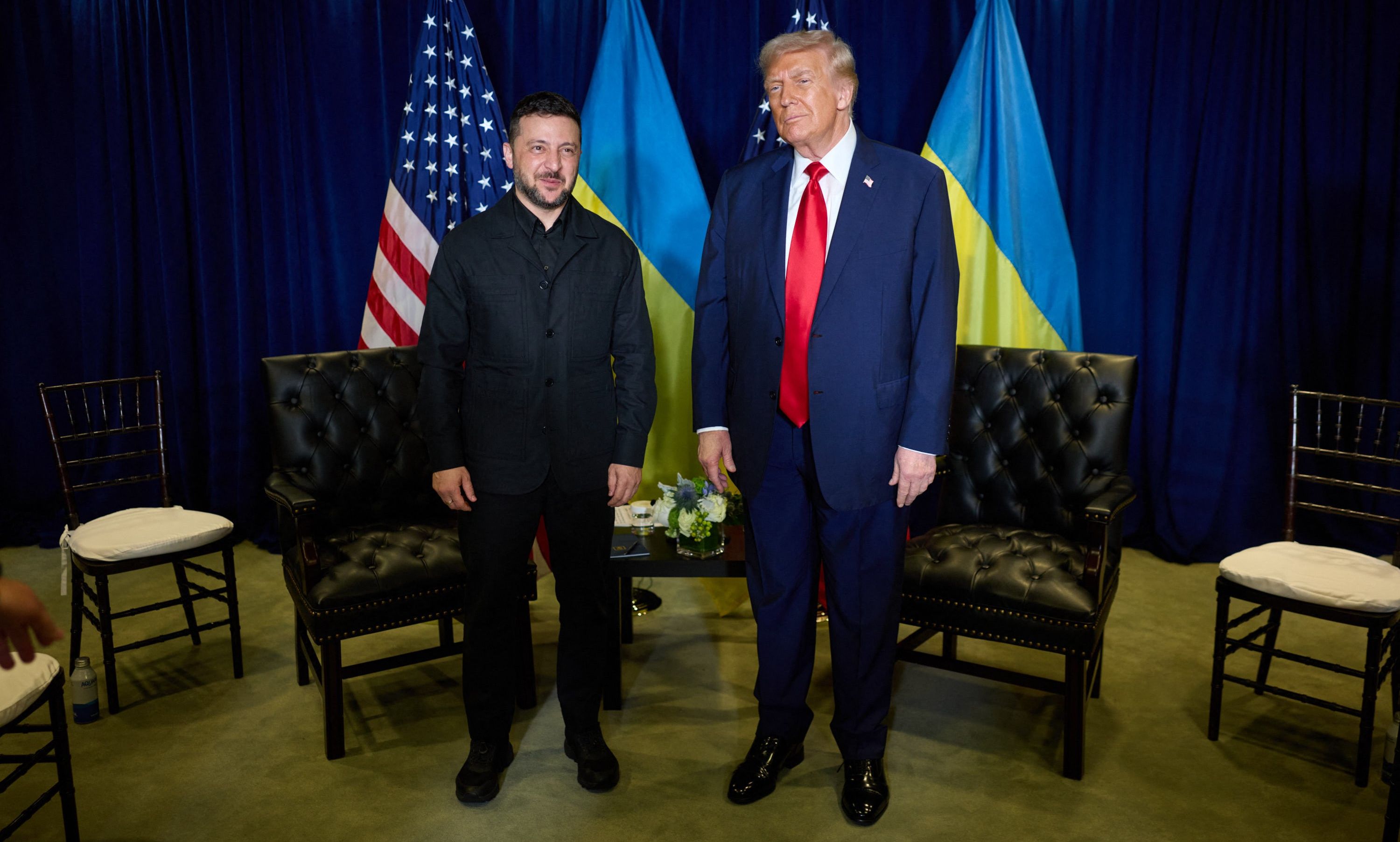
Trump’s recent social media pronouncement on Ukraine, following his meeting with President Volodymyr Zelensky, appears to be a stunning about-face. Just days ago, the core of his “peace plans” was the grim realpolitik of forcing Kyiv to accept territorial losses. Now, he declares Russia a “paper tiger” and seems to endorse fighting to Ukraine’s “final victory”, including “winning back” all the territories it lost to Russia since 2014.
But a closer look reveals this isn’t a genuine shift toward a hawkish policy. Instead, it’s the unveiling of a profoundly dangerous strategy. To understand it, we must see it as the outcome of a successful influence campaign by Kyiv, its European partners and their allies within the U.S. administration, who, after Trump's meeting with Vladimir Putin in Alaska, faced a clear set of objectives.
Their minimum task was to prevent Trump from applying intense pressure on Zelensky to accept Putin’s terms for a peace settlement, most notably Russia’s territorial gains in Donbas and Ukraine’s permanent neutrality (i.e. no NATO membership). More ambitiously, they sought to convince Trump to return to a Biden-era policy of direct aid. And their maximum, albeit distant, task was to gain approval for high-risk actions like a no-fly zone over Ukraine.
Faced with these pressures, Trump had three broad options: pressure Zelensky (facing major resistance from Ukraine, Europe and powerful forces within the U.S.), pressure Putin (with limited leverage and high escalation risks), or essentially “wash his hands” of direct responsibility.
The latest events show that Kyiv and Europe have achieved their minimum goal. Trump is not pressuring Zelensky to accept Putin’s terms. Moreover, he has effectively taken the issue of a rapid ceasefire off the table, a major win for leaders who fear a negotiated compromise. They now have a “green light” from the American president himself to continue fighting.
However, this shift is almost entirely rhetorical. While the tone has swung from advocating a deal to cheering for victory, the underlying substantive policy — American disengagement — has remained remarkably consistent. Before, he argued that Ukraine should cede land because the U.S. should not be involved. Now, he argues Ukraine can win back its land because the U.S. should not be involved, except as a merchant. The core “America First” principle of avoiding costly entanglements is unchanged; only the public justification for it has flipped to accommodate political pressures.
This disengagement is articulated not just by Trump’s transactional arms-sales approach, but by his key officials. Treasury Secretary Scott Bessent recently laid bare the doctrine’s stark logic, dismissing fears of Russian expansion by stating, “All I hear from you is that Putin wants to march into Warsaw. The one thing I'm sure of is that Putin isn't marching into Boston.”
This statement is a clear signal that the administration’s fundamental priority is insulating the American homeland, not defending the NATO frontier, much less a non-NATO country like Ukraine. This “re-orientation” was likely influenced by a combination of factors, including Trump’s genuine frustration with Putin’s refusal to accept a ceasefire without a broader political settlement, incidents with Russian drones and aircraft violating NATO’s airspace, and a concerted flow of information suggesting Ukrainian strength and Russian weakness.
Yet, this apparent victory for Ukraine and its allies comes with a massive catch. Trump has not chosen deeper U.S. involvement. Instead, he has chosen his third option: to “wash his hands.” While his rhetoric is bellicose, his policy is transactional. The U.S., he suggests, will be a weapons wholesaler to Europe, not a direct funder. For Kyiv, this is far from ideal, as it must now rely primarily on European aid, which may be insufficient.
Critically, we must remember Trump’s penchant for abrupt reversals. Not long ago, he claimed Zelensky had “no cards” and that Ukraine would lose to Russia, a more powerful nation. Then he threatened Putin with sanctions, only to later drop those ultimatums, meet with him, and hailed a breakthrough. Now, Russia is a “paper tiger.”
This pattern reveals a leader who reacts to the latest influence campaign or news cycle, not one guided by a strategic doctrine. The substance of his position — a desire to disengage — is stable, but the rhetorical packaging is wildly flexible. This volatility suggests that under new circumstances, his position could shift again to one far less favorable to Kyiv.
Notably, Moscow’s reaction to his latest statement has been calm and soft-pedaled, emphasizing Trump and Putin’s personal relationship and suggesting the Kremlin is banking on precisely such another “conceptual change” from Trump. This hope is underscored by Trump himself refusing to enact new sanctions against Russia.
Therefore, the next task for Ukrainian authorities and Europeans is clear: to attract Trump to more active participation — to achieve their medium-level goal of Biden-like support, or, if possible, the maximum goal of deeper involvement, thereby firmly locking him onto the “Biden road.”
The primary lever to achieve this will be the very incidents in European airspace that likely influenced his recent turn. If these continue or escalate — for instance, if a Russian aircraft is shot down — European calls for Trump to intervene will grow louder and more frequent. Similarly, a significant change on the front lines in favor of either side could drastically alter his calculus.
The fatal flaw in this entire dynamic is that it incentivizes escalation. Kyiv and its allies need dramatic events to entangle a Washington that has explicitly signaled its unwillingness to fight for Warsaw, let alone Kyiv. Meanwhile, Moscow may feel compelled to act sharply to disprove the “paper tiger” label. This creates a perfect storm for a catastrophic miscalculation. Each side may be betting that by raising the stakes to the brink, they can force a favorable settlement.
But the overwhelming risk is that they will misjudge the moment. A policy designed to profit from prolonged conflict, based on the whims of a volatile president, is not a strategy for security; it is a recipe for a direct NATO-Russia confrontation that the U.S. has already suggested it would seek to avoid. The only way to prevent this is to reject the siren song of brinkmanship and prioritize genuine diplomacy before the logic of escalation takes over entirely.
- Ukraine and Europe can't afford to refuse Trump's peace plan ›
- Trump's terms for Russia-Ukraine on the right course for peace ›