

Oman and Iran appear close to a temporary arrangement to reopen the Strait of Hormuz, potentially providing both an exit from the current round of fighting and the foundation for a more durable maritime order. Washington should welcome such an agreement—even if it acknowledges a degree of Iranian authority in administering traffic through the strait—because US interest dictates that open and non-discriminatory passage must be given priority over control.
The emerging formula would reportedly divide responsibility for the shipping lanes. Vessels entering the Persian Gulf would travel through waters administered by Iran, while outbound traffic would pass through an Omani-administered route. Iran would be notified of departing vessels and, while this has not yet been discussed, Tehran appears open to also ensuring that Oman would be notified of incoming traffic. Tehran and Muscat may collect and share fees for specified security and environmental services, although this sensitive issue has not yet been settled. The negotiations remain fluid, and any agreement is reportedly linked to the lifting of the American blockade on Iranian ports.
The arrangement would represent a slight climbdown by Tehran. Iran’s earlier position would have required traffic in both directions to pass through some portion of Iranian waters as well as Omani waters. That would have brought even ships already inside the Persian Gulf under an Iranian-administered transit system. The emerging division of lanes would give Oman primary responsibility for outbound shipping and limit the universe of vessels requiring Iranian approval or coordination.
If successful—and if Washington accepts it—the agreement could help end the present fighting. It remains unclear whether that would restore the previous American-Iranian memorandum of understanding or require a new framework. Nor does it in and of itself move the needle on two other major stumbling blocks: Iran’s demand for a regional ceasefire and Washington’s demands on Iran’s nuclear activities.
The Trump administration will likely receive strong pushback from hawkish elements in Washington and Israel who will complain over the arrangement’s de facto acceptance and legitimization of Iran (and Oman’s) management of the Strait.
But this critique is borne out of a confusion of what the US’s actual core interest in the Strait is: The free and predictable flow of commerce or preventing the ability of a hostile power to assert control.
The Trump administration has increasingly framed the objective as preventing Iran from “controlling” the strait. Yet the central American interest in strategic waterways has historically been less about who administers them than about whether ships can pass through them freely, predictably and without discrimination. Preventing a hostile state from acquiring coercive leverage has generally been a means of preserving passage, not an end that supersedes passage itself.
That hierarchy of interests matters. If reopening the strait requires acknowledging that Iran possesses some capacity to regulate traffic in waters along its coast, Washington should not reject an agreement merely because it fails to preserve the appearance of unqualified American dominance.
The Suez crisis provides the clearest example. In 1956, Egypt’s president, Gamal Abdel Nasser, nationalized the Suez Canal Company, displacing the British- and French-controlled corporation that had operated one of the world’s most important commercial arteries. Britain and France regarded nationalization not merely as an economic injury but as a strategic humiliation and, together with Israel, invaded Egypt.
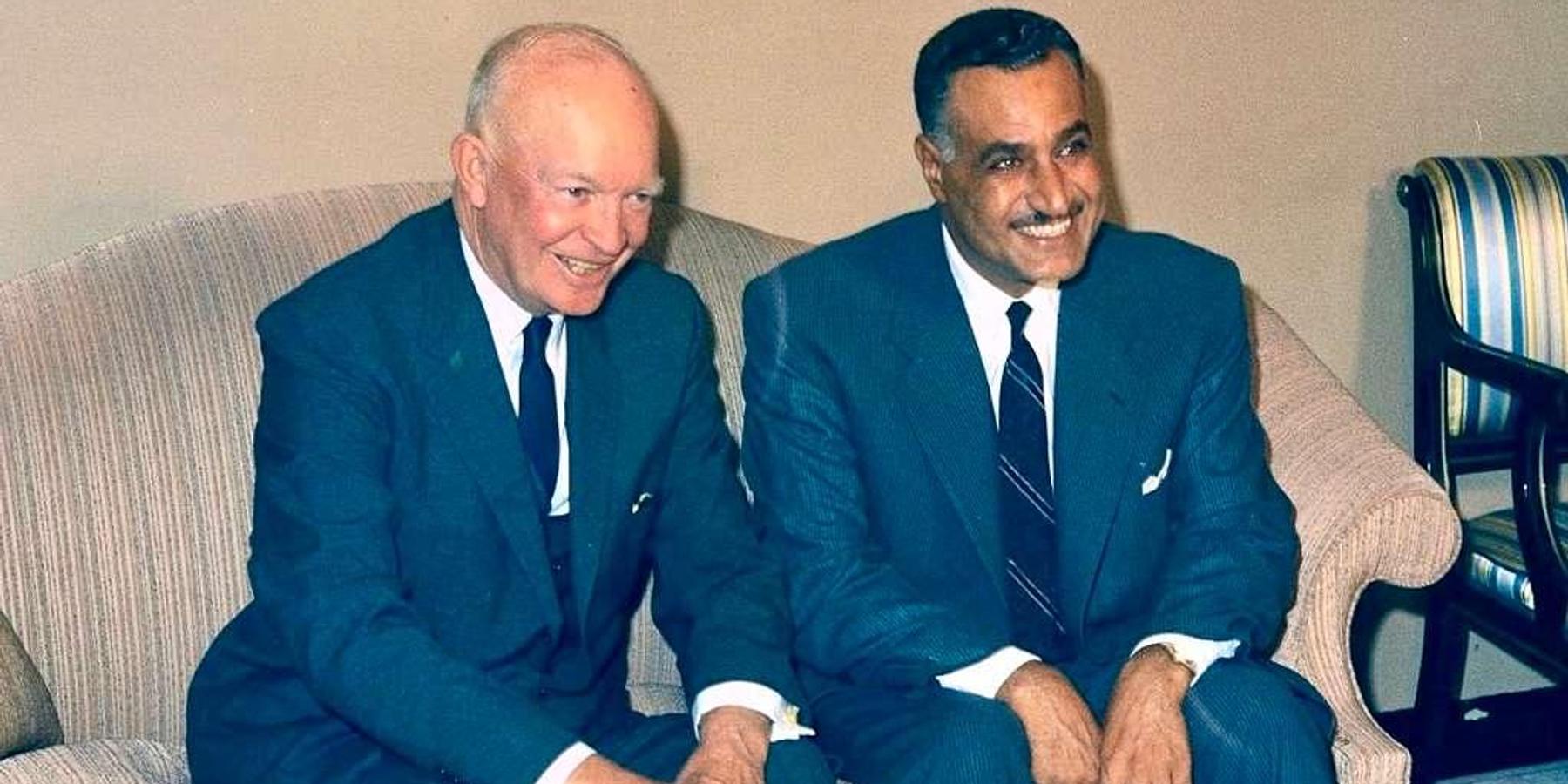
President Dwight Eisenhower refused to support them. After rejecting the Anglo-French invasion, Eisenhower’s administration did not make restoration of British or international ownership a condition for accepting Egypt’s continued administration of the canal. Instead, Washington opposed the invasion and pressed for a diplomatic arrangement that would preserve international access. The applicable legal regime emphasized the canal’s free use by ships of all countries on equal terms, while leaving Egypt responsible for administering and defending the waterway.
Egyptian control was not the same as unrestricted Egyptian discretion. The distinction was crucial. Washington could accept Egyptian sovereignty over the canal while insisting that sovereignty be exercised within rules guaranteeing nondiscriminatory passage. The overriding American interest was not which flag flew over the canal authority, but whether the canal remained open under internationally accepted rules.
A crucial detail that should not be overlooked: Egypt at the time was not an American ally, whereas France and the UK were. Indeed, Egypt was at the time closely aligned with the Soviet Union though not formally allied with Moscow. Washington nevertheless accepted continued Egyptian administration of the canal rather than seeking to reverse nationalization, provided freedom of navigation was preserved.
The Turkish Straits offer another instructive precedent. Under the 1936 Montreux Convention, Turkey recovered control over the Bosporus and Dardanelles, including the right to remilitarize and defend them. Yet commercial vessels retained freedom of passage under an internationally recognized regime. The United States has lived for decades with a strategically important NATO ally exercising extensive authority over a waterway connecting the Black Sea with the Mediterranean—even though Turkey can regulate warship access and, in wartime, exercise additional powers.
The South China Sea makes the same point from another direction. The United States does not claim territory there and formally takes no position on sovereignty over most disputed features. It objects instead to excessive maritime claims, coercion and unlawful restrictions on navigation and overflight. American naval operations are designed to demonstrate that ships and aircraft may exercise rights recognized by international law regardless of which government claims nearby rocks, reefs or waters.
Washington certainly cares about China’s growing regional power. Its legal position, however, is not that the United States must control the South China Sea. It is that no coastal power may transform contested waters into an exclusive domain or condition lawful passage on political obedience. Once again, the preservation of navigational rights lies at the heart of the U.S. legal position. Strategically, Washington’s concern about control extends beyond navigation alone, but it is precisely because control creates the capacity to restrict those rights—and to alter the regional balance of power—that it commands such attention.
Iran, of course, is viewed in Washington as a hostile power. Few American officials would be comfortable with an arrangement that left Tehran able to close the Strait of Hormuz at will. Any agreement must therefore contain credible safeguards: passage should be nondiscriminatory; notification procedures should not become a discretionary licensing system; service charges should be limited to reasonable fees for services rendered rather than function as political tolls; and disputes should be subject to an agreed international mechanism.
But Washington must also acknowledge the strategic reality the war has exposed. The conflict did not give Iran the capacity to close the strait. It revealed a capacity Iran already possessed—perhaps to a greater extent than either Washington or Tehran had fully appreciated.
Crucially, a diplomatic agreement recognizing that reality would not expand Iran’s military power. Rather, it would seek to limit that ability through a legally and politically binding agreement that can be sustained for the simple reason that it meets the core interests of all relevant parties.
The alternative is to insist that even the symbolism of Iranian control is intolerable. But unless the United States can reliably eliminate Iran’s ability to threaten shipping—a goal it has thus far failed to achieve and appears increasingly incapable of achieving—that position offers no practical path to reopening the waterway. Instead, it creates the conditions for an endless war: a militarily unattainable objective coupled with a political dynamic that makes pursuing it indefinitely more acceptable than abandoning it.
If President Trump concludes that keeping the strait open is more important than denying Iran all visible administrative authority, an agreement appears possible. If he decides that American primacy requires rejecting any arrangement that acknowledges Iranian leverage, the likely result will be renewed military action—even though military action has so far failed to guarantee passage.
Incidentally, the elevation of control over access is closely associated with the postwar American pursuit of global primacy - the very same grand strategy that has led to America almost always being at war.
A settlement that subjects Iranian and Omani administration to predictable, nondiscriminatory international standards may not appear attractive, but would meet America’s core interest of free commerce in a region with fast diminishing strategic significance. Washington should judge it by whether ships can pass—not by whether the agreement preserves the illusion that Iran lacks leverage over waters along its own coast that we now know it always enjoyed.
This was republished from Trita Parsi's Substack
- Hormuz is not a tool to end the war but how Iran wins the aftermath ›
- Oman walks tightrope with Iran across the Strait of Hormuz ›
- Israel is going all out to stop Turkey from getting F-35s | Responsible Statecraft ›
- Why the Trump administration will have to accept a Hormuz toll | Responsible Statecraft ›
- The Houthis could be first big test for Mecca mutual defense pact ›