

In September, as the media focused its attention on the conflict in the Strait of Hormuz and the debates at the U.N. General Assembly, some internal developments in Iran went all but unnoticed. On September 28, 32 Iranian conservatives published an open letter calling for Iran to withdraw from the Nuclear Non-Proliferation Treaty (NPT) as a matter of urgency.
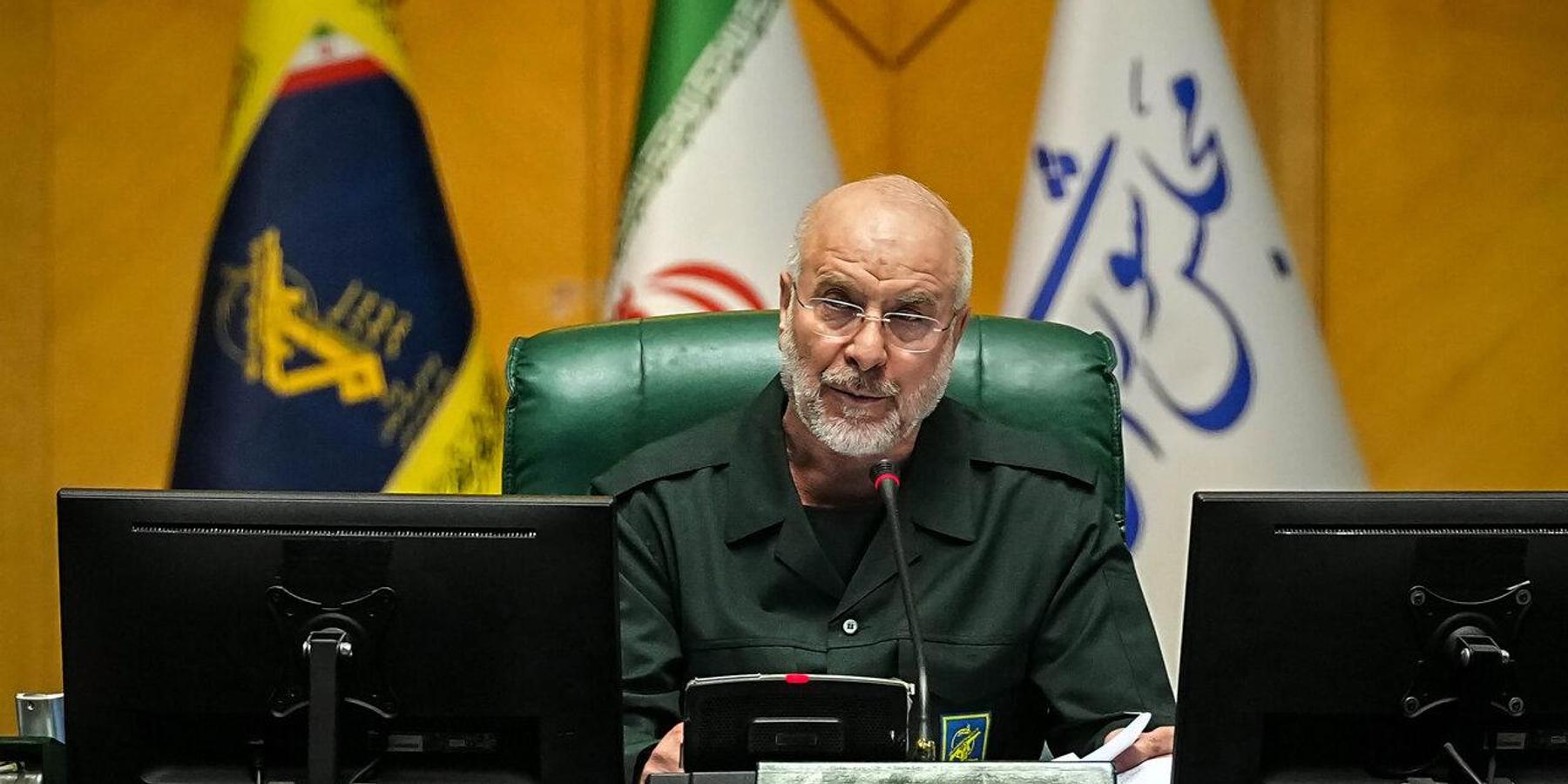
Since the “snapback” of U.N. sanctions on Iran in September 2025, ultraconservative Iranian lawmakers have regularly pushed for pulling out of the NPT, under which the vast majority of states have committed to not develop nuclear weapons. The Majles — Iran’s parliament — drafted a law that would have initiated the move in 2025, but it has yet to move forward. In September, some lawmakers submitted new “triple-urgency” legislation to the Majles’ president, Mohammad Baqer Ghalibaf, who is also currently Iran’s chief negotiator
These continuous calls by ultraconservatives to withdraw from the NPT have yet to produce an actual withdrawal because of a lack of political consensus. Iran has remained in the treaty despite the war, unprecedented economic pressure, and the return of U.N. sanctions. But is continued NPT membership still an asset for Iran?
Background
On September 28, 32 prominent Iranians, many of whom served in conservative administrations, published a declaration arguing that membership in the NPT no longer serves Iranian interests. They asked President Masoud Pezeshkian, the Majles, and the Supreme National Security Council (SNSC), which oversees the country’s key national-security and foreign-policy issues, to halt all cooperation with the International Atomic Energy Agency (IAEA) under the treaty and immediately initiate the withdrawal process.
Of course, a law demanding a withdrawal from the NPT would not by itself force the hand of the executive. As shown when the SNSC suspended the “Chastity and Hijab Law” in August 2024, it is the SNSC that decides any questions it considers crucial to national security, and particularly those related to the nuclear file.
The debate over NPT withdrawal: the end of the ultraconservative monopoly
The open letter’s signatories belong to the conservative camp. Historically, this camp has opposed negotiations with the U.S. and denounced the 2015 Iran deal, even though some of them had embraced the idea of normalization in 2012. Since 2022, amid the stalemate of U.S.-Iran negotiations, the most radical of them, the ultraconservatives, have publicly pressed for leaving the NPT. Among them are Saeed Jalili, who led the country’s nuclear negotiating team from 2007 to 2013 and ran unsuccessfully against Pezeshkian in 2024, as well as Hamid Rasaee, a lawmaker member of the “Stability Front”, a far right sub-group of the conservative camp.
In any case, the 2025 U.S.-Iran war ended the conservative monopoly on the question. Ever since, some figures in the “moderate” camp, comprised of reformists and centrists who traditionally supported normalization with the West, have changed their mind. Journalist Ali Nazari, known as a moderate, is one. More than simply leaving the NPT, Nazari now supports developing a nuclear weapon.
Withdrawal from the NPT as negotiating leverage
Of course, the Iranian political elite has long used the threat of withdrawing from the NPT as leverage in negotiations with the West, whatever political camp the negotiators have identified with.
According to his memoir, for example, former President Hassan Rouhani, a fervent backer of negotiations with the West, threatened to withdraw from the treaty while he was secretary of the SNSC and negotiating bilaterally with the Russians in May 2005, if the IAEA Board of Governors voted to refer the Iranian nuclear file to the Security Council. (Iran did not follow through on that threat when the board made the referral in February 2006.)
What has changed?
The current context, however, is different from the pre-war situation. While the idea of withdrawing from the NPT was long confined to ultraconservative deputies, some recent declarations by Mohsen Rezaei, the SNSC secretary, indicate a certain evolution.
In a post on X following the IAEA’s recent adoption of Resolution GOV/2026/61, Rezaei accused the IAEA of politicizing the Iranian nuclear issue, warning that such actions could lead Iran to leave the treaty. Yet this resolution, which reiterated concerns about Iran’s limited cooperation with the IAEA, did not introduce any new elements in comparison to the previous one, indicating Rezaei used it as a pretext to signal a new posture.
While this comment could be understood as part of Iran’s negotiation strategy with the U.S., no previous SNSC secretary has ever made such a threat. Given the critical role the SNSC plays in nuclear policymaking, the threat must necessarily be taken more seriously.
Previous events indicate the possibility of a convergence of views between an ultraconservative Majles and the SNSC. For example, such an alignment emerged in the lead-up to the suspension of negotiations with the IAEA in September 2025. The question remains whether a similar rapprochement could occur between the two bodies on the possibility of withdrawing from the NPT.
Leave the NPT or build a bomb
Leaving the NPT should not be confused with developing a nuclear weapon. In fact, in an interview with Al Jazeera published on September 19, Rezaei reaffirmed his commitment to the fatwa promulgated by the late Supreme Leader Ali Khamenei in 1995 prohibiting the creation of weapons of mass destruction.. Rezaei seems to prefer a diplomatic solution for the conflict, arguing that Washington should accept Iran’s conditions for ending the war. During last month’s U.N. General Assembly, Iran proposed (and U.S. President Donald Trump rejected)to end hostilities on all fronts, unfreeze Iranian assets, and lift the blockade of Iranian ports, consistent with the MoU agreed by both parties in June.
It is difficult to assess whether Rezaei’s most recent withdrawal threat indicates a firm intention to follow through or the latest in a long history of bluffs. As far as the fatwa goes, some would argue its normative force was already weakened by the new Iranian nuclear posture articulated in 2024, breaking the ultimate linguistic taboo of the Islamic Republic.
Some Iranian experts now argue that a withdrawal from the NPT should only happen after Iran acquires a nuclear weapon; otherwise, the country would be unnecessarily punished as the withdrawal would inevitably be perceived as a move toward weaponization.
Deterioration of relations with the IAEA
It is worth emphasizing that Iran’s relations with the IAEA have deteriorated considerably. Tehran’s hostility toward its director-general, Rafael Grossi, has intensified dramatically. Holding it partially responsible for the 12-day War, Tehran also blames the agency for failing to explicitly condemn Israel and the U.S. for attacking Iranian nuclear sites.
In addition, the appearance of Resolution GOV/2026/61 and the de facto exclusion of Iran’s leading nuclear official, Mohammad Eslami, from the 69th general conference of the IAEA in September have reinforced the view that the IAEA has become politicized.
What prevents Iran from leaving the NPT
The main obstacle to leaving the NPT remains Iran’s diplomatic dependence on Russia and China. Since the U.S. left the JCPOA in 2018, Tehran has doubled down on its cooperation with the two Eastern powers, and China has absorbed nearly all of Iran’s oil exports since. In internal debates, the possible negative effects on relations with Russia and China of withdrawing from the treaty are clearly an important factor.
Yet one could interpret Rezaei’s comments as a warning to Moscow and Beijing, with the goal of pushing them to use their veto against any additional anti-Iran actions at the U.N. Security Council. The fear of abandonment is understandable; after all, the two powers voted to refer the Iranian nuclear file to the U.N. Security Council and supported multilateral sanctions against Iran in the past.
In Iran, the debate over a possible withdrawal from the NPT remains unsettled. Most reformists and centrists still appear to oppose the idea, and the SNSC has not yet reached a consensus on the question. Ghalibaf’s looming decision over whether to advance the anti-NPT law will demonstrate political dynamics, even if it may not determine Iran’s future actions.
In the uncertainty of the moment, one can still draw a few conclusions: Russia and China have once more become essential to maintaining Iran’s NPT membership, and debates on the subject in Iran are intensifying in an unprecedented way.
- How Trump's Iran operation turned into a forever war ›
- The US kill count in Iran makes the phrase ‘precision strikes’ absurd ›
- Did the US only attack Iran because of Israel? ›