

Diplomatic tensions between the United States and Europe have flared once again. Following the killing of French right-wing activist Quentin Deranque earlier this month, the U.S. State Department warned about the threat of “violent radical leftism” and that it expects to see “the perpetrators of violence brought to justice.” Citing interference with domestic politics, the French government summoned U.S. Ambassador Charles Kushner, but he failed to show. He is now being denied access to government officials.
The intent to meddle in European domestic affairs is outlined in the 2025 National Security Strategy. The document mentions Europe in starkly ideological terms. It decries Europe’s loss of “civilizational self-confidence” and claims that “unstable minority governments” are suppressing democracy. Moreover, it lays bare Washington’s goal of “cultivating resistance to Europe’s current trajectory within European nations.”
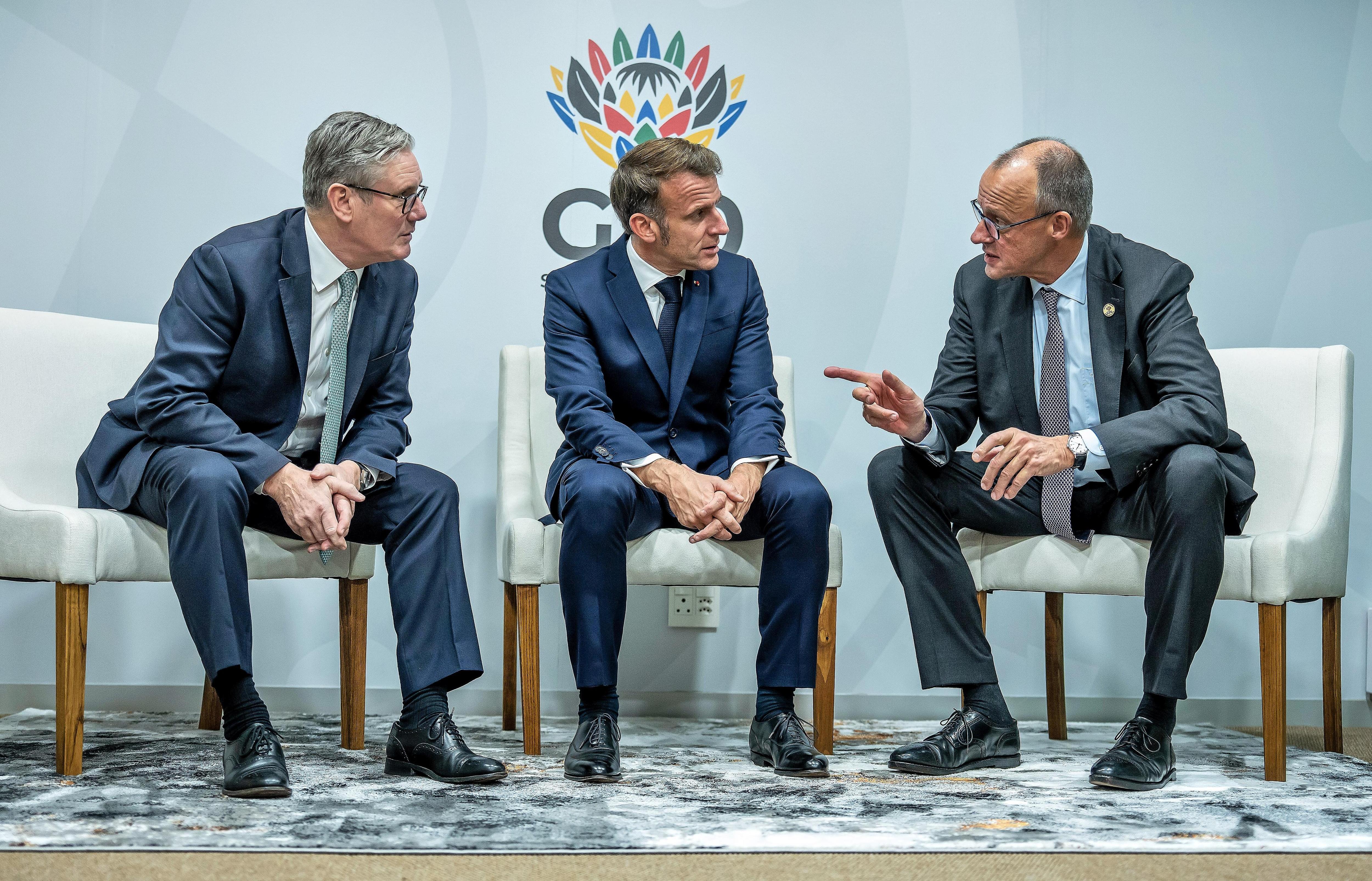
If the Trump administration carries out this strategy successfully, it will be because European leaders already face a crisis of legitimacy. Most are deeply unpopular in their own countries. As of December 2025, every major Western European leader is underwater. Italy’s Georgia Meloni has a favorability rating of 35%, Spain’s Pedro Sanchez 30%, and Germany’s Friedrich Merz 25%. The UK’s Keir Starmer and France’s Emmanuel Macron face paltry favorability ratings of 17% and 16%, respectively.
President Trump aptly perceives this weakness and exploits it. Even as Macron delivered his soon-to-be-memeified Davos speech, Trump posted a screenshot of a private message from the French president on Truth Social. Macron stressed his alignment with Trump on Syria and Iran, and added, “I do not understand what you are doing on Greenland,” closing with a dinner invitation in Paris. Trump similarly leaked a flattering message from NATO Secretary General Mark Rutte last June.
It’s unlikely Trump would treat other world leaders like Xi Jinping, Vladimir Putin, or Mohammed bin Salman in similar fashion. And while he certainly has an affinity for strongmen who wield the kind of power he desires, he also recognizes strong mandates like those of Luiz Inàcio Lula de Silva in Brazil and Claudia Sheinbaum in Mexico. But whether power stems from a democratic majority or authoritarian control, traditional European allies are at a disadvantage. The European Union represents exactly the kind of technocratic coalition-based governance that Trump and his team despise.
In his infamous speech at last year’s Munich Security Conference, Vice President JD Vance proclaimed that the greatest threat to the continent was not Russia nor China, but the “threat from within” and the abandonment of “shared democratic values.” Secretary of State Marco Rubio delivered the same message in slightly gentler terms at this year’s conference, taking aim at immigration, green energy, and deindustrialization.
This type of rhetoric comes at a time when Europe is experiencing a surge in populism that the liberal establishment has barely managed to stave off. The Trump administration sees this as an opportunity to sway elections in favor of right-wing populists, whom they view as their ideological allies. After his speech last year, Vance met with the leadership of the German far-right party Alternative for Germany (AfD), which has sought to deepen ties to the Trump administration. The administration has also courted National Rally in France, a top contender in the 2027 presidential elections, although the French far right believes it has less to gain from aligning with Trump.
Trump ally Elon Musk frequently uses his platform on X to boost the European far right to his 235 million followers. He showed support for AfD in an attempt to influence the 2025 elections in its favor. Ahead of local elections in the United Kingdom, Musk is tweeting in support of new right-wing party Restore Britain.
European leaders have struggled to adequately respond to American provocations. In the wake of U.S. military intervention in Iran and Venezuela, both violations of international law, European objections were tepid. It was only when Trump threatened to seize Greenland by force that European leaders responded more vigorously, but they mistakenly continue to think they can deal with Trump through appeasement and flattery.
In a sense, Vance and Rubio are right in saying that Europe must focus inward to build strength and unity. Europeans themselves agree: 89% of Europeans think EU countries should be more united to face global challenges and 86% think the EU should have a stronger voice at the international level.
In fact, standing up to Trump may help European leaders boost their popularity. A survey conducted last year, shortly after Trump resumed office, shows that majorities of Western Europeans want their leaders to set clear boundaries with the United States. About one third want their leaders to be more confrontational. More recent data confirms that Western Europeans would rather prioritize European independence than preserve Europe’s relationship with the United States.
European leaders are ultimately responsible for how their publics perceive them, and delivering popular domestic agendas is easier said than done. But by appearing weak both at home and abroad, they have made themselves vulnerable to U.S. interference. Rather than appeasing the United States, they should focus on what is actually popular: unity, strength, and autonomy on the global stage.
- Europe already 'Trump proofing' Ukraine war aid ›
- Congress wants to stop Trump troop withdrawal from Europe ›
- As Trump squeezes, can de Villepin give new backbone to France? | Responsible Statecraft ›